Baby's Vision: How It Changes in the First Year
25 February 2026
Becoming a parent opens the door to a whole new world of excitement, challenges, and discovery. One of the most fascinating aspects of your baby’s growth during the first year is their rapidly developing vision. It’s easy to spend hours gazing into your baby’s eyes, but have you ever wondered how they see the world? How clear is their vision? Can they recognize you right from birth?
In this article, we’ll explore the amazing journey of your baby’s vision development in their first year of life. We’ll break down each milestone and help you understand what’s going on behind those adorable eyes. So, let’s dive in!
The Newborn Stage: Blurry Beginnings
What Can a Newborn See?
When your baby is born, their vision is still immature and quite limited. In fact, most newborns can only see about 8 to 12 inches in front of them. That’s roughly the distance between your baby’s face and yours during feeding time—nature's way of ensuring they can focus on their caregivers almost immediately!The world around them will appear blurry, as if they are viewing life through frosted glass. Don’t worry, though! Your baby’s brain is already working hard to process and interpret these early visual signals.
Black and White Patterns Are Key
Surprisingly, one of the most captivating things for a newborn is high-contrast black and white patterns. This is because newborns have difficulty distinguishing between similar colors, but they are drawn to bold contrasts. So, those black-and-white mobiles and toys are not just trendy—they actually provide important visual stimulation.Recognition of Faces
Although your little one’s vision isn’t crystal clear yet, they are already wired to prefer looking at human faces, especially yours. Isn’t that heartwarming? Babies are naturally drawn to faces, so they’ll spend a lot of time studying the outlines and shapes of your face, focusing intently on your eyes, nose, and mouth.
One to Two Months: Transitioning to Color
Fuzzy but Improving Focus
At around 1 to 2 months, your baby’s vision is still considered “fuzzy,” but significant changes are happening. They’re starting to work on focusing better, especially on objects that are close, like your face. You may notice them staring at you longer during feedings.A Burst of Color
As they approach 8 weeks, babies begin to distinguish between different colors. They start with red first, which is usually the easiest color for them to detect. It’s not long before they can see other bold colors like green and blue. For now, pastel hues may still blend into the background, but give it time—those soft shades will soon stand out too.Introducing Moving Objects
At around two months, babies start to follow moving objects with their eyes. This is a milestone known as “tracking.” It's a sign that the coordination between their eyes and brain is improving. You can encourage this by slowly moving a brightly colored object or toy side-to-side in front of their face.
Three to Four Months: The World Gets Clearer
Better Focus and Depth Perception
By the time your baby reaches three months, their focus has improved, and they can now see objects as far as several feet away! While their vision is still far from perfect, it's definitely crisper. Another exciting development is the beginning of depth perception, the ability to judge distances.Imagine your baby suddenly having the ability to “see in 3D”! This is one reason why they may seem surprised or fascinated when a toy that’s close looks different from one that’s further away—it’s their brain learning to make sense of spatial relationships.
The Eyes Start to Work Together
Up until this point, your baby’s eyes may have occasionally wandered or appeared crossed. This is entirely normal in newborns, but by four months, both eyes should start working together more effectively, creating a unified image. If one eye still seems to stray regularly beyond this point, it’s a good idea to mention it to your pediatrician, just to be sure everything's on track.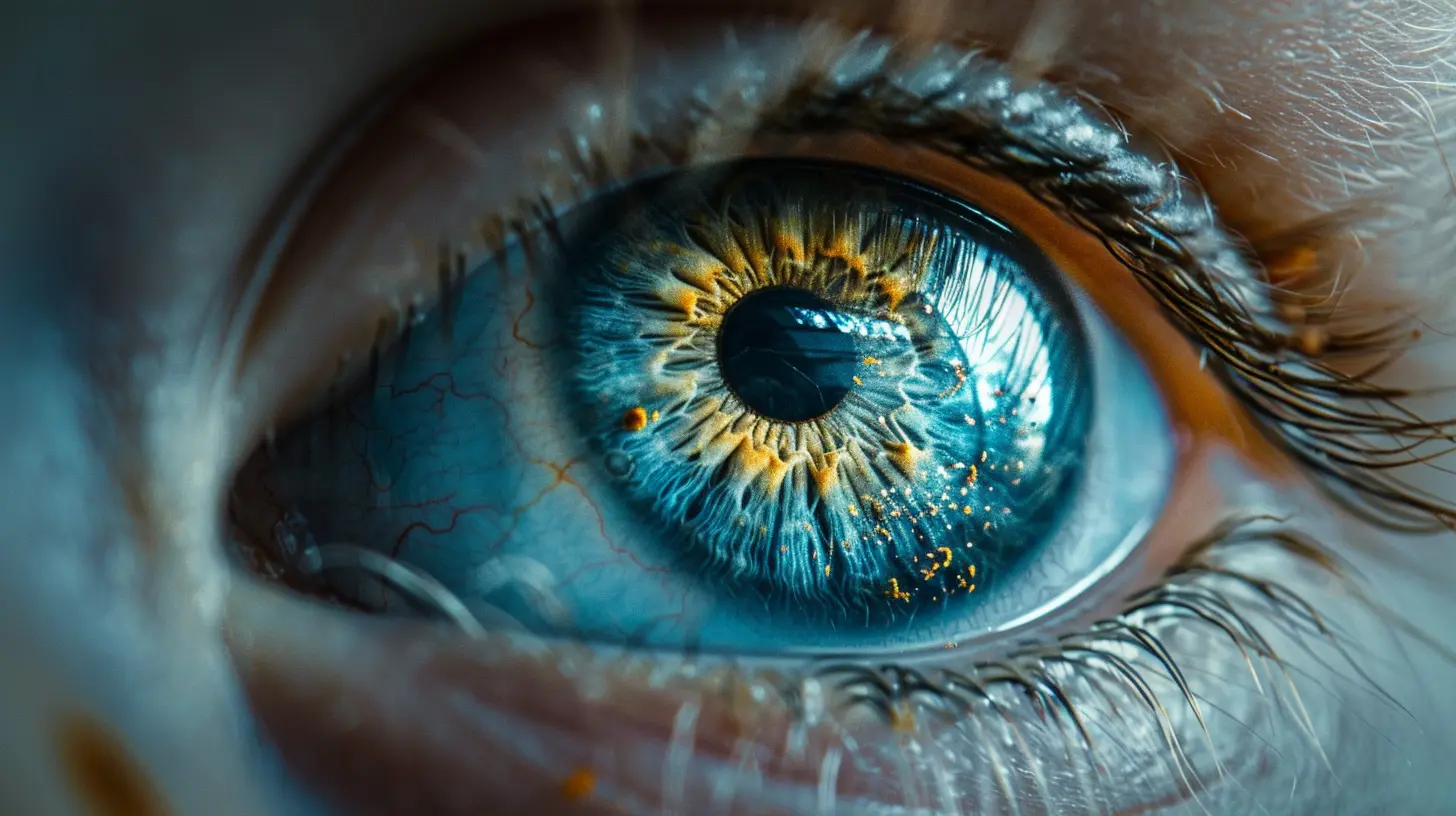
Five to Six Months: Recognizing Familiar Faces and Objects
Faces and Expressions
By five to six months, your baby can now recognize familiar faces from across the room. They'll greet you with wide eyes and possibly a big smile when you enter their line of sight. They can even pick out the details of facial expressions. That's right—your baby is starting to recognize when you’re smiling, frowning, or making silly faces.Eye-Hand Coordination
Around this time, your baby’s vision is also playing a crucial role in developing eye-hand coordination. When you hand them a toy, they’ll not only see it clearly but reach out and grasp it with increasing precision. You’ll see them closely inspecting toys, books, and even their own hands. Those tiny fingers will spend more time exploring objects, and they may even start trying to bring things to their mouth for further investigation.Seven to Eight Months: Depth and Distance
Full Color Vision
Around the seven to eight-month mark, your baby’s color vision is now similar to that of an adult. They can effortlessly distinguish between many different shades and tones. This is when those pastel-colored toys, blankets, and clothes finally start making an impact!Understanding Depth Perception
Your baby’s depth perception continues to improve, making them better at understanding distances. This milestone is crucial for mastering crawling, which often begins during this time. You’ll see them becoming more adventurous, exploring their surroundings by moving toward objects that catch their eye.Becoming More Inquisitive
With improved vision comes curiosity. Your baby will start actively examining their environment more closely. They may stare out the window at trees swaying in the wind or follow the movements of a family pet. This period is often referred to as a “sensory explosion,” as their brain processes countless new visual inputs.Nine to Twelve Months: Nearing the Finish Line
Improved Visual Acuity
By the time your baby celebrates their first birthday, their vision is still developing, but it’s come a long way. During these latter months of the first year, your baby’s visual acuity (sharpness of vision) continues to improve, meaning they’ll see things more clearly and with more detail.Recognizing Objects Up Close and Far Away
At this stage, your baby can easily recognize familiar objects and faces, even from a distance. You may notice them spotting their favorite toy across the room and crawling over to retrieve it. They’ll also love games like peekaboo—thanks to their improved ability to track movements and recognize patterns.Fine Detail and Texture
Your child’s ability to focus on fine details is also sharper now, and they’re more likely to inspect patterns, textures, and small details on toys or books. This newfound visual precision often coincides with the development of the pincer grasp (using thumb and forefinger to pick up small items), so don’t be surprised if they start scrutinizing and grasping tiny bits of food or even lint (time to baby-proof again!).Signs of Healthy Vision Development
It’s natural to wonder how your baby’s vision is developing, so here are a few signs that they've been hitting those visual milestones:- Eye contact: Around six weeks, your baby should start making eye contact with you.
- Tracking objects: By two to three months, they’ll track moving objects with their eyes.
- Squinting or crossing eyes: Although some crossing is normal, consistent squinting or wandering after four months could warrant a visit to the pediatrician.
- Reaching for things: Around five months, they’ll reach for objects they see—and eventually grab them!
When to Consult a Doctor
While most babies develop their vision without any issues, there are some signs that may require professional assessment. If you notice any of the following, it’s worth consulting with your pediatrician or a pediatric ophthalmologist:- Extreme sensitivity to light
- Constant eye-crossing or misalignment beyond six months
- Lack of interest in looking at faces or objects by three months
- No ability to track moving objects by three to four months
Remember, early detection of vision problems can make a big difference in your baby’s overall development.
Conclusion
Your baby’s vision development in the first year is nothing short of miraculous. It starts as a blurry, black-and-white world and rapidly evolves into a sharp, colorful, and detailed experience. With each passing month, your baby will take in more of their surroundings, recognize new faces, and learn to interact with their environment in new and exciting ways.As a parent, your role is to provide plenty of visual stimulation and, of course, enjoy every moment of watching your little one discover the world. So, grab some brightly colored toys, make funny faces, and play peekaboo—your baby’s vision will keep improving, and so will their connection to the world around them.
all images in this post were generated using AI tools
Category:
Infant DevelopmentAuthor:

Austin Wilcox
Discussion
rate this article
2 comments
Thane Banks
This article offers a concise overview of the remarkable changes in a baby's vision during their first year. It highlights critical developmental milestones, such as focusing abilities and depth perception. Understanding these stages not only reassures parents but also emphasizes the importance of engaging with infants to stimulate visual growth effectively.
March 15, 2026 at 3:41 AM
Austin Wilcox
Thank you for your feedback! I'm glad you found the article informative and helpful for parents in understanding their baby's vision development.
Mary Sharpe
Understanding your baby's evolving vision is key to fostering their development. Celebrate each new milestone, as these changes not only enhance sight but also deepen their connection with the world.
February 28, 2026 at 3:26 PM
Austin Wilcox
Thank you for your insightful comment! Celebrating these milestones is indeed crucial for nurturing both vision and connection.