Helping Your Child Navigate Peer Pressure Gracefully
5 October 2026
Peer pressure gets talked about as if it were a single, predictable force, like weather moving in from the west. In reality, it is closer to a current in a river. It is always present, it changes with the terrain, and the child who knows how to read it can swim with intention instead of being pulled wherever it happens to flow.
Parents often ask the wrong question first. They ask, "How do I stop my child from giving in?" A more useful question is, "How do I help my child build the inner and outer resources to make thoughtful choices when I am not in the room?" That shift matters, because the goal is not obedience in your presence. It is judgment in your absence.
This article is written for parents, caregivers, and anyone who plays a meaningful role in a child's life. It covers what peer pressure actually is, how it changes across developmental stages, why some children are more susceptible than others, and what you can realistically do to help without turning your home into a surveillance operation.

What Peer Pressure Really Is
Most people picture peer pressure as a direct dare. Someone holds out a cigarette or a phone and says, "Come on, everyone is doing it." That version exists, but it is a small slice of the whole.Peer pressure includes:
- Direct verbal pressure. Teasing, urging, bargaining, or threatening.
- Indirect pressure. Watching others do something and feeling you should too.
- Perceived pressure. Believing that others expect something even when no one has said a word.
- Self-imposed pressure. Wanting to belong so badly that you convince yourself the group's choice is your own.
That last category is the one parents underestimate most. A child who says yes to something risky may not feel pushed at all. They may feel like they are finally fitting in, and the decision feels less like surrender and more like relief.
Understanding this matters because it changes your response. If you assume pressure is always external, you will focus on teaching your child to resist other people. If you understand that pressure is often internal, you will also focus on helping your child understand their own needs for belonging, status, and safety.

Why Belonging Is Not a Weakness
Adults sometimes talk about peer influence as if wanting to fit in were a character flaw. It is not. The drive to belong is deeply human and developmentally normal. For most of human history, being cast out of a group was dangerous. The brain treats social exclusion as a genuine threat, and it responds accordingly.So when your child changes their clothes, their slang, or their opinions to match a group, they are not being shallow. They are doing something that has helped humans survive. The challenge is not to eliminate that drive. The challenge is to help your child hold it alongside their own values, safety, and long-term interests.
This reframe is not just comforting. It is practical. Children who feel understood in their desire to belong are more likely to talk honestly about the situations they face. Children who feel judged for that desire tend to go quiet.
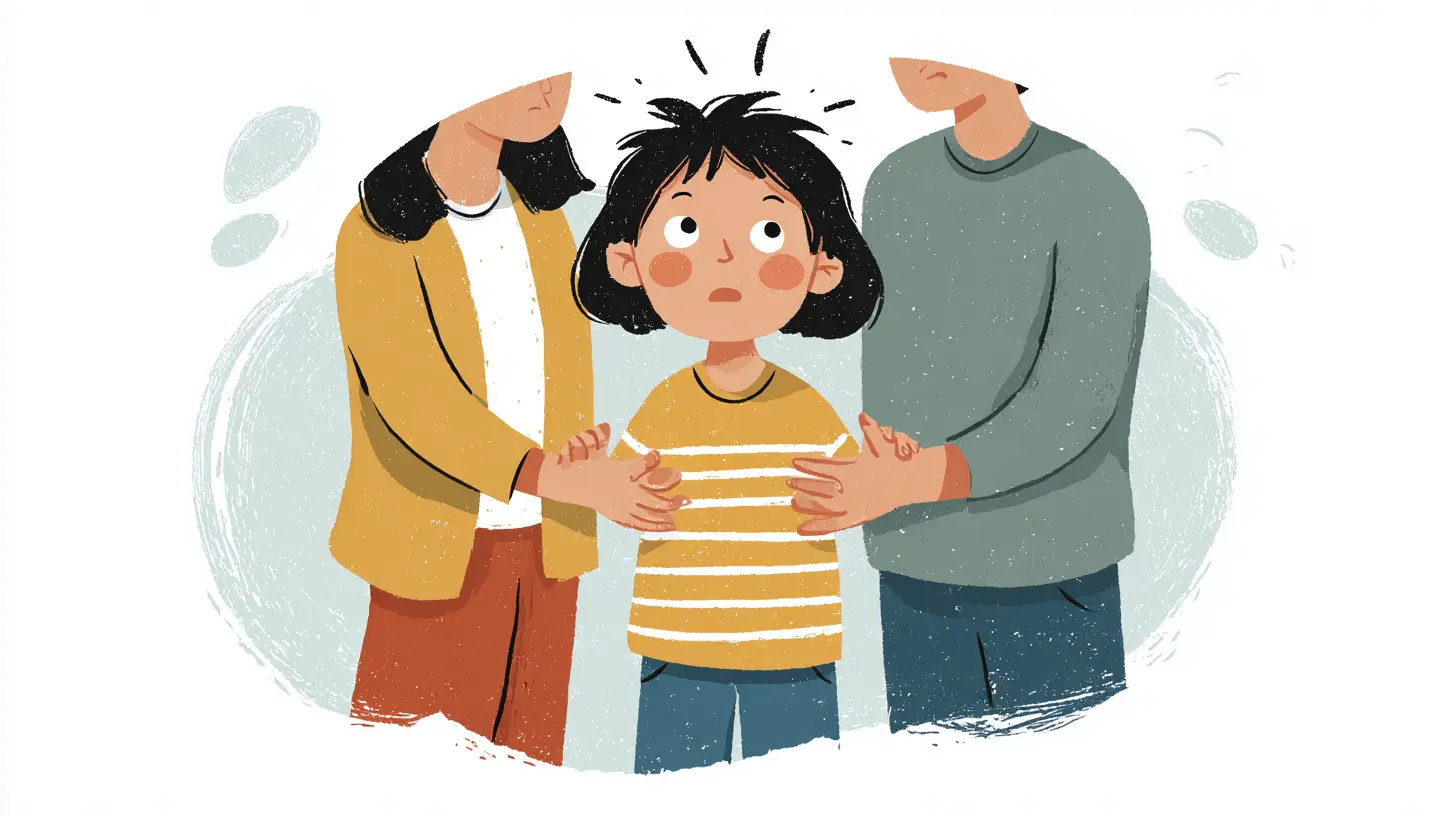
How Peer Pressure Changes Across Ages
The nature of peer influence shifts as children grow. Knowing the general pattern helps you respond in ways that match your child's actual stage rather than the stage you remember from your own childhood.Early Childhood, Roughly Ages 4 to 7
At this age, children are learning to share, take turns, and follow group rules. Pressure usually shows up in small, concrete moments. A child might go along with a game they do not like because a friend insisted. They might copy a behavior they saw at preschool without understanding it.The main task here is helping your child name what they feel. Phrases like "I do not want to" and "I need a turn" are early building blocks. You are not teaching negotiation. You are teaching basic self-awareness and the right to have a preference.
Middle Childhood, Roughly Ages 8 to 11
Friendships become more selective, and social rules become more visible. Children start to care deeply about who is in and who is out. This is when you will see pressure around:- What to wear
- Which games or shows are acceptable
- Who to sit with
- Whether to break small rules
At this stage, children are often testing boundaries and learning that different groups have different norms. They may behave one way at home and another way at school. That is not necessarily deception. It is social learning.
Early Adolescence, Roughly Ages 12 to 14
This is the period most parents worry about, and for good reason. The brain's reward system becomes highly sensitive to social feedback, while the regions responsible for long-term planning and impulse control are still developing. The result is a child who feels social stakes intensely and has limited capacity to slow down and think.Pressure at this age often involves riskier behavior: experimenting with substances, sharing things online, skipping class, or going along with mean behavior toward others. The pull is strong, and the consequences can be serious.
Middle and Late Adolescence, Roughly Ages 15 to 18
Older teens are often better at resisting obvious pressure, but the pressure itself becomes more complex. It may involve:- Sexual expectations
- Drinking or drug use at parties
- Academic cheating
- Loyalty to a friend who is making harmful choices
- Choosing a path that conflicts with family expectations
At this stage, teens are forming an identity. They need room to make decisions, and they also need to know you are a safe place to land when those decisions go wrong.

What Makes Some Children More Susceptible
Susceptibility is not fixed. It varies by situation, mood, and context. Still, certain factors tend to increase the likelihood that a child will go along with something they would otherwise avoid.- Low social confidence. A child who feels unsure of their place in a group may work harder to keep it.
- Few close friendships. Belonging to one group can feel like the only option.
- Anxiety or rejection sensitivity. A child who fears exclusion may agree to almost anything to prevent it.
- Impulsivity. Some children act before their judgment catches up.
- A history of being excluded. Children who have been left out may overcorrect by being agreeable.
- Unclear personal values. A child who has never thought about what matters to them has little to anchor against.
Notice that none of these are permanent traits. They are conditions that can change with support, experience, and skill-building.
The Limits of "Just Say No"
The classic advice to "just say no" fails for a simple reason. It treats refusal as a single moment, when in reality it is a social act with consequences. A child who says no may face teasing, exclusion, or a loss of status. Telling them to refuse without helping them manage that fallout is like telling someone to jump without offering a net.A more effective approach teaches refusal as a skill with many forms. Some examples:
- The broken record. Repeating the same short phrase without escalating. "I am good, thanks." Said calmly, three times, it ends most pushes.
- The redirect. Changing the subject or the activity. "Let us go see what is happening outside."
- The excuse. Using a neutral reason that does not invite debate. "My parents would ground me for a month."
- The ally move. Leaving with a friend who also wants out. Pressure is easier to resist in pairs.
- The exit. Simply walking away, without explanation, when the situation is unsafe.
Each of these works in different contexts. The broken record is useful for mild pressure. The exit is essential when safety is at stake. Teaching your child a menu of options gives them flexibility instead of a single script that may not fit the moment.
Why Role-Play Works Better Than Lectures
Telling your child what to do is easy. Helping them actually do it under pressure is harder. That is where practice comes in.Role-play works because it builds what psychologists sometimes call behavioral rehearsal. When a child has said a phrase out loud in a low-stakes setting, the words are more available when the stakes are high. The brain recognizes the pattern and responds faster.
A simple way to do this:
1. Pick a realistic scenario your child might face.
2. Let them play themselves. You play the person applying pressure.
3. Start mild. Increase the pressure gradually.
4. Pause and ask what felt hard.
5. Try again with a different strategy.
Keep it short. Five minutes is plenty. Do it casually, maybe in the car or while doing dishes. If it feels like a formal lesson, most children will resist.
One caution. Do not use role-play to trap your child into admitting something they have already done. If they sense the exercise is a disguised interrogation, they will shut down. The purpose is preparation, not confession.
The Role of Values in Resisting Pressure
Skills matter, but they are not enough on their own. A child who has no idea what they stand for will struggle to know when to push back. Values give direction.You can help your child clarify their values without preaching. Ask questions like:
- What kind of friend do you want to be?
- What would you want someone to do if they saw you being treated badly?
- What matters more to you, being liked in the moment or feeling good about your choices later?
These questions do not have one right answer. The point is to get your child thinking about the kind of person they want to become. When a decision conflicts with that picture, they are more likely to notice.
It also helps to talk about your own values out loud. Not as a lecture, but as a running commentary. "I did not want to go to that event, but I had promised, so I went." "I almost said yes to something I did not believe in, and then I changed my mind." Children learn more from watching how you navigate pressure than from hearing you describe it.
When to Step In and When to Step Back
One of the hardest parts of parenting is knowing when to intervene. Step in too often, and your child never builds the muscle. Step back too far, and they may face consequences they are not ready for.A useful guide is to consider three factors:
- Safety. If there is a real risk of physical harm, illegal activity, or serious emotional damage, step in.
- Reversibility. If the decision can be undone, it is usually worth letting your child try.
- Learning value. If the situation offers a chance to practice a skill they need, leaning back may be the better move.
For example, a child who is being teased about their clothes can probably handle it with some coaching. A child who is being pressured to get into a car with someone who has been drinking needs you to act.
Even when you step in, do it in a way that preserves your child's dignity. "I am going to call the other parent" lands differently than "You are not allowed to see that person again." The first keeps the door open. The second often closes it.
Common Mistakes Parents Make
Even well-meaning parents fall into patterns that backfire. Here are some of the most common.Dismissing the Problem
Telling a child that their social worries are not a big deal teaches them that you are not a useful ally. The problem may look small to you. It does not feel small to them.Overreacting
The opposite mistake is treating every incident as a crisis. If your child comes to you with something small and you respond with alarm, they will think twice before coming to you with something big.Assuming Your Child's Experience Matches Yours
The pressure your child faces is shaped by technology, culture, and their specific school environment. What worked for you in 1995 may not work now. Ask questions instead of assuming.Focusing Only on the Other Kids
It is tempting to blame the friend who introduced the behavior. But your child's choices are about your child, not just about the friend. Focusing on the other child can also make your child defensive.Forgetting to Praise Good Judgment
When your child makes a thoughtful choice under pressure, say so. Specific praise, like "I noticed you did not go along with that even though it was awkward," reinforces the behavior you want to see again.
Peer Pressure in the Digital Age
Online life has changed the texture of peer pressure in ways that are still being understood. A few features stand out.- It is constant. There is no break. A child who leaves school can still be reached at home.
- It is visible. Public metrics like likes and comments make social standing feel measurable.
- It is amplified. A single moment can be recorded and shared widely.
- It is anonymous. Pressure can come from people your child has never met.
These features make some strategies harder. Walking away from a group is simpler than walking away from a phone that keeps buzzing. That is why digital boundaries matter. Not as punishment, but as protection.
Practical steps include:
- Keeping devices out of bedrooms at night
- Talking about what your child sees and how it makes them feel
- Helping your child curate their feeds so they are not surrounded by content that fuels comparison
- Modeling your own healthy use of technology
None of these are foolproof. But they reduce the intensity of the current your child is swimming in.
Building a Relationship That Invites Honesty
The single most protective factor in a child's life is a relationship with at least one adult who listens without rushing to fix. That is not a slogan. It is a pattern that shows up again and again in how children handle difficulty.What does that look like in practice?
- Listening more than talking. When your child shares something, resist the urge to jump in with advice.
- Asking open questions. "What was that like?" works better than "Why did you do that?"
- Staying calm. If your child's news makes you visibly anxious or angry, they will edit next time.
- Following up later. "I have been thinking about what you told me. How are things now?"
- Repairing when you get it wrong. If you overreact, say so. That models accountability.
Honesty is not guaranteed. Some children, especially teens, keep parts of their lives private. That is normal and often healthy. But a child who knows you are a safe place is more likely to come to you when something serious happens.
Encouraging Friendships That Support Good Choices
Peer pressure is not always negative. Friends can also pressure each other toward better choices. A friend who says, "Let us not do that, it is not worth it," can be more influential than any parent.You can help your child build relationships that lean this direction by:
- Encouraging friendships with children who share their values
- Hosting gatherings at your home so you know who your child spends time with
- Talking positively about the friends who bring out the best in your child
- Noticing when a friendship seems to consistently pull your child away from who they are
This last point deserves care. Not every difficult friendship is harmful. Some are simply complicated. Before you intervene, ask whether the friendship is consistently making your child feel worse about themselves, or whether it is going through a rough patch. The distinction matters.
When to Seek Outside Help
Most peer pressure situations can be handled within the family. But some require more support. Consider reaching out to a school counselor, therapist, or pediatrician if you notice:- Persistent anxiety or depression
- Withdrawal from friends and family
- A sudden drop in grades
- Signs of substance use
- Changes in sleep or appetite
- Talk of self-harm
Seeking help is not a sign of failure. It is a sign that you are taking the situation seriously.
A Final Word
Peer pressure is not a problem you solve once. It is a condition your child will navigate in different forms for the rest of their life. Your job is not to eliminate it. Your job is to help your child build the awareness, skills, and relationships that let them move through it with their values intact.That work happens in small moments. A conversation in the car. A question at dinner. A calm response when your child admits something hard. None of these feel dramatic. Together, they shape the kind of person your child becomes when no one is watching.
all images in this post were generated using AI tools
Category:
Parenting And Social SkillsAuthor:

Austin Wilcox