Raising Resilient Children Amid Uncertainty
19 August 2026
Every parent wants their child to be strong. But when the world feels unpredictable, that wish turns into a pressing need. You watch the news, hear about economic shifts, school changes, and global events, and you wonder: How do I raise a kid who can handle all this without falling apart?
The short answer is that resilience is not a fixed trait. It is a skill. And like any skill, it can be taught, practiced, and strengthened over time. The long answer involves understanding what resilience actually looks like in a child, what gets in the way, and how your own behavior shapes theirs more than any lesson you could ever teach.
This article is not about positive thinking or quick fixes. It is about the hard, slow, and deeply rewarding work of building a child who can bend without breaking.

What Resilience Really Means for a Child
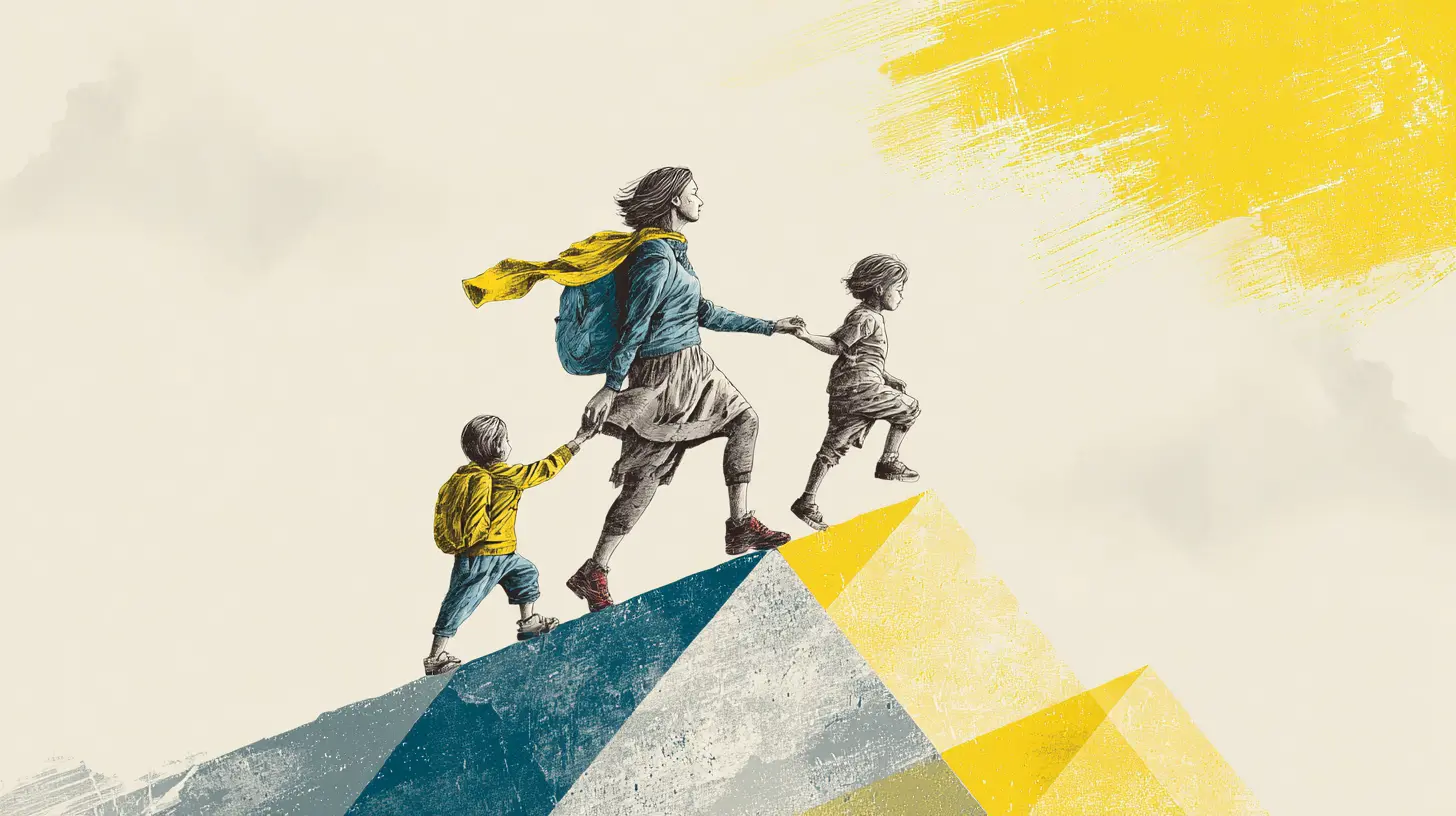
Resilience is often misunderstood as the ability to bounce back quickly from adversity. But that definition misses something important. A resilient child does not just recover. They grow. They develop new coping strategies, a sharper sense of their own abilities, and a more realistic view of the world.Think of it this way: A rubber band bounces back. But a tree in a storm bends, sways, and then stands taller because its roots have been tested. That is what we want for our children. Not a quick return to normal, but a deeper anchoring that comes from having survived something hard.
Resilience is not the absence of fear, sadness, or frustration. Those emotions are normal and necessary. A resilient child feels them fully, but they do not get stuck there. They have tools to move through the feeling and come out the other side with a new understanding.
This distinction matters because many parents make the mistake of trying to shield their children from all discomfort. They think that if they prevent every fall, their child will never need to learn how to get up. The opposite is true. A child who never experiences failure, disappointment, or struggle has no reference point for handling it when it inevitably arrives.
The Role of Uncertainty in Child Development
Uncertainty is not new. Every generation has faced it, though the flavors change. What is different today is the sheer volume of information and the speed at which it reaches our children. They hear about climate change, political conflict, and economic instability in real time. They absorb adult anxiety from conversations they are not meant to overhear.But here is the key insight: Uncertainty itself is not the enemy. It is a constant part of the human condition. The problem arises when children believe they have no control over their own lives in the face of that uncertainty. That belief is what breeds anxiety, helplessness, and despair.
Your job is not to give your child certainty. You cannot. The honest approach is to help them feel capable even when the outcome is unknown. This is a subtle but powerful shift. Instead of saying, "Everything will be fine," you say, "I do not know what will happen, but I know we can handle it together."
This kind of honesty builds trust. It also models a realistic form of confidence that children can adopt as their own.

Why Overprotection Backfires
The instinct to protect is strong. When your child is scared, your first impulse is to remove the source of fear. But doing this too often sends a dangerous message: "You cannot handle this." The child internalizes that message and begins to believe it.Overprotection takes many forms. It can be as obvious as never letting your child walk to school alone. It can be as subtle as jumping in to solve a homework problem the moment they show frustration. In both cases, the child learns that they are not capable of managing difficulty on their own.
The result is a child who is anxious, dependent, and brittle. They may perform well in controlled environments, but they crumble when the unexpected happens. This is the opposite of resilience.
The alternative is not neglect. It is graduated exposure. You let your child face challenges that are slightly beyond their current comfort zone, and you stay close enough to support them without taking over. You let them make mistakes and experience the consequences. You let them feel the discomfort of not knowing the answer, and you resist the urge to provide it.
This is hard work. It requires patience and a willingness to watch your child struggle. But the payoff is a child who trusts their own abilities.

Building a Foundation of Safety at Home
Before a child can be resilient out in the world, they need to feel safe at home. This is not about creating a bubble. It is about creating a base camp. A place where they can return to recharge, process their emotions, and feel unconditionally accepted.Safety comes from consistency. Routines matter, especially during uncertain times. Even if the outside world is chaotic, a predictable dinner time, bedtime, and weekend rhythm gives children a sense of control. They know what to expect, which reduces their overall anxiety.
Safety also comes from emotional availability. When your child is upset, do you rush to fix it, or do you sit with them and listen? The latter is far more powerful. When you simply acknowledge their feelings, you are telling them that their inner world is valid. That validation is the foundation of self-worth, and self-worth is the engine of resilience.
One common mistake is to dismiss a child's fears because they seem irrational to you. You might think, "There is no way a monster is under the bed," but to your child, that fear is real. Instead of arguing, you can say, "I understand that you are scared. What can we do to make you feel safer?" This approach respects their experience while guiding them toward a solution.
Teaching Problem-Solving Skills
Resilience is not just about feeling okay. It is about taking action. Children who are resilient have a toolkit of problem-solving strategies they can draw on when things go wrong.You can start teaching these skills early. When your child faces a problem, resist the urge to give them the answer. Instead, ask questions. "What do you think you could do?" "What happened the last time you tried something like this?" "What is one small step you could take right now?"
This is called scaffolding. You provide just enough support for your child to work through the problem themselves. Over time, they internalize the process. They start asking themselves these questions without your prompting.
Another useful technique is the "plan, do, review" cycle. When your child is facing a challenge, help them make a plan. Then let them execute it. Afterward, talk about what worked and what did not. This teaches them that failure is not a verdict. It is data. It is information they can use to adjust their approach next time.
This cycle also builds a growth mindset. Children learn that their abilities are not fixed. They can improve through effort and strategy. This is a powerful antidote to the helplessness that uncertainty can create.
The Power of Modeling Emotional Regulation
Children learn more from what you do than from what you say. If you want a resilient child, you need to show them what resilience looks like in practice. This means managing your own emotions in front of them.That does not mean hiding your feelings. In fact, pretending to be fine when you are not teaches children to suppress their own emotions. Instead, you can say things like, "I am feeling really stressed about work right now. I am going to take a few deep breaths to calm down." Then do it. Let them see the strategy in action.
This is a form of emotional co-regulation. When you stay calm, your nervous system sends a signal to your child's nervous system that everything is okay. Over time, they learn to regulate themselves by internalizing the patterns you model.
One of the most powerful things you can do is apologize when you lose your temper. This shows your child that adults make mistakes too, and that repair is possible. It models humility and accountability, which are essential components of resilience.
Encouraging Autonomy and Independence
Resilience requires a sense of agency. Children need to believe that their actions matter and that they can influence their own lives. This belief is built through experiences of autonomy.Start small. Let your toddler choose between two shirts. Let your elementary schooler pack their own lunch. Let your teenager plan their own schedule for the weekend. Each of these choices is a small exercise in control. They teach children that they are capable of making decisions and living with the results.
It is also important to let children take age-appropriate risks. Climbing a tree, walking to a friend's house, using a knife in the kitchen under supervision. These activities carry some risk, but they also carry enormous developmental benefits. They teach children to assess danger, trust their bodies, and recover from minor setbacks.
The trade-off is real. You will feel anxious watching your child do something that scares you. But if you constantly intervene, you are telling them that you do not trust their judgment. That message is corrosive. It creates self-doubt, which is the opposite of resilience.
A good rule of thumb is to allow your child to do anything that they are physically and developmentally capable of, as long as the potential harm is not permanent. Scraped knees heal. A lost game is a lesson. A failed test is a wake-up call. These are all valuable experiences.
Developing a Flexible Mindset
Rigid thinking is a major obstacle to resilience. Children who believe that things should go a certain way are devastated when they do not. They struggle to adapt to new circumstances and often give up when the plan changes.Flexible thinking, on the other hand, allows children to see alternatives. It helps them understand that there is more than one way to reach a goal. This is a skill that can be explicitly taught.
One way to do this is through language. When your child says, "I cannot do this," you can gently challenge them by asking, "What is another way you could try?" When they say, "This is too hard," you can respond, "What part is hard? What would make it easier?" This reframing shifts their focus from the obstacle to the path around it.
You can also model flexible thinking in your own life. Talk about times when you had to change your plans. Discuss what you learned from the experience. This normalizes the idea that change is not a failure. It is a natural part of life.
Another technique is to introduce the concept of "both/and" thinking. Instead of "I am either good at this or I am not," children can learn to say, "I am not good at this yet, and I am getting better." This small linguistic shift has a profound impact on how they interpret their own performance.
The Importance of Social Connection
Resilience is not a solo endeavor. Children who have strong relationships with family, friends, and other trusted adults are better equipped to handle stress. Connection provides a buffer against adversity.Encourage your child to build and maintain friendships. This is not always easy, especially for shy children. But you can support them by arranging playdates, helping them practice social skills, and talking through conflicts when they arise.
It is also valuable for children to have relationships with adults outside the immediate family. A grandparent, an aunt, a coach, a teacher. These adults offer different perspectives and provide additional sources of support. They can be a sounding board when your child does not want to talk to you.
In times of uncertainty, community matters even more. When children see that the adults in their lives are united and supportive of each other, they feel safer. They understand that they are part of a larger network of people who will help them when they need it.
Allowing Healthy Risk and Failure
This deserves its own section because it is so counterintuitive. Most parents want to prevent failure. But failure is one of the best teachers of resilience. It is not the failure itself that builds character. It is what happens after the failure.When your child fails, your response matters more than the failure itself. If you respond with anger or disappointment, they will learn to fear failure. If you respond with empathy and curiosity, they will learn to use failure as a stepping stone.
Ask questions like, "What did you learn?" "What would you do differently?" "What surprised you?" These questions turn a negative experience into a learning opportunity. They also reinforce the idea that failure is not a reflection of your worth. It is simply an event that happened.
It is also important to let your child experience the natural consequences of their choices. If they forget their homework, let them face the teacher's response. If they spend their allowance on a cheap toy that breaks, let them feel the disappointment. These small lessons in cause and effect are the building blocks of wise decision-making.
The key is to distinguish between natural consequences and punishment. Natural consequences are the logical outcomes of an action. Punishment is an external penalty imposed by an adult. Natural consequences are far more effective at teaching resilience because they come from the situation itself. The child learns that their choices have real effects, and they are motivated to make better choices in the future.
Managing Your Own Anxiety as a Parent
You cannot pour from an empty cup. If you are anxious and overwhelmed, your child will absorb that energy. This is not a criticism. It is a biological reality. Children are highly attuned to their parents' emotional states.The first step is to acknowledge your own anxiety. Do not pretend it is not there. Name it. Talk about it with a trusted friend or partner. Write it down. This is not weakness. It is self-awareness, and it is the foundation of self-regulation.
Next, take care of your own nervous system. This means getting enough sleep, eating well, exercising, and finding time for activities that bring you joy. These are not luxuries. They are necessities for effective parenting.
It also helps to limit your own exposure to news and social media. Constant exposure to negative information keeps your stress response activated. It makes it harder to stay calm and present with your child. Set boundaries around when and how you consume news. Your child needs a parent who is grounded, not a parent who is doom-scrolling.
If you find that your anxiety is interfering with your ability to function, consider seeking professional help. Therapy is not just for crises. It is a tool for building emotional strength. A good therapist can help you develop strategies for managing stress and modeling healthy behavior for your child.
Common Misconceptions About Resilience
There are several myths about resilience that can lead parents astray. The first is that resilience is something you either have or you do not. As mentioned earlier, this is false. Resilience is a set of skills that can be developed.The second myth is that resilient children never show distress. This is also false. Resilient children cry, get angry, and feel anxious. The difference is that they recover more quickly and are better able to seek help when they need it.
The third myth is that resilience requires toughness. This is perhaps the most damaging misconception. Many parents believe that they need to be hard on their children to make them strong. They withhold affection, dismiss emotions, and punish mistakes. This approach does not build resilience. It builds insecurity and emotional suppression.
True resilience is rooted in warmth, not toughness. Children who feel securely attached to their parents are more willing to take risks and explore the world. They know they have a safe base to return to. This security gives them the courage to face challenges, not the fear of being punished if they fail.
A fourth myth is that resilience is about being positive all the time. This is unrealistic and harmful. It teaches children to suppress negative emotions, which leads to anxiety and depression. Resilience is not about forcing positivity. It is about accepting all emotions and developing the skills to cope with them.
Practical Daily Habits That Build Resilience
You do not need a grand plan to build resilience. You need consistent, small actions. Here are some habits you can incorporate into your daily routine.First, have regular family meals. This is one of the most effective ways to create a sense of connection and belonging. Use this time to talk about your day, share highs and lows, and listen to each other. This simple ritual provides a predictable anchor in an unpredictable world.
Second, establish a bedtime routine that includes time for reflection. Ask your child, "What was the best part of your day?" and "What was the hardest part?" This encourages them to process their experiences and develop emotional awareness.
Third, encourage physical activity. Exercise is one of the most effective ways to regulate the nervous system. It reduces stress hormones and increases endorphins. It does not have to be organized sports. A walk in the park, a bike ride, or a dance party in the living room all count.
Fourth, read together. Stories are a powerful way to explore difficult emotions in a safe context. Choose books that deal with challenges, loss, and perseverance. Discuss the characters' choices and ask your child what they would have done differently.
Fifth, practice gratitude. This can be as simple as sharing one thing you are grateful for at dinner. Gratitude shifts focus from what is missing to what is present. It is a proven buffer against anxiety and depression.
Sixth, let your child be bored. Boredom is not a problem to be solved. It is a space for creativity and self-direction. When children are bored, they learn to entertain themselves, solve their own problems, and develop inner resources.
When to Seek Professional Help
While building resilience is important, there are times when professional help is necessary. If your child shows signs of persistent anxiety, depression, or behavioral changes that last for more than a few weeks, it is worth seeking an evaluation.Warning signs include changes in sleep or appetite, withdrawal from friends and activities, frequent physical complaints like headaches or stomachaches, and expressions of hopelessness. If your child talks about self-harm or suicide, seek help immediately.
Therapy is not a sign of failure. It is a tool for strengthening mental health. A good therapist can help your child develop coping strategies, process difficult emotions, and build self-esteem. They can also provide parent coaching to help you support your child more effectively.
There are also community resources such as school counselors, support groups, and parenting classes. These can provide additional layers of support. The key is to act early rather than waiting for the situation to worsen.
The Long View
Raising a resilient child is not a sprint. It is a marathon. There will be setbacks, both for you and for your child. There will be days when you feel like you are doing everything wrong. That is normal. What matters is that you keep showing up.Resilience is built in the small moments. It is built when you let your child make a mistake and then help them figure out what to do next. It is built when you admit your own fears and show them how you cope. It is built when you choose to listen instead of lecture, and to support instead of solve.
You cannot protect your child from the uncertainty of the world. But you can give them the confidence that they can face it. You can give them the tools to adapt, the courage to try, and the knowledge that they are loved no matter what happens. That is the foundation of resilience. And it is within your reach.
all images in this post were generated using AI tools
Category:
Navigating ParenthoodAuthor:

Austin Wilcox
Discussion
rate this article
1 comments
Zevan McPhail
Empower your kids to embrace challenges and grow.
August 20, 2026 at 3:36 PM