Supporting Your Child’s Learning Style from the Start
18 August 2026
Every parent has watched their child do something that makes them pause. One kid builds an elaborate block tower after seeing a picture only once. Another needs to hear a story three times before they can retell it, but then they add their own dramatic flair. A third child refuses to sit still during story time but can recite every fact about dinosaurs after a trip to the museum. These differences are not random. They are early signals of how a child takes in, processes, and stores information. The mistake many parents make is treating learning style as a fixed label or a buzzword. The truth is more useful and more complicated.
Your child does not have one single learning style. They have a profile of preferences, strengths, and weaknesses that shifts with age, context, and the subject matter. The goal from the start is not to pigeonhole them into a category like "visual" or "kinesthetic." The goal is to observe, adapt, and build a flexible toolkit that helps them learn anything, even when the material does not naturally fit their preferred mode.

What Learning Style Really Means
The concept of learning styles has been oversimplified in popular culture. You have likely seen the quiz that tells you if you are a visual, auditory, reading/writing, or kinesthetic learner. That framework, often called VARK, is a useful starting point but not a scientific law. Decades of cognitive research show that most people use multiple modalities, and forcing a single label can actually limit a child's growth.Think of learning style as a default setting, not a locked door. A child who prefers visual input will naturally gravitate toward pictures, diagrams, and written instructions. But that same child can learn to listen carefully, to move while memorizing, or to talk through a problem out loud. The goal is to honor the default while expanding the range. A child who only learns visually will struggle in a lecture-based classroom. A child who only learns by doing will struggle with abstract math. Your job is not to protect them from discomfort. Your job is to give them the tools to succeed in any environment.
The most practical way to think about learning style is through the lens of sensory preference and cognitive processing. Sensory preference is about input: seeing, hearing, touching, moving. Cognitive processing is about how the brain organizes that input: sequentially, step by step, or holistically, seeing the big picture first. A child can be visual and sequential, or kinesthetic and holistic. These combinations matter more than any single label.
Why Early Identification Matters More Than You Think
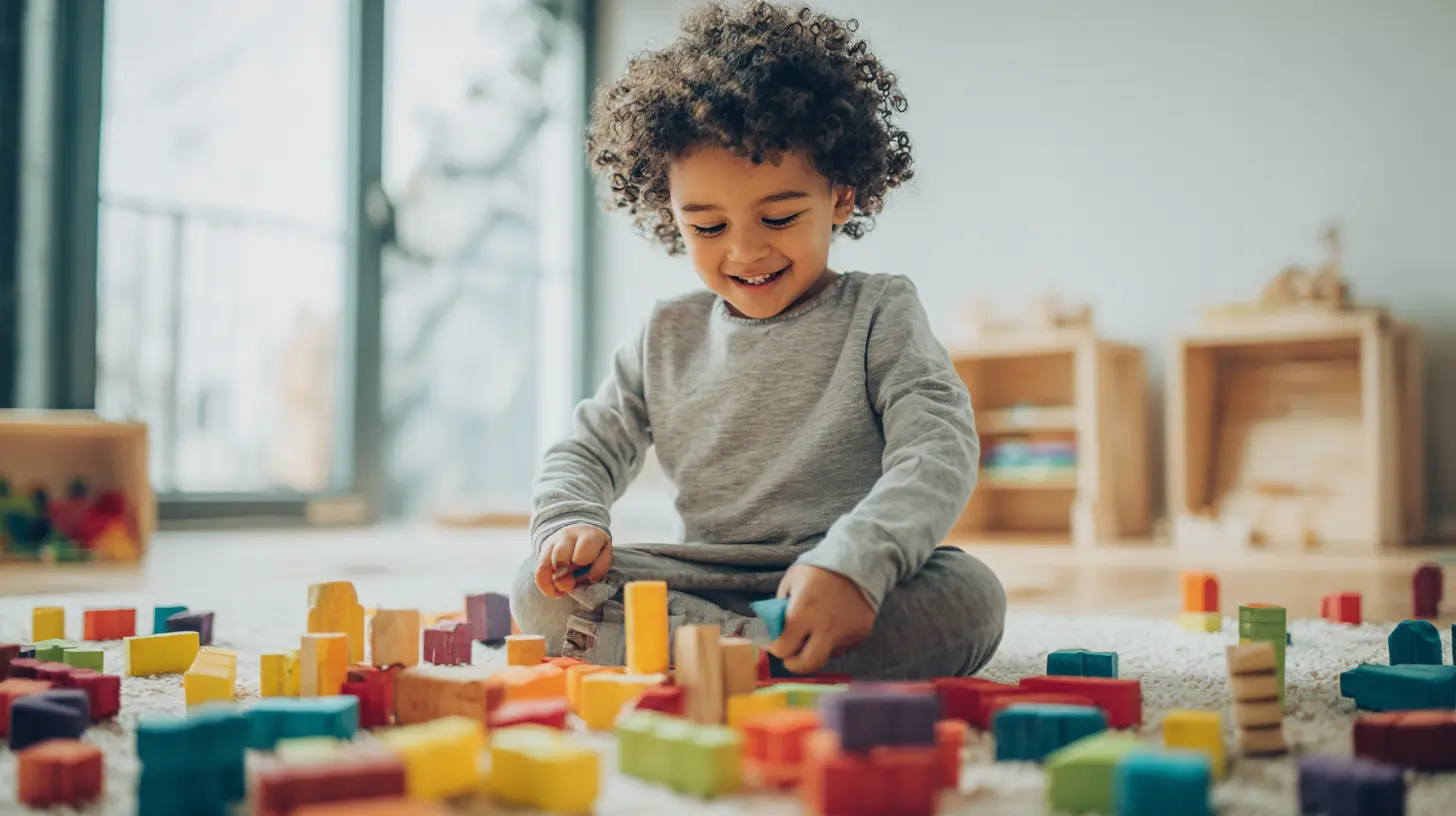
The first five years of life are a period of rapid neural development. Synapses form at an astonishing rate, and the brain is highly plastic. This means that early experiences literally shape the architecture of the child's mind. If you pay attention to how your child learns from ages two to six, you can build on their natural strengths while gently strengthening weaker areas. Waiting until school starts is not too late, but it is a missed opportunity.Consider a toddler who loves to touch everything. They grab leaves, squeeze playdough, and turn every object over in their hands. If you label this as "messy" or "distracted," you might discourage a core learning pathway. Instead, recognize that this child processes the world through tactile input. Give them textured books, let them help with cooking, and let them trace letters in sand before they hold a pencil. This is not just play. It is neural wiring.
On the other hand, a preschooler who asks "why" constantly is showing a verbal and logical preference. They are not being annoying. They are building causal chains in their mind. Answering with patience and asking follow-up questions strengthens their ability to reason. Ignoring them or telling them to be quiet teaches them that curiosity is unwelcome. That lesson is hard to undo.
The real value of early identification is not about labeling. It is about matching your teaching methods to their natural receptivity so that learning feels like success, not struggle. When a child experiences early wins, they develop a sense of competence. That sense carries into every future subject, even ones that do not come naturally.
The Four Main Learning Preferences and How to Spot Them
Visual Learners
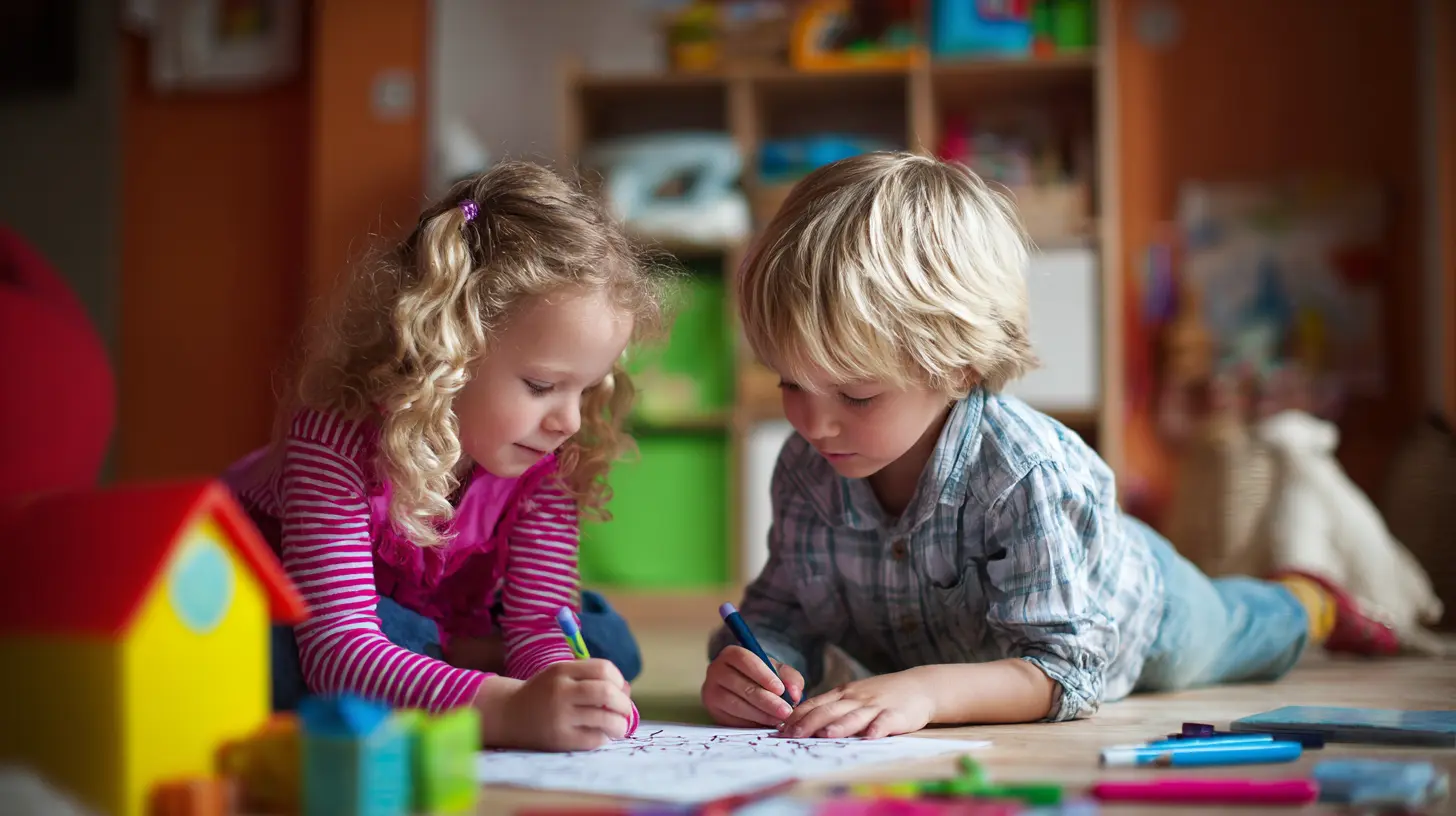
Visual learners think in pictures. They remember faces better than names. They notice colors, shapes, and spatial arrangements. They often love drawing, puzzles, and building toys. When you read a story, they might close their eyes to picture the scene. When they start to write, they may prefer to draw a picture first and then add words.Signs in a young child:
- They watch your face intently when you speak.
- They can find hidden objects in a picture book faster than you can.
- They enjoy sorting objects by color or size.
- They remember where things are placed in the house.
How to support them:
- Use picture schedules for daily routines.
- Draw diagrams for simple concepts, like a circle for the sun and a line for the ground.
- Provide coloring books, pattern blocks, and visual memory games.
- When explaining a rule, show them a picture of the rule, like a drawing of a child brushing teeth.
The trade-off: Visual learners can become overly dependent on seeing things. When a teacher talks for a long time without visuals, they may zone out. Start early by giving them audio stories and asking them to describe what they heard without any pictures. This builds their auditory pathway.
Auditory Learners
Auditory learners learn through sound. They love music, rhymes, and conversations. They may talk to themselves while playing. They remember song lyrics after one listen. They often ask you to read the same book repeatedly because they are absorbing the rhythm and the sounds of the words.Signs in a young child:
- They hum or sing while playing.
- They prefer being read to over looking at pictures.
- They repeat phrases they hear and mimic your tone of voice.
- They respond well to verbal instructions, sometimes without needing a demonstration.
How to support them:
- Use songs to teach routines, like cleaning up or getting dressed.
- Record yourself reading a story and let them listen while playing.
- Clap out syllables in words to build phonemic awareness.
- Talk through steps out loud, like "First we put on socks, then shoes."
The trade-off: Auditory learners can struggle with quiet, visual tasks like worksheets. They may need to whisper to themselves while working. Do not silence them. Instead, let them use a "private voice" while they work. Also, expose them to visual puzzles and mazes to build their visual-spatial skills.
Kinesthetic Learners
Kinesthetic learners need to move. They learn by doing, touching, and experiencing. They are often labeled as "hyperactive" but they simply have a high need for physical engagement. They are the kids who cannot sit still during circle time but can build a complex fort for hours.Signs in a young child:
- They are constantly in motion, even while eating.
- They need to hold objects while listening to a story.
- They enjoy climbing, jumping, and rough-and-tumble play.
- They learn a new skill by trying it immediately, not by watching first.
How to support them:
- Use action verbs in instructions, like "run to the door" or "stomp like a dinosaur."
- Give them a fidget toy or a small object to hold during quiet time.
- Turn math into movement, like counting steps or jumping jacks.
- Use sidewalk chalk for letter practice instead of paper and pencil.
The trade-off: Kinesthetic learners often struggle in traditional school settings that demand stillness. The key is to teach them self-regulation, not to eliminate movement. Set clear boundaries: "You can wiggle in your chair, but you cannot stand up during story time." This gives them an acceptable outlet while teaching them classroom norms.
Reading and Writing Learners
This preference usually emerges later, around age six or seven, because it requires literacy skills. But early signs can appear in children who love books, ask you to label objects, and show intense interest in letters and words. They may memorize the alphabet early and pretend to write.Signs in a young child:
- They point to words in a book while you read.
- They ask what a sign says or what a word means.
- They enjoy tracing letters and numbers.
- They prefer quiet activities like looking at books over playing with toys.
How to support them:
- Provide a print-rich environment with labeled objects.
- Let them see you reading and writing for real purposes, like making a grocery list.
- Encourage them to "write" their own stories with invented spelling.
- Use simple word games like matching letters to objects.
The trade-off: Reading and writing learners can become too reliant on text and miss out on hands-on or social learning. They may avoid group activities or physical play. Encourage them to draw, build, and act out stories to balance their preference.

The Sequential versus Holistic Processing Dimension
Sensory preference is only half the picture. The other half is how a child organizes information. Sequential learners like order, steps, and predictable routines. They need to know what comes next. They are the children who want the same bedtime routine every night and notice if you skip a step. Holistic learners see the big picture first. They want to know why they are doing something before they do it. They may jump into a task without reading instructions and figure it out as they go.Sequential learners benefit from checklists, step-by-step instructions, and clear expectations. They thrive with routines and may become anxious with sudden changes. Support them by explaining schedules and preparing them for transitions.
Holistic learners benefit from context and meaning. They need to understand the purpose of a lesson. If you tell a holistic child to practice writing the letter A, they may resist. But if you say, "Let's write a note to Grandma," they will suddenly care. They often make intuitive leaps and see connections that others miss. Their weakness is skipping steps and making careless errors.
Most children are a mix, but one tendency usually dominates. The best approach is to teach using their dominant processing style while gently pushing them to practice the other. A sequential child should occasionally be allowed to plan a day without a schedule. A holistic child should be asked to retell a story in order, step by step.
Common Mistakes Parents Make
The first mistake is trying to force a learning style that is not natural. If your child is kinesthetic, sitting them at a desk with worksheets for an hour will not make them more visual. It will make them hate learning. Instead, adapt the worksheet into a movement game.The second mistake is using learning style as an excuse. "He is not a reader, he is a hands-on learner" might be true, but it does not mean he should avoid books. It means you need to find ways to make reading more physical, like using magnetic letters or acting out the story.
The third mistake is ignoring the context. A child might prefer visual learning for math but auditory learning for music. Do not assume one style applies everywhere. Observe them in different situations and adjust accordingly.
The fourth mistake is comparing your child to siblings or peers. Learning styles are not better or worse. A child who learns slowly through reading may actually retain information longer than a fast visual learner. Speed is not the same as depth.
Practical Strategies for the Home Environment
Create a Multi-Sensory Learning Space
Do not set up a single desk with a single chair and expect that to work for everything. Have a low table for drawing, a comfortable rug for listening, and an open floor area for movement. Rotate materials so they stay fresh. Offer sensory bins with rice, beans, or sand for tactile exploration. Keep headphones with audio stories available. The goal is to let the child choose the mode that fits the task.Use the "Preview, Do, Review" Method
Before any activity, preview it with the child in their preferred style. If they are visual, show them a picture of the finished project. If they are auditory, explain the steps out loud. If they are kinesthetic, give them a small sample to touch. Then let them do the activity. Afterward, review it in a different style. If they learned visually, ask them to tell you about it. If they learned by doing, ask them to draw it. This builds flexibility.Teach the Same Content in Multiple Ways
Pick a simple concept, like the number five. For a visual child, show five dots on a card. For an auditory child, clap five times and count out loud. For a kinesthetic child, jump five times. For a reading child, write the word "five" and trace it. Do not do all of these at once. Do one per day. This reinforces the concept through different neural pathways, making the memory stronger.Adjust Homework and Chores
If your child resists chores, connect the chore to their learning style. A visual child can sort laundry by color. An auditory child can listen to a song while folding. A kinesthetic child can sweep or vacuum. A reading child can write the shopping list. Chores become learning opportunities, and learning becomes less of a fight.When to Push and When to Accommodate
There is a fine line between honoring a learning style and enabling a weakness. If a child refuses to read because they prefer audio, do not eliminate reading. Instead, use audiobooks while following along with the printed text. This pairs the strength with the challenge. Similarly, if a child can only focus with constant movement, do not allow them to run around during a lesson. Give them a small outlet, like a wobble cushion or a foot tap, but keep them engaged with the task.The rule of thumb is this: Accommodate the input style, but push the processing style. Let a visual child see the math problem, but make them explain the solution out loud. Let a kinesthetic child build the model, but make them write one sentence about what they learned. This ensures they develop a full set of skills rather than a narrow comfort zone.
The Role of the School and How to Advocate for Your Child
Schools often have a default teaching style that is visual and auditory, with a heavy emphasis on reading and writing. This works well for some children and poorly for others. You cannot change the whole school system, but you can advocate for your child in specific ways.At the start of the school year, talk to the teacher about your child's preferences. Do not say "my child is a kinesthetic learner" as a label. Instead, say "my child focuses better when they can move a little while working. Could they use a fidget or stand at the back?" This is a reasonable request that most teachers will accommodate.
Ask about the format of instruction. If the teacher uses a lot of worksheets, ask if there are alternative ways for your child to show learning, such as oral responses or building a model. Many teachers are open to differentiation if you frame it as a collaboration, not a demand.
Also, watch for signs of frustration. If your child suddenly hates school, it may not be the content. It may be the mismatch between their learning style and the teaching method. A child who loved learning at home can become discouraged in a rigid classroom. Address this early, before it becomes a fixed mindset.
The Myth of the "Balanced Learner"
Some parents want their child to be equally good at all learning styles. That is not realistic. Most people have clear preferences, and that is fine. The goal is not to create a perfectly balanced learner. The goal is to create a flexible learner who can use different strategies when needed.A child who is strongly visual may always prefer diagrams. But they can still learn to listen to podcasts, take notes by hand, and explain ideas verbally. They will not love it, but they will be able to do it. That is enough.
Do not force hours of practice in a disliked mode. Instead, use short, low-stakes exposures. A five-minute auditory exercise followed by a fun visual activity is more effective than a thirty-minute lecture that produces tears.
Real-World Example: The Case of Two Siblings
Consider two siblings in the same family. The older one, Maya, is a visual and sequential learner. She loves schedules, charts, and step-by-step instructions. She learned to read early and prefers quiet, structured activities. Her younger brother, Leo, is kinesthetic and holistic. He cannot sit still, hates instructions, and learns by taking things apart. The parents initially tried to treat them the same, sitting them down for the same worksheets. It was a disaster. Maya thrived, Leo rebelled.The change came when the parents stopped trying to make Leo fit Maya's mold. They gave Leo a balance bike instead of a tricycle. They let him build with blocks while listening to stories. They turned math into a scavenger hunt. They stopped forcing him to sit for dinner and let him stand at the table. Within a month, Leo's resistance faded. He was not a "problem child." He was a child who needed a different approach.
The lesson is not that one style is better. It is that the match matters. The same content can be taught in multiple ways, and the child's willingness to engage depends on the match.
Looking Ahead: How Learning Styles Evolve
As children grow, their learning styles can shift. A toddler who was highly kinesthetic might become more visual in elementary school. A child who loved auditory learning might develop strong reading skills later. Do not assume that the style you observe at age three is permanent.Reassess every six months or so. Watch how they approach new tasks. Ask them what helps them focus. Even a four-year-old can say "I like it when you show me" or "I like to do it myself." Their answers matter.
Also, consider the task itself. Learning to tie shoes is kinesthetic by nature. Learning to recognize letters is visual. Learning to follow a rhythm is auditory. Some subjects naturally favor certain styles. A child who is not naturally kinesthetic will still need to practice handwriting, which is a motor skill. The style is a preference, not a destiny.
The Bottom Line
Supporting your child's learning style from the start is not about giving them an easy path. It is about giving them the right tools and the confidence to use them. Observe without judging. Adapt without overprotecting. Push without breaking. And always remember that your child is more than a label. They are a complex, changing, and capable person. Your role is to be their first and best teacher, not by having all the answers, but by paying attention to how they learn and responding with intention.Start today. Watch your child for ten minutes during free play. What do they choose? How do they approach a problem? What frustrates them? What excites them? The answers are the starting point. The rest is a journey of small adjustments, patient observation, and the quiet confidence that comes from knowing you are on their side.
all images in this post were generated using AI tools
Category:
Early Childhood EducationAuthor:

Austin Wilcox
Discussion
rate this article
1 comments
Logan Pacheco
Every child is unique. Embrace their learning style and watch them thrive. Don't box them in.
September 2, 2026 at 4:54 PM