Teaching Children the Art of Apologizing
15 August 2026
There is a moment every parent knows well. Your child snatches a toy from a playmate. The playmate cries. You march over, put a hand on your child's shoulder, and say the words that have echoed through generations of playgrounds: "Say you're sorry."
And your child mumbles "sorry" without looking up, then immediately tries to grab the toy again.
That hollow, robotic apology is not really an apology. It is a compliance script. And if we keep using it, we teach our children that saying sorry is a magic word that erases consequences, not a meaningful act of repair. The art of apologizing is one of the most valuable social skills a person can carry into adulthood, yet most of us were never formally taught it. We were just told to do it, usually under duress, and we passed that same shallow instruction down to our kids.
This article is about doing better. Not perfect, just better. Because teaching a child to apologize well is messy, slow, and often feels like you are making no progress at all. Then one day, out of nowhere, your kid says something like "I'm sorry I yelled at you. That was not fair. Can I get you a glass of water?" and you realize the work was worth it.

Why "Say Sorry" Fails
The biggest mistake parents make is treating the apology as a punishment or a chore. When you force a child to apologize on command, you are training them to perform a social ritual without understanding its purpose. The child learns that "sorry" is a way to escape an uncomfortable situation, not a way to take responsibility.Think about how it feels when an adult gives you a forced apology. Someone cuts you off in traffic and waves a hand without looking. A coworker says "sorry, but" and then justifies their behavior. You do not feel better. You feel dismissed. Children feel the same way when they are on the receiving end of a scripted apology from a sibling or friend. They know it is fake. They just do not have the words to say so.
The deeper problem is that forced apologies do not build empathy. Empathy is the ability to imagine how someone else feels. When we demand an apology, we are asking the child to focus on their own discomfort, the shame of being caught, the frustration of being interrupted. That is the opposite of empathy. The child is thinking about themselves, not the person they hurt.
There is also a timing issue. Young children, especially those under six, often do not have the cognitive ability to understand another person's perspective in the heat of the moment. Their brains are still developing the theory of mind, the understanding that other people have thoughts and feelings different from their own. Asking a three-year-old to genuinely feel remorse while they are still upset is asking for something they cannot deliver.
That does not mean we should skip apologies entirely for young children. It means we need to adjust our expectations and our approach.

The Anatomy of a Real Apology
Before you can teach your child to apologize, you need to know what a real apology looks like. Most adults are terrible at this, so it is worth breaking down the components.A genuine apology has three parts. First, you name what you did. Second, you acknowledge the impact it had on the other person. Third, you make a commitment to do better or take action to repair the harm.
Here is what that sounds like in practice. Instead of "sorry," a child might say "I am sorry I pushed you off the swing. That must have hurt and scared you. Next time I will wait my turn."
That is a complete apology. It names the action, acknowledges the feeling, and offers a plan for the future. It is not easy for a child to produce this on their own. That is why they need coaching, not commands.
The order matters too. Naming the action comes first because it forces the child to own what they did. "I am sorry" by itself is vague. It could mean "I am sorry I got caught" or "I am sorry you are crying." Adding the specific action removes the ambiguity.
Acknowledging impact is the empathy piece. This is where the child practices putting themselves in someone else's shoes. You can help by asking questions like "How do you think she felt when you took her toy?" or "What do you think it felt like when you said that mean thing?"
The repair piece is often forgotten. An apology without a plan for change is just a promise. Children need to learn that apologies are followed by different behavior. If your child apologizes for hitting and then hits again five minutes later, the apology was empty. That is not a reason to punish the apology. It is a reason to work on impulse control separately.
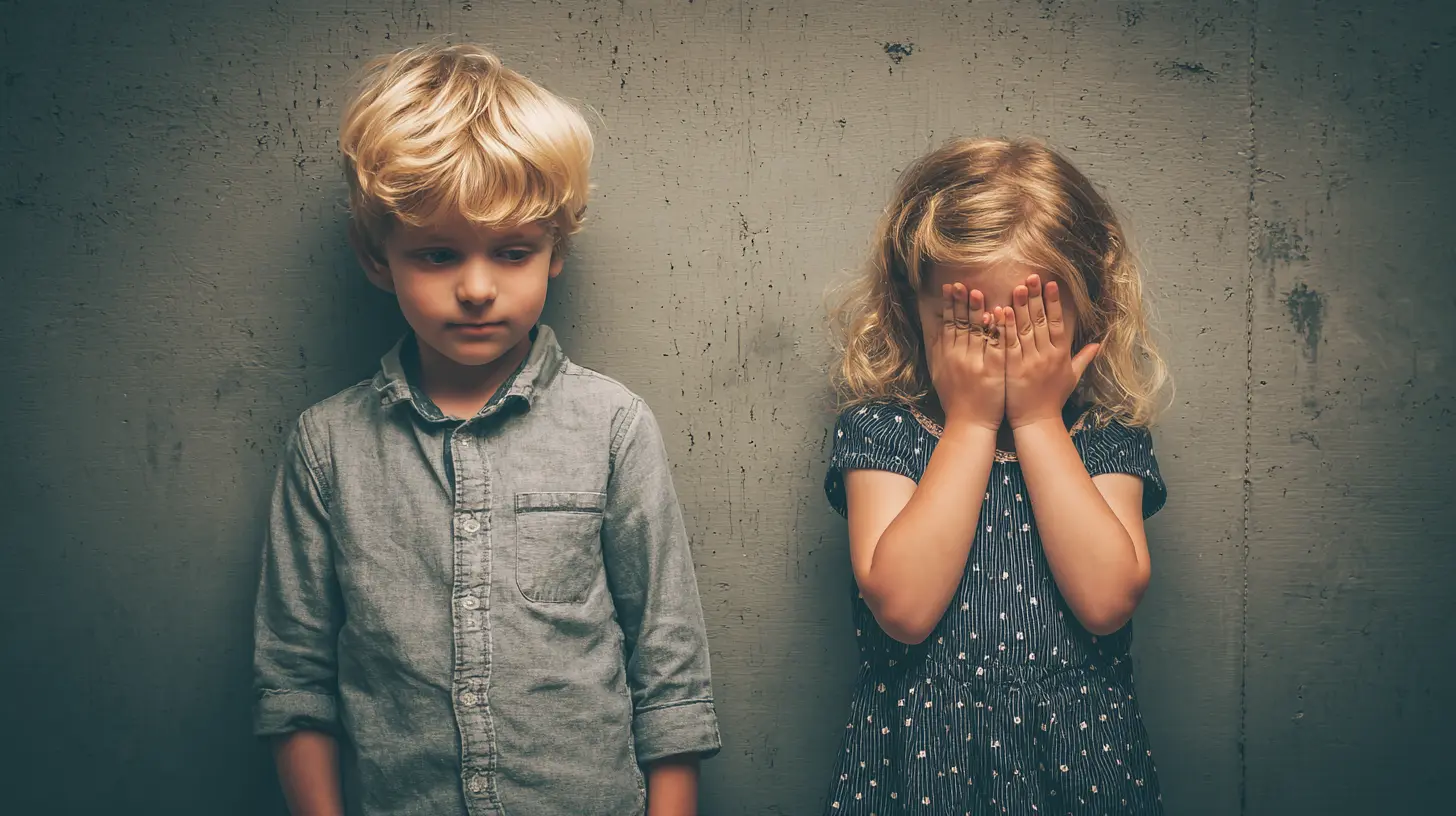
Age-Appropriate Apology Training
The way you teach apologizing has to match your child's developmental stage. A two-year-old and a twelve-year-old are completely different creatures, and treating them the same way will fail.Toddlers and Preschoolers (Ages 2-5)
At this age, children are egocentric. That is not a moral failing. It is brain development. They literally cannot fully understand that another person has a separate inner world. So your goal is not to extract a heartfelt apology. Your goal is to build the habit of noticing when someone is upset.Start with modeling. When you make a mistake, apologize to your child out loud. "I am sorry I snapped at you. I was frustrated, but it was not okay to yell." This shows your child what an apology sounds like and normalizes the act of admitting fault.
When your child hurts someone, do not force the words. Instead, narrate what happened and guide them toward repair. "You took Maya's doll. She is crying. She looks sad. What can we do to help her feel better?" Often a young child will offer a toy back or give a hug. That is a form of apology, even if the word "sorry" is not spoken.
You can also use the word "sorry" yourself on their behalf. "I am sorry you are sad, Maya. Leo is still learning how to share." This models the language while taking the pressure off your child.
One practical technique is the "apology sandwich." Put the apology between two concrete actions. "First, give the toy back. Then say sorry. Then ask if she wants to play with you." This gives the child a sequence to follow, which is easier for a young brain than abstract reasoning.
Early Elementary (Ages 6-9)
This is the golden age for teaching apologies. Children at this age are developing stronger empathy and can understand cause and effect. They also care deeply about fairness and rules, which gives you something to work with.Start having conversations about apologies after the heat of the moment has passed. If your child had a conflict at school, wait until you are both calm, maybe at dinner or before bed. Ask open-ended questions: "What happened at recess today?" "How did that feel for you?" "How do you think the other kid felt?"
This is also the age to introduce the concept of a "redo." If your child says something rude or acts out, give them a chance to do it over. "That came out harsh. Can you try again in a kinder way?" This is not a punishment. It is practice. The child gets to experience what it feels like to correct themselves, which is a powerful lesson.
Role-playing is incredibly effective at this age. Set up scenarios where your child practices apologizing. You play the wronged party. Let them practice saying sorry in different tones of voice, with different words. Make it silly sometimes. Laughter lowers the stakes and helps the lesson stick.
One thing to watch out for is the "but" apology. "I am sorry I hit you, but you started it." This is a common trap. Children (and adults) use "but" to justify their behavior, which cancels out the apology. Teach your child that a real apology does not include excuses. If they need to explain themselves, they can do that separately, before or after the apology, but not inside it.
Tweens and Teens (Ages 10+)
By this age, your child should have the basic mechanics down. The challenge now is helping them apologize in more complex social situations, where pride, peer pressure, and fear of looking weak get in the way.Teenagers often resist apologizing because they confuse admitting fault with losing status. They think saying sorry makes them look bad. Your job is to reframe apology as a sign of strength, not weakness. Point out that it takes more courage to say "I was wrong" than to double down.
This is also the age where you need to respect their autonomy. If a teenager feels forced to apologize, they will do it with maximum sarcasm and minimum sincerity. Instead of demanding an apology, ask them what they think the right thing to do is. "You and your sister had a fight. What do you think needs to happen to make things right between you two?" Sometimes they will surprise you with a thoughtful answer.
Another important lesson for this age is knowing when not to apologize. There is a difference between apologizing for something you did and apologizing for someone else's reaction. If your teen says "I am sorry you got upset" that is not an apology. It is a subtle blame-shift. Teach them to take responsibility for their actions, not for the other person's feelings.
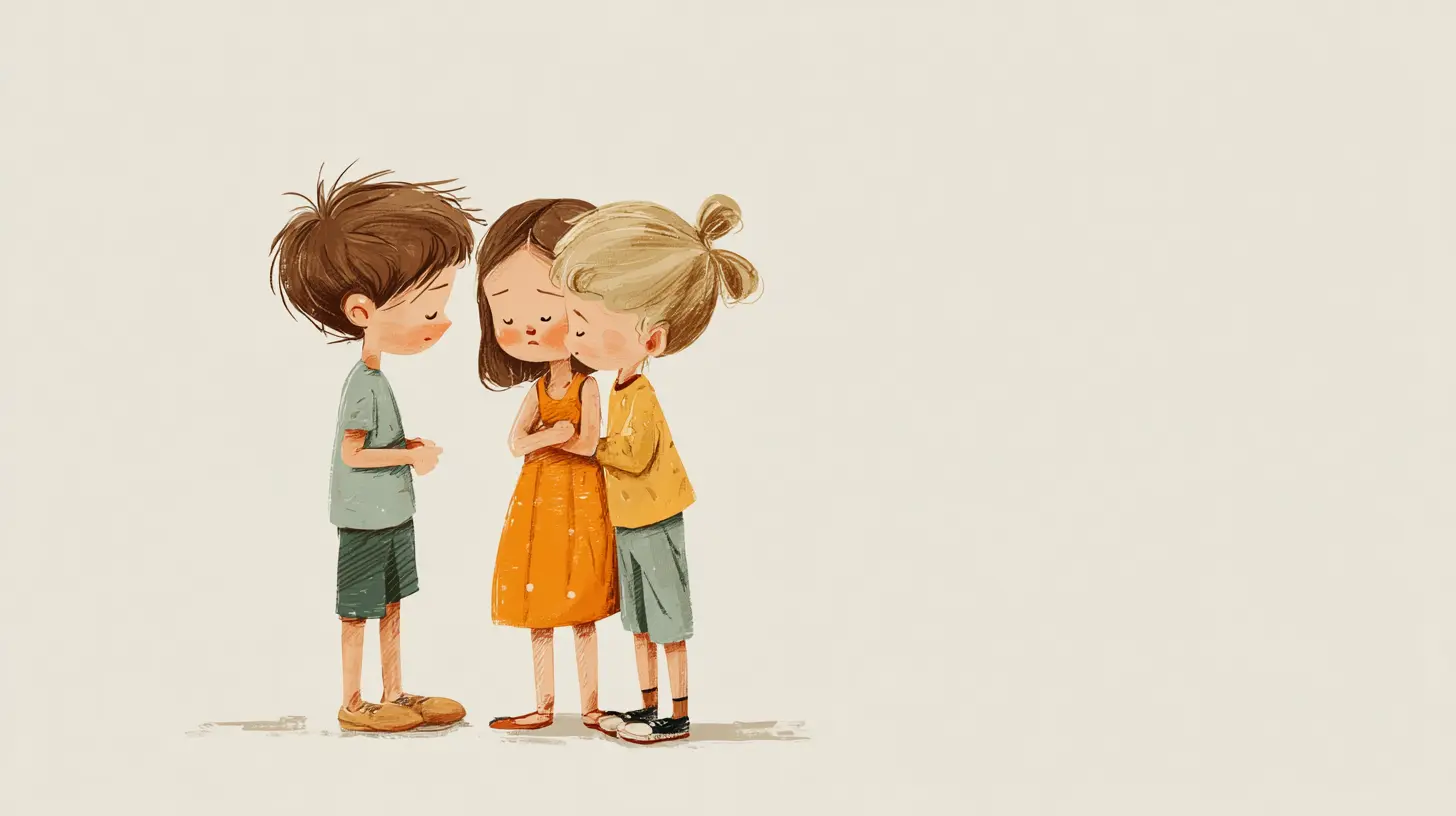
Common Mistakes Parents Make
Even well-meaning parents sabotage their own efforts. Here are the most common mistakes I see, along with better alternatives.Mistake 1: Apologizing for Your Child
When you say "I am sorry he hit you" on behalf of your child, you are taking away their responsibility. The child learns that Mom or Dad will handle it, so they do not need to engage. Instead, let your child do the apologizing, even if it is clumsy. You can be present for support, but the words should be theirs.Mistake 2: Using Apology as a Weapon
Some parents use "say sorry" as a way to win an argument or assert authority. "You will apologize right now or you are going to your room." This turns apology into a power struggle. The child learns to say sorry to avoid punishment, not because they understand the harm. The result is a child who lies through their teeth just to escape.Mistake 3: Accepting Any Apology
When your child mumbles a quick "sorry" and moves on, it is tempting to let it go because you are tired. But accepting a low-effort apology teaches your child that low effort is enough. Gently push back. "That did not sound like you meant it. Can you try again and look me in the eyes?" You do not need to be harsh, just consistent.Mistake 4: Forgetting to Apologize to Your Child
This is the big one. Parents often expect children to apologize to them but never model apologizing to the child. If you yell at your kid for spilling milk, and then realize you overreacted, say sorry. Out loud. Without excuses. "I am sorry I yelled. That was too loud and it was not fair. I was stressed, but that is not your fault." This is the single most powerful lesson you can give. Your child learns that apologies are for everyone, not just kids.Mistake 5: Confusing Apology with Punishment
An apology is not a punishment. If your child hits a sibling, they might need to apologize and also face a consequence, like losing screen time. But the apology should not be the consequence. It should be a separate act of repair. When you use apology as punishment, the child associates saying sorry with shame and resentment.The Role of Repair and Restitution
A truly skilled apologizer knows that words are not always enough. Sometimes you need to do something to make up for the harm. This is called restitution, and it is a powerful tool for children.If your child breaks a friend's toy, the apology is the first step. The second step is helping to fix or replace the toy. If your child says something mean to a sibling, they might need to do a chore for that sibling or spend extra time playing with them. This is not about buying forgiveness. It is about demonstrating commitment through action.
Restitution works because it forces the child to spend time and effort on the person they hurt. That effort builds empathy in a way that words alone cannot. It also gives the wronged person a tangible sign that the apology is sincere.
For young children, restitution can be very simple. "You knocked over her block tower. Let's help her rebuild it." For older children, you can ask them to come up with their own restitution. "What do you think would make this right?" Sometimes they will suggest something more generous than you would have.
When Apologies Are Not Appropriate
not every conflict requires an apology. Sometimes a child is genuinely not at fault. If your child was defending themselves against a bully, they do not need to apologize for standing up. Forcing an apology in this situation teaches a terrible lesson: that being a victim means you must appease the aggressor.Similarly, if your child is being pressured to apologize for their feelings, that is wrong. Feeling angry or sad is not an offense. Acting on those feelings in harmful ways is. Make sure your child understands the difference between "I am sorry I felt angry" and "I am sorry I threw the book."
There are also situations where an apology is not safe. If your child is in a toxic friendship or being manipulated, they should not apologize just to keep the peace. Teaching your child to recognize when an apology would be used against them is an advanced skill, but an important one, especially for older kids and teens.
How to Handle the "I Don't Feel Sorry" Problem
Every parent hears this at some point: "I am not sorry. He deserved it." This is infuriating, but it is also an opportunity.First, validate the feeling. "You are angry because he took your stuff. That makes sense." Then separate the feeling from the action. "It is okay to be angry. It is not okay to hit. You can be sorry for the hitting even if you are not sorry for being angry."
This distinction is crucial. Apologizing does not mean you were wrong to feel a certain way. It means you are taking responsibility for your behavior. Once a child understands this, they are much more willing to apologize, because they do not feel like they are betraying their own emotions.
Another approach is to ask "What are you sorry about?" If the child says "I am sorry I got in trouble," you know they are focused on the consequence, not the harm. Gently redirect. "I hear that. But are you sorry for what you did to your brother?" Sometimes the honest answer is no, and that is okay. That is a starting point for a conversation about why the action was harmful, not a reason to force a fake apology.
The Long Game
Teaching apologies is not a one-time lesson. It is a years-long process that will involve countless repetitions, failures, and do-overs. Your child will say sorry without meaning it. They will forget to apologize. They will give terrible apologies that make things worse. That is normal. That is how learning works.The goal is not to raise a child who always apologizes perfectly. The goal is to raise a child who understands that relationships require repair, that admitting fault is a strength, and that words have the power to heal or harm. If you can do that, you have given them a gift that will serve them in every friendship, every job, every marriage, and every moment of their adult life.
One last thought. When your child does give a genuine apology, acknowledge it. Not with a lecture, but with simple recognition. "That was a really good apology. I could tell you meant it." That positive reinforcement is worth more than any punishment or nagging.
And when you mess up, which you will, apologize to your child. They will forgive you. That is what love does. And that is the real lesson behind all of this: apologies are not about being perfect. They are about being brave enough to say "I was wrong" and then trying again.
all images in this post were generated using AI tools
Category:
Parenting And Social SkillsAuthor:
Austin Wilcox
Discussion
rate this article
1 comments
Arianth Alexander
Apologizing is a superpower that kids can master with a little guidance. It teaches empathy and builds strong connections. When you model sincerity and kindness, your little ones will follow suit. So keep it light, make it fun, and watch them blossom into thoughtful communicators. You've got this!
August 15, 2026 at 2:25 PM
Austin Wilcox
Absolutely! Modeling sincerity makes a huge difference. Kids learn best when we keep it fun and relatable. Thanks for sharing this insight!