The Intersection of Parenting and Civic Engagement
1 September 2026
There is a moment that most parents recognize, even if they cannot pinpoint exactly when it happens. You are driving your child to school, or watching them eat cereal, or helping with homework, and suddenly they ask a question that has no simple answer. Why is that playground closed? Why did that man on the corner hold a sign? Why do people argue so much about the president? In that instant, you realize that parenting is no longer just about keeping a small human alive and reasonably happy. It has become something larger. You are now responsible for shaping a person who will live in a community, a country, and a world that will demand things of them.
The intersection of parenting and civic engagement is not a niche topic. It is the quiet engine of democracy. Every habit you model, every conversation you tolerate, every time you choose to explain instead of dismiss, you are teaching your child what it means to be a citizen. This is not about forcing your child to attend city council meetings or memorize the Constitution before they turn ten. It is about recognizing that civic life is not a separate sphere that you enter as an adult. It is the texture of daily existence, and your children are watching how you navigate it.

Why Parenting Is Inherently Civic
Consider what you do every day as a parent. You negotiate. You listen to opposing viewpoints, even when those viewpoints come from a four-year-old who is absolutely convinced that wearing a winter coat is a form of tyranny. You enforce rules that exist for the common good, like holding hands in parking lots or not hitting your sibling. You explain why some things are fair and others are not. You decide, often without thinking, what values your household will prioritize: honesty, kindness, responsibility, courage.These are not just parenting tasks. They are the foundational skills of citizenship. A democracy does not survive because people read the news. It survives because people can hold conflicting ideas in their heads, compromise on shared goals, and extend basic respect to those they disagree with. You are practicing those skills every time you mediate a dispute over a toy or calmly explain why bedtime is non-negotiable. The question is whether you are doing it deliberately.
When you parent with civic awareness, you stop treating these moments as chores. You begin to see them as lessons in how to live with others. The child who learns to take turns on the swing is learning about equal access to public resources. The child who is asked to help clean up a shared space is learning about collective responsibility. The child who is allowed to argue a case for a later bedtime, within reason, is learning about persuasion and the limits of authority. None of this requires a lecture. It requires presence and intention.

Modeling Civic Behavior at Home
Children are remarkably poor listeners and remarkably sharp observers. They will forget every word you say about being a good neighbor, but they will remember how you treated the neighbor whose dog barked all night. They will notice if you thank the bus driver, if you pick up trash on a walk, if you vote and mention it casually, or if you complain about the government without ever doing anything about it.The home is the first public square. It is where children learn the difference between private wants and shared needs. If you want to raise a child who engages with civic life, start by making civic behavior visible and normal in your own life. That does not mean you have to become an activist or run for office. It means you should be willing to say things like "I am going to vote today because it is how we choose our leaders" or "I am going to help at the food bank because some families need a little extra support this month." You do not need to be grand. You need to be consistent.
There is a common mistake here, and it is worth naming. Many parents assume that civic engagement begins at the ballot box or in a protest march. But those are advanced forms of participation. The everyday forms are simpler: reading local news, attending a school board meeting, writing a letter to an elected official, volunteering at a library, or simply knowing the names of your neighbors. When your child sees you doing these things, they begin to understand that citizenship is not a spectator sport. It is a set of habits.
One practical approach is to make civic activities age-appropriate and collaborative. A five-year-old can help you drop off a donation at a shelter. An eight-year-old can help you write a thank-you note to a firefighter or a teacher. A ten-year-old can attend a town hall with you, with the understanding that they can leave if they get bored, and you will explain what happened afterward. The goal is not to make your child passionate about zoning laws. The goal is to make the act of participating feel ordinary, not exceptional.

Talking to Children About Politics and Current Events
This is where many parents freeze. Politics is messy. It involves anger, misinformation, and deeply held beliefs that can divide families. It is tempting to shield children from all of it until they are older. But that approach has a cost. Children hear things anyway, from classmates, from screens, from snippets of adult conversation. If you do not help them make sense of what they hear, they will make sense of it on their own, often with incomplete or distorted information.The key is not to avoid political topics but to approach them with a developmental lens. A young child does not need a detailed analysis of tax policy. They need to understand that people can disagree and still be good people. They need to know that in a democracy, differences are expected and managed through rules, voting, and conversation rather than through violence or silence.
Start with questions. Ask your child what they heard and what they think about it. Listen without correcting them immediately. This does two things. It tells you what is going on in their head, and it signals that their thoughts matter. Then you can offer a simple, honest framework. For example, if they ask about an election, you can say, "People vote for the person they think will make better decisions for the community. Different people think different things are important. That is why we have elections." That is enough for a six-year-old.
As children get older, you can go deeper. You can discuss why people hold different views, what evidence they use, and what values are at stake. You can admit uncertainty. You can say, "I am not sure about that. Let us look it up together." This models intellectual humility, which is a civic virtue in its own right.
There is a trap that parents fall into, especially in polarized times. They treat their own political views as self-evidently correct and assume that their job is to transmit those views to their children. That is not entirely wrong, but it is incomplete. If you only teach your child what to think, you have not prepared them for the world. You have only prepared them to agree with you. A better approach is to teach them how to think: how to ask questions, how to evaluate sources, how to recognize bias, and how to change their minds when presented with good reasons. That is a much harder task, and it is the one that matters.
Civic Engagement as a Family Activity
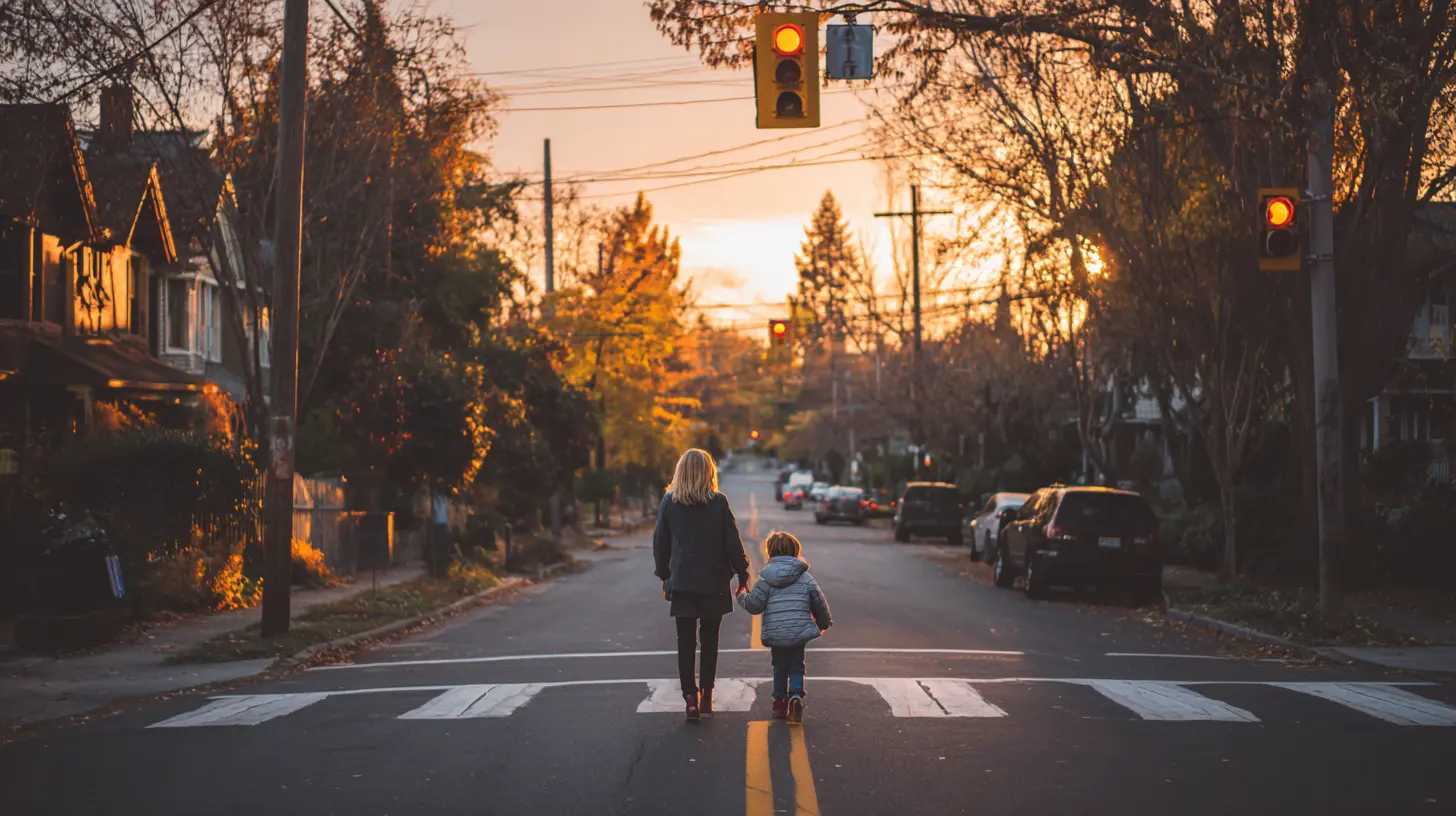
One of the most effective ways to integrate civic engagement into parenting is to treat it as something you do together rather than something you send your children to do. This shifts the dynamic from obligation to shared experience.Family volunteering is a natural starting point. But choose carefully. Not all volunteering is equally meaningful. Picking up trash in a park is good. Sorting donations at a food bank is good. But if you want your child to understand the root causes of hunger or homelessness, you need to combine the activity with conversation. Why do people need food banks? What could be done so that fewer people need them? These questions turn a service project into a civic lesson.
Another option is to attend local government meetings together. Many cities and towns have public comment periods, and children are often welcome. The first time you go, keep it short. Sit in the back. Let your child draw or read. Afterward, ask them what they noticed. Did people seem angry? What were they angry about? Did the council members listen? This is not about boring your child into civic duty. It is about showing them that governance is a human activity, with all the messiness that implies.
You can also create civic rituals at home. For example, you might have a weekly family meeting where everyone gets a turn to bring up a problem and propose a solution. This is a microcosm of civic life. It teaches speaking, listening, and compromise. You can extend this to real-world issues by letting your child choose a cause to learn about for a month. They might research why bees are declining, or how a local library gets funding, or why some neighborhoods have more trees than others. The topic does not matter as much as the process: research, discussion, and a small action.
The Role of Schools and Extracurriculars
Schools are often the first formal civic institution a child encounters. They have rules, elected student councils, and curricula that include history and government. But parents should not assume that school alone will create an engaged citizen. Schools are constrained by testing requirements, funding, and the political sensitivities of the community. Civic education, when it exists, is often focused on facts and dates rather than on skills and dispositions.This means parents need to complement what happens in school. If your child is learning about the three branches of government, you can ask them to identify each branch in the news. If they are studying a historical event, you can ask them to consider what ordinary people did during that time, not just the famous leaders. You can also advocate for better civic education at your child's school. Attend school board meetings. Ask what the curriculum covers. Suggest that students practice deliberative discussion rather than just memorizing facts.
Extracurricular activities also play a role. Team sports teach cooperation and respect for rules. Debate clubs teach argumentation and listening. Student government teaches the difficulty of representing diverse interests. Scouting programs often include service components. Even a part-time job, for older teens, teaches the relationship between work, responsibility, and community. The question is whether you, as a parent, help your child reflect on these experiences. A child who plays soccer for years may never think about civic life. But if you ask them, "What did you learn about working with people who are different from you?" or "How did the team decide who gets to be captain?" you have turned a sport into a civic lesson.
Common Mistakes and Misconceptions
There are several errors that well-meaning parents make when trying to raise engaged citizens. The first is assuming that civic engagement means being political in a partisan sense. This is a mistake because it makes citizenship feel like a team sport. You do not need to be a Democrat or a Republican to be a good citizen. You need to be informed, involved, and respectful. Partisanship is a choice; civic duty is a baseline.The second mistake is overloading children with information. A twelve-year-old does not need to understand the intricacies of the Electoral College or the history of filibusters. They need to understand that voting matters, that local government affects their daily lives, and that they can make a difference in small ways. If you push too much, they will tune out. If you make it boring, they will associate civic life with boredom.
The third mistake is being dishonest about complexity. Parents often want to present the world as clear and just. But the real world is full of gray areas. Policies have trade-offs. Good people support bad ideas, and bad people sometimes support good ones. If you always simplify, your child will be ill-prepared for the contradictions they will inevitably encounter. It is better to say, "This is complicated, and I do not have all the answers" than to offer a false certainty.
A fourth mistake is ignoring the emotional dimension. Civic engagement is not just about facts and actions. It is about feelings: hope, frustration, anger, compassion. When your child sees something unfair, they may feel outraged. That is a good sign. It means they care. Your job is not to suppress that feeling but to channel it into constructive action. Ask them what they would like to do about the unfairness. Help them think about realistic options. This is how passion becomes citizenship.
The Teenage Years and Beyond
As children become teenagers, they will start to form their own political identities. This can be difficult for parents, especially if those identities differ from their own. It is important to remember that this is normal and even healthy. A teenager who challenges your views is practicing the skills of citizenship. They are testing arguments, seeking independence, and trying to figure out who they are in relation to the world.The best thing you can do during this period is to keep the lines of communication open. Do not punish your teenager for disagreeing with you. Do not mock their idealism or their cynicism. Instead, ask questions. Why do they believe what they believe? What sources are they reading? What experiences have shaped their views? You might learn something. You might also find that your teenager is more thoughtful than you expected.
This is also the time to help your teenager take on more responsibility. Encourage them to register to vote when they are eligible, even if they are not enthusiastic about the options. Help them understand how to research candidates and ballot measures. If they are interested in a cause, help them find ways to get involved, whether that is through a local organization, an online campaign, or a summer program. The goal is not to push them into a specific direction but to support their initiative.
Practical Strategies for Busy Parents
You do not have to overhaul your life to raise an engaged citizen. Small, consistent actions are more effective than grand gestures. Here are some concrete strategies that fit into a normal routine.First, use the dinner table. Pick one night a week to discuss something that happened in your community or the world. Keep it brief and age-appropriate. Ask each family member to share one thing they are curious about. This builds a habit of paying attention.
Second, read together. This does not have to be political. Any book that involves characters facing moral dilemmas, communities in conflict, or people working together can spark civic conversations. Ask questions like "What would you have done?" or "Why do you think that character acted that way?"
Third, take advantage of local events. Many communities have festivals, farmers markets, library programs, and public hearings. Attending these events, even for a short time, reinforces the idea that public life is worth participating in. You do not have to stay for the entire city council meeting. Show up, say hello, and leave.
Fourth, talk about money and taxes in a simple way. Many children have no idea that public services like parks, schools, and roads are funded by taxes. Explaining this, even briefly, helps them understand that government is not an abstract concept. It is the way we pool resources to do things together.
Fifth, model repair. When you make a mistake in your community, whether that is being rude to a store clerk or failing to show up for a volunteer shift, apologize openly. Explain what you will do differently. This teaches that civic life is not about perfection but about accountability.
The Long View
Parenting is a long game, and civic engagement is part of that game. The child who learns to share, to listen, to question, and to serve is not just a well-behaved child. They are a person who will one day sit on a jury, vote in an election, attend a neighborhood meeting, or run for a local office. They will decide whether to speak up when they see injustice or stay quiet for comfort. They will shape the communities they live in, whether they intend to or not.You cannot control all of that. But you can influence it. Every conversation you have, every example you set, every time you choose to engage with the world rather than retreat from it, you are teaching your child something. The question is not whether you are teaching them about civic life. You are. The only question is what you are teaching.
So be intentional. Not perfect. Not always right. Just present. Show up for your child and for your community. The two are not separate. They are the same work, done in different rooms.
all images in this post were generated using AI tools
Category:
Parenting And CommunityAuthor:
Austin Wilcox
Discussion
rate this article
1 comments
Tamsin Baker
This article beautifully highlights how parenting shapes our responsibility to engage in our communities.
September 1, 2026 at 2:30 AM