Building a Sleep Routine for Babies in Multilingual Homes
22 September 2026
Parents raising bilingual or multilingual children often run into a specific kind of anxiety around bedtime. The worry usually sounds like this: "If my baby hears two or three languages all day, will that make sleep harder?" It is a fair question. Language exposure is stimulating. A household where one parent speaks Spanish, another speaks German, and a grandparent speaks English is a busy auditory environment. But the relationship between multilingualism and infant sleep is more nuanced than most parents assume, and the routine you build matters far more than the number of languages floating through your home.
This article breaks down what actually influences infant sleep in multilingual households, why certain common fears are overstated, and how to design a bedtime routine that supports both rest and language development without turning either into a battle.
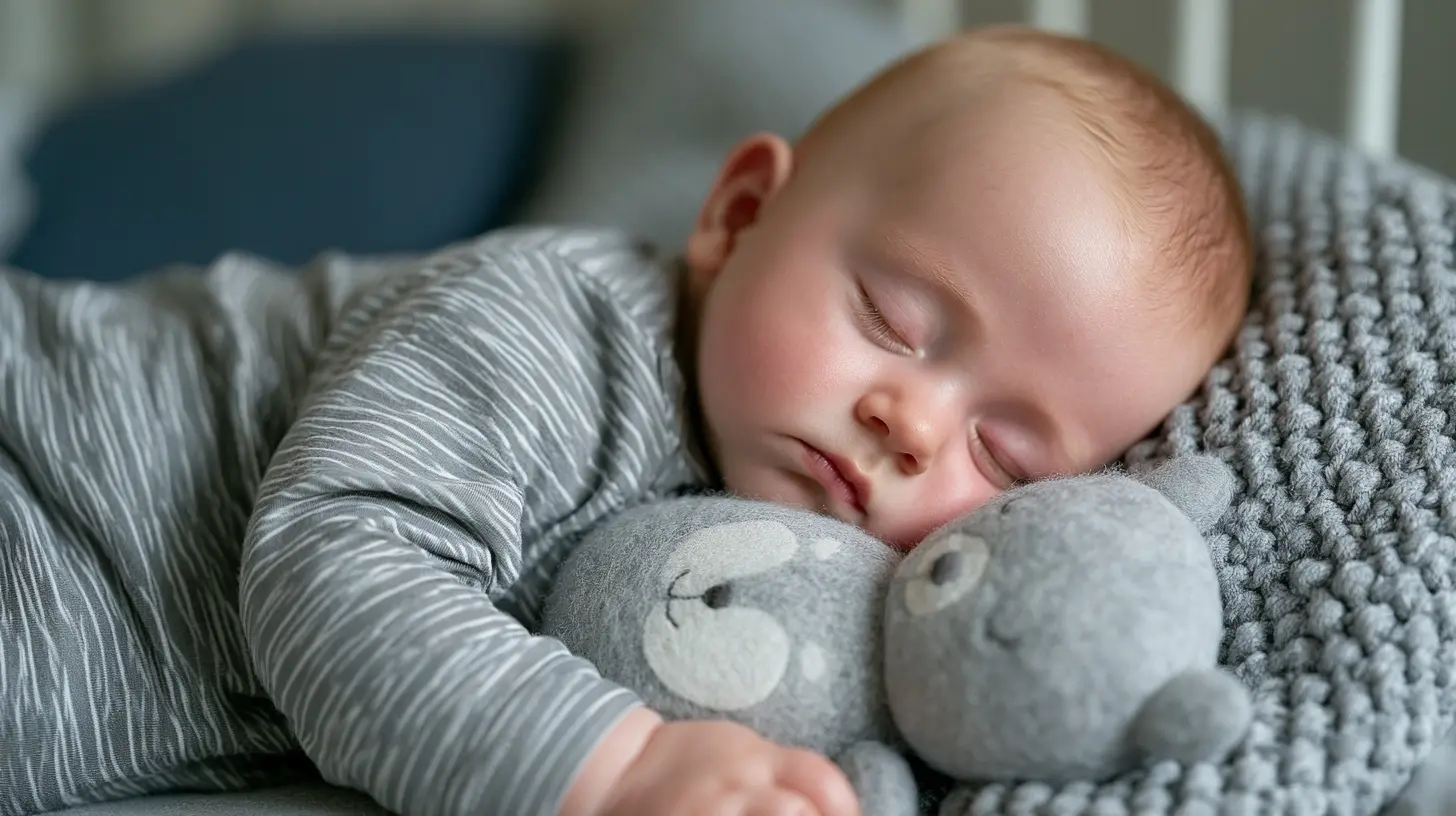
The Core Question: Does Multilingual Exposure Disrupt Sleep?
The short answer is no, not inherently. A richer language environment does not automatically produce a worse sleeper. What disrupts sleep is inconsistency, overstimulation at the wrong time, and a lack of predictable cues. Those problems exist in monolingual homes too.The more useful question is this: how do you sequence language exposure and sleep cues so they reinforce each other instead of competing?
Think of the infant brain as a pattern-detection machine. It is constantly sorting sounds, faces, and routines into categories. Sleep pressure builds through the day, and the brain learns to associate specific sequences with winding down. In a multilingual home, the sequence might include two languages, and that is fine, as long as the sequence itself stays stable.
The danger is not the languages. The danger is chaos: a different routine every night, unpredictable lighting, inconsistent bedtime, or a caregiver who tries to "tire the baby out" with vigorous play right before bed.

Why Multilingual Homes Sometimes Struggle With Sleep
Even though multilingualism is not the cause, there are real friction points that show up more often in these households. Understanding them helps you avoid blaming the wrong thing.Split Caregiving and Mismatched Routines
In many multilingual families, different adults handle different parts of the day. One parent does mornings, another does evenings, a nanny or grandparent fills the gap. Each adult may have a slightly different idea of what "bedtime" looks like. One sings, one reads, one rocks in silence.For an infant, this is not necessarily a problem. Babies can learn that different people do things differently. But the transition points can become confusing if there is no shared anchor. A consistent final cue, such as a specific song or a specific phrase in a specific language, helps the baby recognize that sleep is coming regardless of who is present.
The Stimulation Trap
Parents who want to maximize language exposure sometimes pack every waking moment with talking, singing, and labeling objects. This is generally good for language development. It becomes counterproductive when it continues right up to the moment of sleep.The reason is simple: language is cognitively demanding. When you narrate the room, ask questions, or introduce new words at 7:45 p.m., you are asking the infant brain to process novelty at the exact moment it needs to downshift. The fix is not less language. The fix is a clear boundary between "learning time" and "wind-down time."
Guilt and Overcorrection
Some parents feel pressure to compensate for the fact that their child will eventually speak a majority language more fluently than the heritage language. That guilt can lead to over-scheduling, over-talking, and a reluctance to simplify the bedtime routine. The result is a bedtime that serves the parent's language goals rather than the child's sleep needs. Sleep and language are both long games. Neither benefits from panic.
The Architecture of a Multilingual Bedtime Routine
A good routine is not a script. It is a structure with flexible parts. Here is how to think about building one.Anchor Cues Versus Language Cues
Separate your routine into two layers.Anchor cues are sensory and non-verbal: dimming lights, a warm bath, a sleep sack, white noise, a specific chair. These cues are language-independent. They work the same way every night and signal to the brain that sleep is approaching.
Language cues are verbal: a goodnight phrase, a lullaby, a short book. These carry the multilingual element.
The key insight is that anchor cues should be identical every night, while language cues can vary. This gives you the best of both worlds. The baby gets a stable physiological signal, and you still get to expose them to multiple languages.
The Order Matters
A workable sequence might look like this:1. Dim the lights and reduce noise (anchor)
2. Bath or wipe-down (anchor)
3. Feed, if still applicable (anchor)
4. One short book in one language (language)
5. A fixed goodnight phrase in each language the household uses (language)
6. Sleep sack, white noise, lights out (anchor)
Notice that the language elements are sandwiched between predictable physical cues. The baby does not need to understand the words to understand the sequence. The words become part of the ritual rather than the signal itself.
Why One Book Beats Three
It is tempting to read a book in each language to "cover all bases." For older toddlers, this can work. For infants and young toddlers, it usually backfires. Three books is three transitions, three chances for the baby to re-engage, and three opportunities for the routine to stretch past the point of usefulness.One book, rotated by night or by caregiver, is usually enough. If you want both languages represented, choose a bilingual book or alternate nights. The goal is a predictable ending, not maximum input.
Language Strategies and How They Interact With Sleep
Different families use different language strategies. Each has implications for how you structure bedtime.One Parent, One Language (OPOL)
In OPOL, each parent consistently speaks one language to the child. This is one of the most common approaches in multilingual homes, and it works well with sleep routines because it is predictable. The baby learns that Mom's voice means one language and Dad's voice means another.The sleep implication is straightforward: whoever puts the baby down uses their own language for the verbal cues. The anchor cues stay the same. This is probably the easiest strategy to align with a stable bedtime routine.
Minority Language at Home (mL@H)
Here, the family speaks a minority language at home and the child picks up the majority language outside. Bedtime is often the richest language window of the day, so parents may feel pressure to maximize it.The risk is over-stuffing the routine. A better approach is to accept that bedtime is not the primary language classroom. It is a connection ritual. The language exposure happens naturally through the goodnight phrase, the lullaby, and the book, without needing to be forced.
Time and Place (T&P)
Some families assign languages to specific times or places. For example, one language in the morning, another in the evening. This can work well with sleep because the bedtime language becomes a reliable cue. The trade-off is rigidity. If a caregiver who does not speak the "evening language" handles bedtime, the system breaks.If you use T&P, build in a fallback. The anchor cues still do the heavy lifting, so a language mismatch on a given night is not catastrophic.
Common Mistakes and Misconceptions
Misconception: Two Languages Confuse the Baby and Cause Night Waking
Night waking in infants is developmentally normal. It is driven by hunger, teething, illness, sleep associations, and neurological maturation. There is no credible reason to believe that hearing two languages causes a baby to wake at 2 a.m.If your baby is waking frequently, look at sleep pressure, schedule, and environment before you look at language.
Mistake: Switching Languages Mid-Routine to Calm the Baby
When a baby is fussy, parents sometimes switch languages instinctively, hoping one will land better. This can work in the moment, but if it becomes a pattern, it undermines the predictability of the routine. The baby learns that the verbal cues are unstable.A better move is to keep the language consistent and adjust the tone, volume, or pace. A whispered lullaby in the same language is more soothing than a switch to a different language delivered at the same volume.
Mistake: Using Screen-Based Language Content at Bedtime
Videos and apps in a heritage language can feel like an efficient way to expose a child to the language. At bedtime, they are a poor choice. Screens emit light, demand attention, and often increase arousal. If you want to use media for language exposure, do it earlier in the day and keep the bedtime window screen-free.Mistake: Assuming the Routine Must Be Identical Across Caregivers
It does not have to be identical. It has to be predictable in its structure. A grandparent who speaks a different language can still follow the same sequence: dim lights, bath, feed, one book, goodnight phrase, sleep sack, lights out. The words change. The shape does not.
Practical Adjustments for Different Ages
Newborn to 4 Months
At this stage, sleep is driven by feeding and biological rhythms. A formal routine is less important than a consistent wind-down sequence in the final 20 to 30 minutes before sleep. Keep language exposure gentle. A single goodnight phrase in each household language is plenty.4 to 8 Months
This is when sleep associations form and when a routine starts to pay off. Four to six steps, repeated in the same order, is the sweet spot. Language cues can expand slightly. A short board book in one language, plus a fixed goodnight phrase, works well.8 to 18 Months
Separation anxiety often peaks here. The routine becomes a source of security. Predictability matters more than novelty. If you want to introduce a second language into the bedtime routine, do it gradually, one element at a time.18 Months to 3 Years
Toddlers test boundaries. A multilingual routine can become a negotiation if you let it. Keep the language cues short and non-negotiable. "One book, then goodnight" is easier to enforce than "as many books as you want in whatever language you want."When to Simplify and When to Add Complexity
Simplify when:- Sleep is disrupted by illness, travel, or a developmental leap
- A new caregiver is handling bedtime
- The routine is consistently taking more than 30 minutes
- The baby is consistently overstimulated at lights-out
Add complexity when:
- The routine is stable and sleep is good
- The child is old enough to anticipate and enjoy the language elements
- You want to introduce a new language cue without disrupting the anchors
The principle is simple: change one variable at a time. If you add a new language element and sleep worsens, you know what to pull back.
A Note on Parental Language and Emotional Tone
Babies are exquisitely tuned to prosody, the rhythm and melody of speech. This is why a lullaby in a language the baby does not yet understand can still soothe. What matters is not the vocabulary. It is the emotional tone.This has a practical implication. If you are stressed, rushed, or resentful during the bedtime routine, the baby will register it regardless of which language you are speaking. A calm, slow, repetitive delivery in a language you are less fluent in will outperform a tense, hurried delivery in your native language.
This is also why it helps to choose bedtime language elements you can deliver comfortably. If you stumble over a heritage-language lullaby, you will dread it. Pick something simple. A single phrase repeated with warmth beats a complex song delivered with hesitation.
Balancing Language Goals With Sleep Goals
The tension between language exposure and sleep is real, but it is not a zero-sum game. The resolution is to stop treating bedtime as a language lesson and start treating it as a ritual that happens to include language.Language acquisition thrives on quantity and quality of interaction across the whole day. Bedtime is a small slice. If you sacrifice sleep quality to squeeze in more language input, you undermine the very conditions that support learning. Sleep is when memory consolidation happens. A well-rested child learns language more efficiently than a chronically overtired one.
So the trade-off is not "language versus sleep." It is "short-term language input versus long-term learning capacity." Framed that way, the choice is obvious.
Putting It Together: A Sample Framework
Here is a framework you can adapt. It assumes two languages in the home, but it scales to three.- 30 minutes before bed: Dim lights, reduce noise, stop screens
- 20 minutes before bed: Bath or wipe-down, pajamas
- 15 minutes before bed: Feed or snack, if applicable
- 10 minutes before bed: One short book in Language A
- 5 minutes before bed: Goodnight phrase in Language A, then in Language B
- Lights out: Sleep sack, white noise, same physical position each night
The languages are present but contained. The anchors carry the routine. The baby learns that the sequence itself means sleep, no matter which words are spoken.
Final Thoughts
Multilingualism is not the enemy of infant sleep. Inconsistency is. The families who struggle most are usually the ones who treat every night as a fresh experiment, or who let language goals override the basic signals a baby needs to wind down.Build the anchors first. Make them boring and repeatable. Then layer in language in small, stable doses. If sleep goes sideways, strip the routine back to its anchors and rebuild from there. If sleep is good, you have room to add a second language cue or a new book.
The goal is not a perfect routine. It is a reliable one, in whatever languages your family speaks.
all images in this post were generated using AI tools
Category:
Babies And SleepAuthor:

Austin Wilcox