Helping Your Child Cope with a New Sibling in 2027
4 September 2026
The year 2027 is not a distant sci-fi future. It is the world your toddler and your newborn will actually share. And if you are reading this, you are probably standing at the edge of one of the most emotionally charged transitions a family can face: the arrival of a second child.
By 2027, family life looks different. Screens are woven into every corner of childhood. Parents are more aware of emotional intelligence than any generation before. Remote work has blurred the lines between home and office. And yet, the core of sibling jealousy has not changed. It is still about fear of losing love, attention, and place. What has changed is the environment in which that fear grows.
This guide is not about cute matching onesies or forcing your older child to "love" the baby. It is about the real, messy, and often counterintuitive work of helping your firstborn survive and thrive when they are no longer the only sun in your solar system.
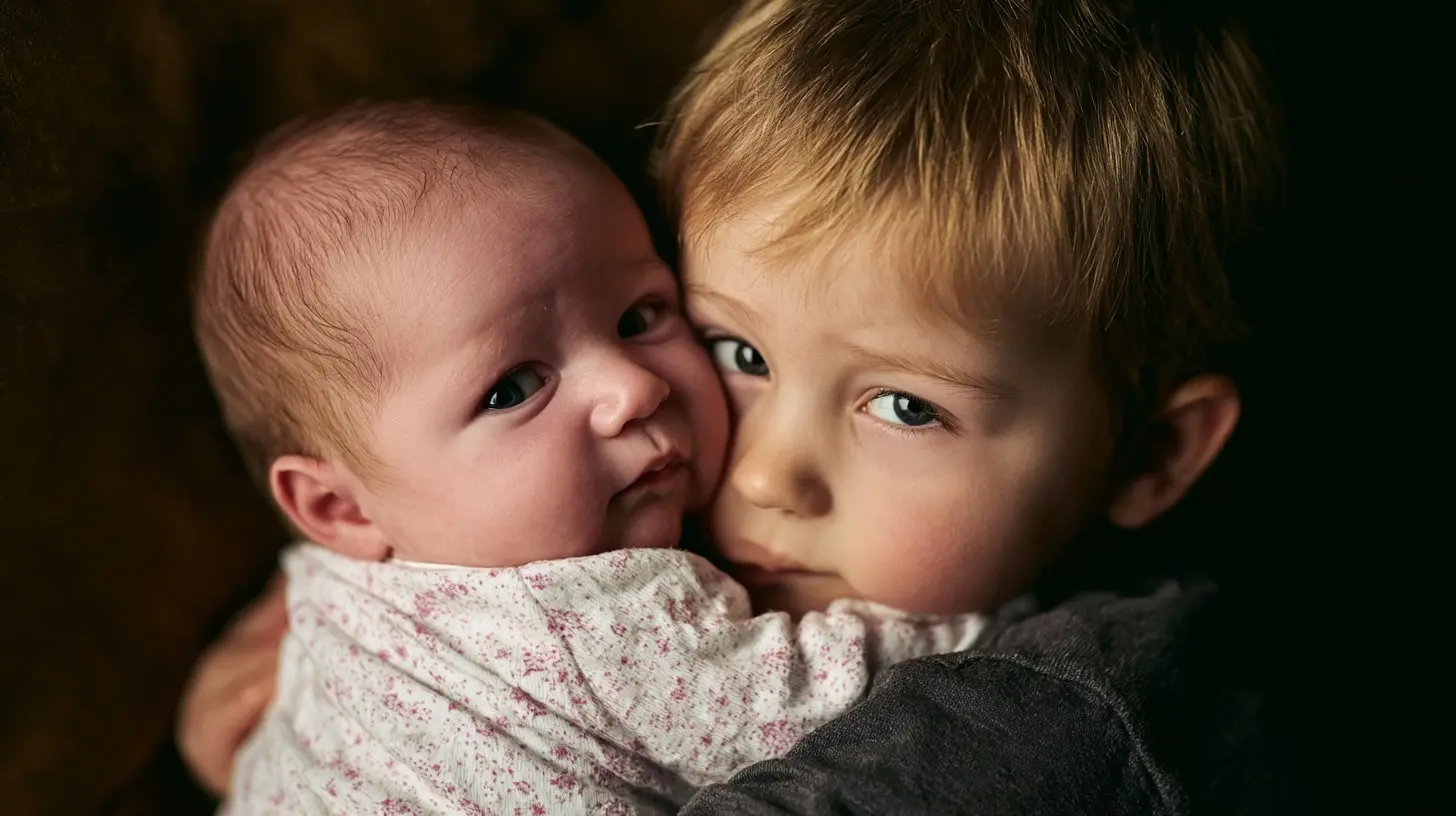
The New Landscape of Sibling Rivalry in 2027
Before we talk about solutions, let us be honest about the context. Your older child in 2027 is growing up with a tablet in one hand and a parent who is more psychologically literate than parents in the 1990s. That sounds like an advantage. It can be. But it also creates a unique set of pressures.The Attention Economy Hits Home
In 2027, your attention is the most valuable currency your child owns. They see you check your phone while pushing a swing. They hear you answer a work email during their bedtime story. Now add a newborn who needs you every forty minutes. The older child does not think, "Mom is tired." They think, "The baby took my last drop of her."This is not a parenting failure. It is a structural reality. The fix is not to become a monk who never glances at a screen. The fix is to make your focused attention so loud and so deliberate that it cuts through the noise. A ten-minute block of full-body, eye-contact, phone-on-the-other-side-of-the-room play is worth more than an hour of half-hearted presence.
The Rise of the "Only Child Identity"
Many children born in the early 2020s spent their first years in smaller households. Birth rates dipped, playdates were sparse, and many parents delayed a second child for financial or logistical reasons. By 2027, a significant number of firstborns have deeply internalized being an only child. They have never had to share a parent's lap. They have never heard "wait your turn" for a hug.When the sibling arrives, the shock is not just about a new person. It is about losing a core identity. This is why some older children regress. They stop using the potty. They want a bottle. They babble. They are not being difficult. They are trying to tell you, "I am still small enough to need you, too."
Do not punish the regression. Name it. Say, "You miss being a baby sometimes. That makes sense. You can be my big helper and my little cuddle bug at the same time."
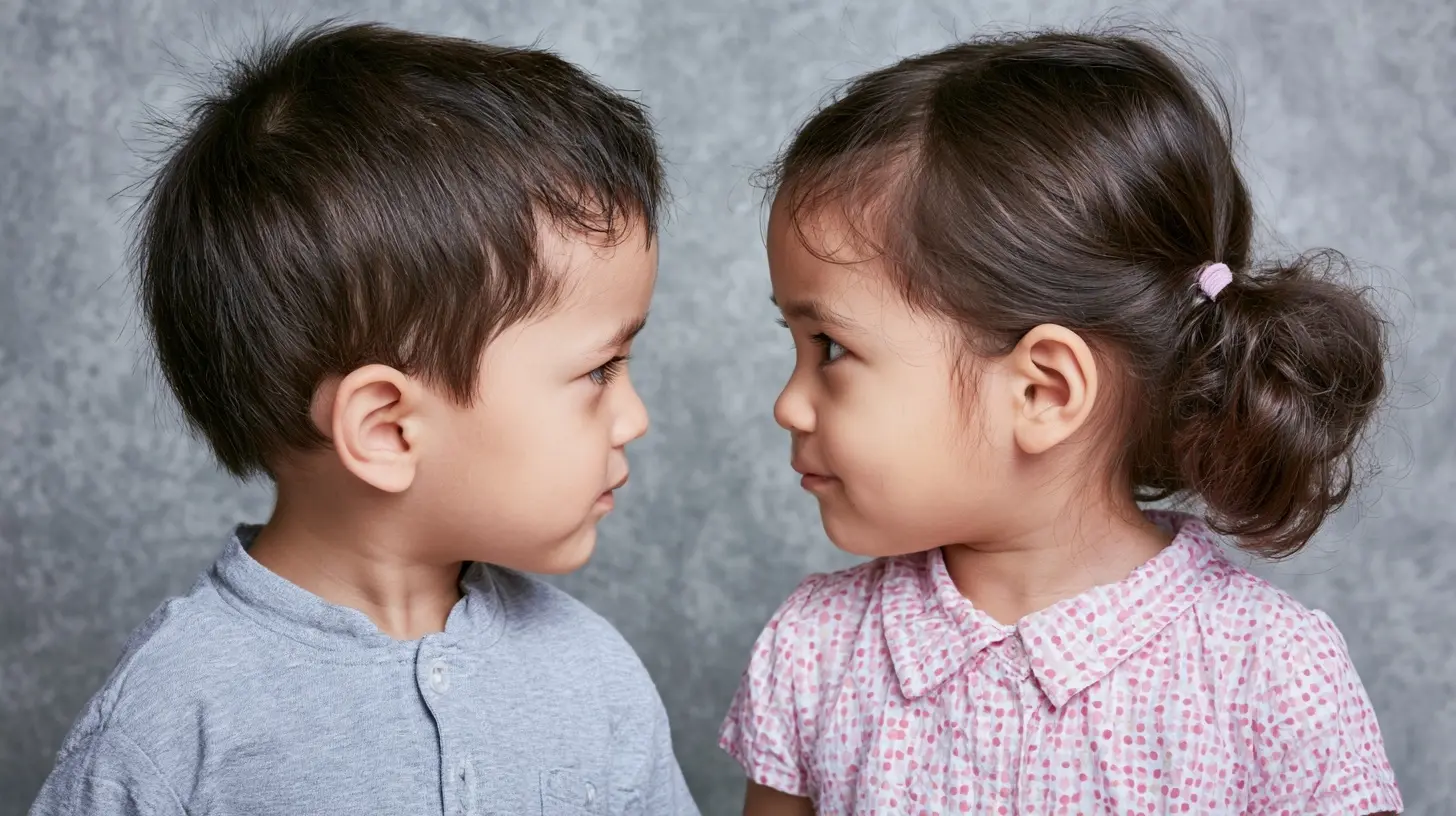
What Actually Works: The Preparation Phase
The weeks before the birth matter more than the day itself. But most parents make the same mistake. They prepare the nursery, pack the hospital bag, and buy the baby clothes. They forget to prepare the older child's heart.Stop Saying "You Are Going to Be a Big Brother"
This phrase is everywhere. It is on greeting cards and onesies. And it is almost useless. A three-year-old does not understand what "big brother" means except that it sounds like a title they did not ask for.Instead, talk about what the baby will actually do. "The baby will cry a lot." "The baby will not be able to play with your cars." "The baby will take up a lot of Mommy's arms." This is not pessimistic. It is honest. Children handle honesty far better than they handle vague positivity.
Use stories. In 2027, there are excellent picture books about siblings, but do not just read them. Act them out with stuffed animals. Let your older child make the baby doll cry and then decide what to do. This builds a mental model of what is coming.
Give Them a Role, Not a Job
A "job" is something they must do. A "role" is something they are. Say, "You are in charge of making the baby smile." That is a role. It gives them dignity without burden. Say, "Your job is to grab the wipes when I ask." That is a chore, and it will breed resentment.The difference matters because a role survives fatigue and tantrums. A job does not. On day three at home, when you are exhausted and the baby is screaming, you will not want to manage a task list for your toddler. But a child who believes they are the "smile maker" will naturally lean in when they see the baby's face.
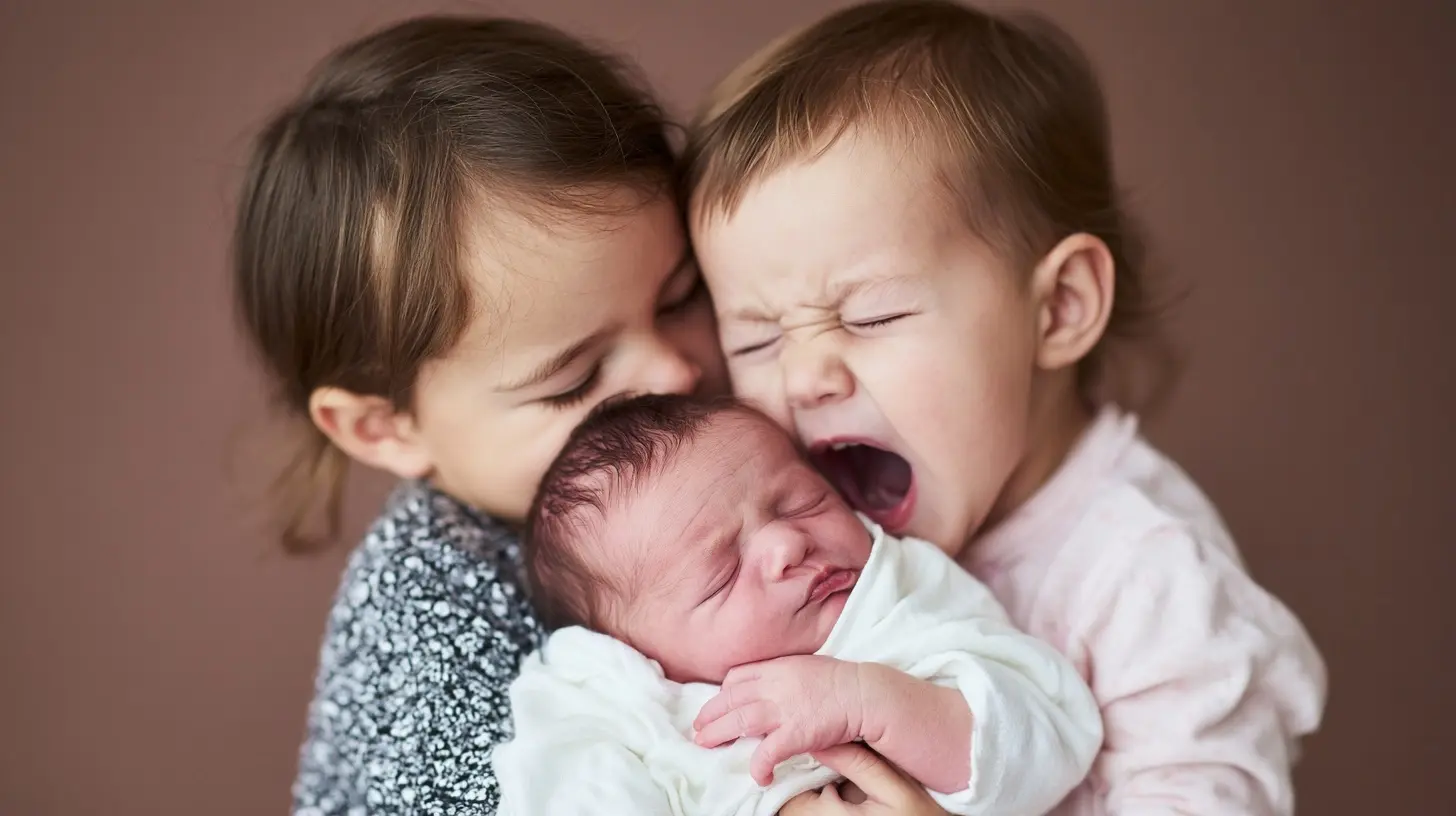
The First Week: Survival Without Sacrifice
The hospital stay and the first days home are a blur. Your older child is meeting a rival who smells like milk and hospital soap. They are watching you hold someone else the way you used to hold them.The Arrival Moment: Manage the Meeting
Do not let the first meeting happen in a sterile hospital room with you lying in a bed looking pale and exhausted. If possible, have the older child meet the baby at home, on their own turf, with you sitting in a familiar chair. Have someone else hold the baby when the older child walks in. Your arms should be empty and open for the first hug.Let the older child initiate contact with the baby. Do not force a kiss or a touch. Some children want to poke the baby's eye. Some want to run away. Both are normal. Say, "You can look as long as you want. You can touch if you want. You can also just tell me what you think."
The Gift Trap
Grandparents will arrive with gifts for the baby. This is a disaster for a toddler. The solution is not to ban gifts. The solution is to have a stash of "from the baby" gifts ready. When the baby receives a present, the older child receives one too, wrapped, from the baby. Say, "The baby picked this out for you. They wanted you to have it."This is not bribery. It is translation. The baby cannot say "I like you" so the gift says it for them. Over time, you will phase this out, but in the first month, it is a bridge.
Do Not Outsource All Care of the Older Child
Here is the trap. You are exhausted. Your partner is handling the baby. So you send the toddler to grandma's house for three days. That feels efficient. But to a small child, being sent away right after the baby arrives feels like exile. They think, "The baby is here, and now I am being removed."If you need help, bring the help into your home. Have grandma come to you. Have her take the older child to the park for two hours, not two days. The message must be: "You stay. The baby stays. Everyone is still here."
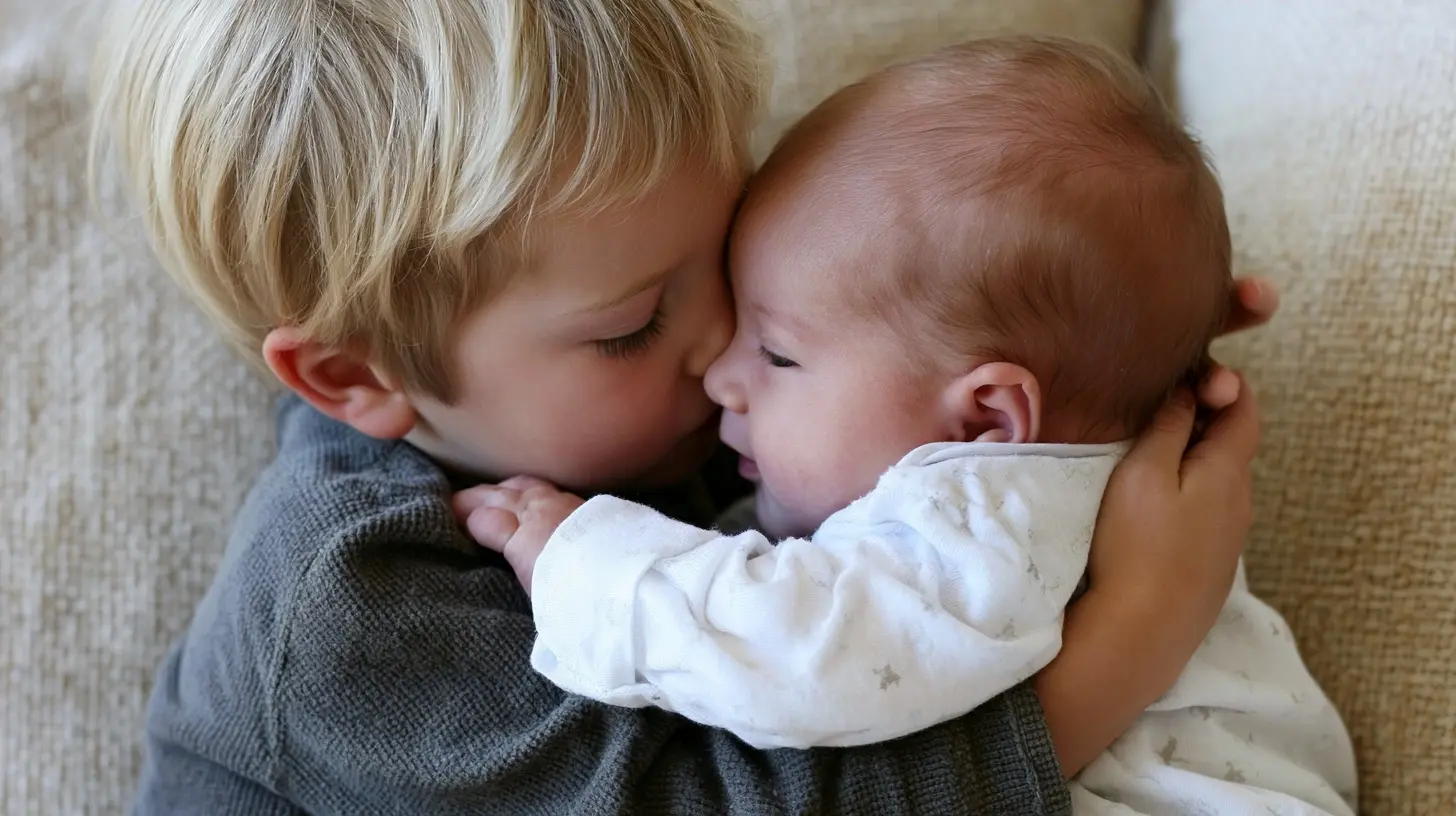
The First Month: Rebuilding the Bond
The newborn haze is real. You are sleeping in two-hour chunks. Your emotions are raw. And your older child is acting out at the worst possible moments, usually when you are nursing or changing a diaper.The Ten Minute Rule That Changes Everything
Every day, carve out ten minutes of exclusive time with the older child. No baby in the room. No phone. No interruptions. Set a timer if you must. Let the child choose the activity, even if it is the same puzzle for the tenth time.Why ten minutes? Because it is short enough to be sustainable and long enough to feel real. Your child will start to trust that this window exists. They will stop fighting for your attention all day because they know they have a guaranteed slot. This is not a cure. It is a foundation.
Let Them Be "Bad" Sometimes
Here is a counterintuitive truth. Your older child needs to know that you still love them when they are angry, jealous, or mean to the baby. If you only give attention when they are sweet, they will learn that their negative feelings are dangerous.When your toddler says, "I hate the baby," do not panic. Do not lecture. Say, "You are having big feelings. It is okay to be angry. It is not okay to hit. But I will still love you when you are angry."
This is the single most important emotional lesson of siblinghood. Love is not conditional on being nice.
The Comparison Trap
You will compare. You cannot help it. "Your sister slept through the night at this age." "Your brother ate broccoli without a fight." Stop. Say it out loud if you catch yourself. Then say, "They are different people." Comparison is the enemy of individual attachment. Every child needs to feel that their specific self is the one you wanted.The First Year: Building a Real Relationship
As the baby grows, the dynamics shift. The baby becomes mobile. They grab toys. They crawl into towers. The older child's jealousy often peaks not in the newborn phase, but around month four to nine, when the baby becomes an active intruder.Teach the Baby to "Respect" the Older Child
You cannot reason with a seven-month-old. But you can model boundaries. When the baby crawls toward the older child's block tower, say, "That is your tower. The baby is going to try to knock it down. Let us move it somewhere safe." You are showing the older child that their work matters. You are also showing the baby, through your actions, that everyone's space counts.This is not about being fair to a baby who does not understand fairness. It is about creating a family culture where property and effort are respected, even if the baby cannot yet follow the rules.
Do Not Force Sharing
Forcing a toddler to share with a baby is a recipe for resentment. Toddlers do not understand sharing. They understand possession. "Mine" is not selfishness; it is the beginning of a sense of self.Instead of forcing sharing, teach parallel play. "The baby has a rattle. You have a car. We are all playing together." When the baby grabs your toddler's toy, do not say, "Let the baby have it." Say, "The baby wants your toy. You can say no. I will help you keep it safe." This sounds counterintuitive, but it actually teaches generosity later. Children who are allowed to say no become children who choose to say yes.
The "Special Job" That Backfires
Many parents try to make the older child feel important by giving them "special jobs" like fetching a diaper or throwing away a wipes package. This can work, but only if you do not overuse it.The backfire happens when every interaction becomes transactional. "If you give the baby the pacifier, you get a sticker." Soon, the older child will not do anything for the baby without a reward. And worse, they will start to see the baby as a source of treats, not as a person.
Use special jobs sparingly. Use them when you genuinely need help, not as a constant emotional band-aid.
Common Mistakes That Even Good Parents Make
You will make mistakes. That is fine. But some mistakes are so common and so damaging that they deserve a warning label.Mistake One: Blaming the Baby
When the baby is crying and you cannot play with the older child, it is tempting to say, "I cannot play right now, the baby needs me." This teaches the older child to resent the baby as a rival for your time.Instead, say, "I am taking care of the baby right now. When I am done, I will be with you." This shifts the focus from the baby as an obstacle to your own responsibility as the parent. It also models that you are in charge, not the baby.
Mistake Two: Overpraising the Older Child for Being "Good"
When your toddler is gentle with the baby, you naturally say, "Good job!" That seems fine. But over time, the child learns that their worth is tied to how they treat the baby. They start to perform for approval.Instead, describe what you see without judgment. "You gave the baby the rattle. He is smiling." This is a subtle but powerful difference. The child learns that their actions have impact, not that their actions earn love.
Mistake Three: Assuming the Older Child Is Fine
Some children internalize their jealousy. They do not act out. They become quiet, overly mature, or clingy. Parents mistake this for acceptance.Ask yourself: Is my child sleeping well? Are they eating normally? Do they still laugh with abandon? If not, they may be struggling silently. Do not wait for a tantrum to address their feelings. Give them extra closeness and verbal acknowledgment: "This is a big change for our family. I know you feel it too."
When to Worry: Red Flags in 2027
Most sibling adjustment issues are normal. But some situations need professional help. In 2027, access to child psychologists and family therapists is more common, and there is no shame in using them.Seek help if:
- The older child shows persistent aggression toward the baby, like hitting, biting, or throwing objects at them, beyond what you can redirect.
- The older child stops eating, sleeping, or talking for more than a few weeks.
- The older child starts harming themselves, like head-banging or scratching.
- You feel so overwhelmed that you are afraid of your own reactions.
These are not signs of failure. They are signs that your family needs more support than a blog post can offer.
The Role of Technology in 2027: A Double-Edged Sword
We cannot ignore the elephant in the room. Your older child may watch videos on a tablet. Your baby may be soothed by a white noise app. Technology is here.The Good
Video calls with grandparents can let the older child show off the baby without physical competition. Educational apps can give you ten quiet minutes to nurse. Smart monitors can alert you to the baby's cries before they escalate, giving you more mental space for the older child.The Bad
Screens can become a pacifier for the older child's emotions. When they feel jealous, they get a tablet. This teaches them to numb feelings instead of processing them. Limit screen use during high-emotion moments. Do not hand over the tablet when your toddler is melting down because you are holding the baby. Instead, sit on the floor, hold the baby, and let the toddler sit next to you, even if they are crying.The Ugly
Do not post your older child's embarrassing moments online for sympathy. In 2027, your child will eventually have a digital footprint. A video of them crying because they hate the baby will not be funny in ten years. Protect their dignity.The Long Game: Siblings in 2027 and Beyond
The goal is not to have children who never fight. The goal is to have children who know how to fight and repair. In 2027, the world will ask your children to collaborate, negotiate, and empathize in ways we cannot fully predict. Sibling relationships are the first training ground.Teach Repair, Not Perfection
When your older child hits the baby, do not just punish. After everyone is calm, sit down and say, "What happened? What could you do differently next time? How can you make it right?" This is not about forcing a hollow apology. It is about building the skill of repair. That skill will serve them in friendships, marriages, and careers.Do Not Compare Them to Each Other
In 2027, your children will be compared by teachers, coaches, and algorithms. Your home should be the one place where comparison does not exist. Celebrate each child's unique strengths. Do not say, "Why can you not be more like your sister?" Say, "You have your own way of doing things, and I love it."Let Them Fight (Sometimes)
Not all conflict is bad. Sibling fights teach negotiation, perspective-taking, and resilience. If the fight is not dangerous, step back. Let them solve it. If you intervene too quickly, you become the referee, and they learn to fight for your verdict, not for each other.A practical rule: If no one is hurt and no one is calling for you, do not interfere. If you must step in, separate them and ask each child to tell their side without interruption. Then ask, "What do you both want?" This is a mediation skill that takes time but pays off for years.
A New Mindset for Modern Parents
The biggest shift you can make in 2027 is to stop seeing sibling jealousy as a problem to be fixed and start seeing it as a feeling to be hosted. Your job is not to make your older child happy all the time. Your job is to help them feel safe while they are unhappy.This is harder. It requires you to sit with their tears, their anger, and their regression without trying to rush them out of it. But it is also more freeing. You do not have to control their emotions. You only have to be present for them.
The Anchor Metaphor
Think of your love as an anchor. When a storm hits, the anchor does not stop the waves. It holds the ship steady. Your older child will have storms. They will rage, cry, and act out. Your love is not there to make the storm stop. It is there to make sure they do not drift away.This is the deepest truth of helping a child cope with a new sibling. You cannot remove the jealousy. You can only make it safe to feel.
Final Thoughts: The Gift of a Sibling
Despite all the difficulty, siblinghood is one of the great gifts you can give your firstborn. In 2027, when families are smaller and communities are more fragmented, a sibling is a built-in witness to your childhood. They remember your parents before they got gray hair. They know the house you grew up in, the smells, the fears, the jokes.Your older child will not thank you for the sibling in the first year. They might not thank you in the first five years. But by the time they are adults, they will have someone who truly understands what it was like to be them. That is worth the tears.
So hold your older child close. Let them be jealous. Let them be angry. Let them be small. And remind them, again and again, that there is no limit to your love. It is not a pie that gets sliced thinner with each new child. It is a fire that grows with every log you add. The first log is not diminished by the second. It is joined by it.
Your job in 2027 is not to be a perfect parent. It is to be a steady anchor in a choppy sea. Do that, and your children will find their way to each other.
all images in this post were generated using AI tools
Category:
Sibling RivalryAuthor:

Austin Wilcox
Discussion
rate this article
1 comments
Joanna Martin
In this tender shift, hearts intertwine, A new rhythm begins, not just yours but theirs. Guide them gently, cherish each moment, For love expands, like stars in a night sky.
October 10, 2026 at 3:20 PM