Helping Your Child Navigate Friendships and Fitting In
28 November 2026
Every parent knows the ache of watching a child come home quiet after a rough day at school. Maybe a best friend suddenly sat with someone else at lunch. Maybe a group chat went silent. Maybe your child wasn't invited to the birthday party everyone else was talking about. These moments hurt, and they hurt us too, because friendships are not a side issue in childhood. They are the emotional infrastructure of it.
Here is the good news, and it is genuinely good: friendship is a skill, not a fixed trait. Children are not simply born popular or destined to struggle. They learn how to read social cues, repair conflict, set boundaries, and choose friends well, and they learn it the same way they learn to read or ride a bike - through practice, guidance, and safe opportunities to try again after falling down. Your role is not to engineer your child's social life or shield them from every bump. It is to be the coach on the sidelines: present, steady, and wise about when to step in and when to let the game unfold.
This article walks through what healthy friendship actually looks like at different ages, why "fitting in" and "belonging" are not the same thing, and how to respond when things go wrong. It also covers the mistakes parents commonly make, often with the best intentions, and what to do instead.

Understanding What Friendship Means at Different Ages
A common mistake is expecting eight-year-old friendship to work like friendship at fifteen. It doesn't, and applying the wrong expectations can turn normal development into a perceived crisis.Early childhood: play as the language of connection
For young children, friendship is largely about proximity and play. A friend is whoever is building blocks nearby. Sharing is hard because impulse control is still under construction, not because your child is selfish. At this stage, your job is to create low-stakes opportunities for play, narrate social moments simply ("She looked sad when you took the toy. Let's see if she wants a turn"), and keep playdates short. An hour of parallel play that ends happily teaches more than a two-hour marathon that ends in tears.Middle childhood: rules, fairness, and the first real cliques
Around ages seven to ten, friendship becomes more intentional. Children start choosing friends based on shared interests, and fairness becomes a huge theme. This is also when exclusion begins to appear, because children this age are testing social power. Expect your child to report dramatic betrayals one day and be best friends again the next. Resist the urge to treat every conflict as a permanent rupture. Often the most useful response is a calm question: "Do you want help thinking it through, or do you mostly want to vent?"The tween and teen years: identity, loyalty, and social stakes
By late childhood and early adolescence, peer groups carry enormous weight. Friends become mirrors in which teenagers see themselves, which is why rejection at this age cuts so deep. The social world also becomes more complex: group chats, exclusion by omission, shifting alliances. Your child may not want you to solve anything. What they usually need is a steady adult who listens without overreacting, asks before advising, and keeps the door open for the moments they do want help.
Fitting In Versus Belonging: A Distinction That Changes Everything
These two ideas get used interchangeably, but they are not the same, and understanding the difference is one of the most useful things you can teach a child.Fitting in means adapting yourself to be accepted by a group. It can require hiding parts of who you are, laughing at things you don't find funny, or going along with behavior that makes you uncomfortable. Belonging means being accepted for who you already are. Fitting in is a performance. Belonging is a rest.
Children who learn to chase fitting in at all costs become experts at reading what others want and abandoning what they want. That skill can look like social success in the short term, but it often leads to anxiety, resentment, and friendships that feel hollow. Children who experience genuine belonging, even with just one or two good friends, tend to be more resilient, more confident, and better at recognizing unhealthy relationships later.
Your practical takeaway: praise your child for being a good friend, not for being liked. Ask "Who did you enjoy talking to today?" rather than "Who did you sit with?" The questions you ask shape what your child believes matters.

The Skills Behind Friendship, and How to Build Them
Friendship rests on teachable skills. Here are the ones that matter most, with concrete ways to support each.Reading social cues
Many children miss subtle signals not because they don't care but because the signals are genuinely subtle. You can build this skill at home through gentle narration: "Did you notice Grandpa changed the subject? He might be tired of that topic." Watching a show together and pausing to ask "What do you think that character is feeling?" builds the same muscle. Keep it light. Children shut down when they feel analyzed.Conversation skills
Conversation is a back-and-forth game, and some children play it like solitaire. Teach the two-part rhythm: share something, then ask something. Practice at dinner with a simple rule that everyone asks at least one follow-up question. If your child tends to monologue about a favorite topic, help them build a mental "pause button" - a reminder to check whether the other person is still engaged. Frame it as a skill, not a flaw, because that is what it is.Handling conflict and repair
Every friendship has friction. The children who keep friends are not the ones who avoid conflict; they are the ones who repair it. Teach a simple script: "I felt ___ when ___ happened. Can we talk about it?" Also teach the harder skill of apologizing without excuses. "I'm sorry I left you out" lands very differently from "I'm sorry, but you were being annoying." Model repair at home. When you lose your temper, say so and apologize. Children learn far more from what they witness than from what they are told.Setting and respecting boundaries
A good friend can say no. Practice this at home by respecting small no's when you can. If your child doesn't want to hug a relative, offer a high five instead. If they don't want to talk about their day, let it go and check in later. Children who experience their boundaries being respected learn to respect the boundaries of others, and they learn that a friendship requiring them to abandon their comfort is not a friendship worth keeping.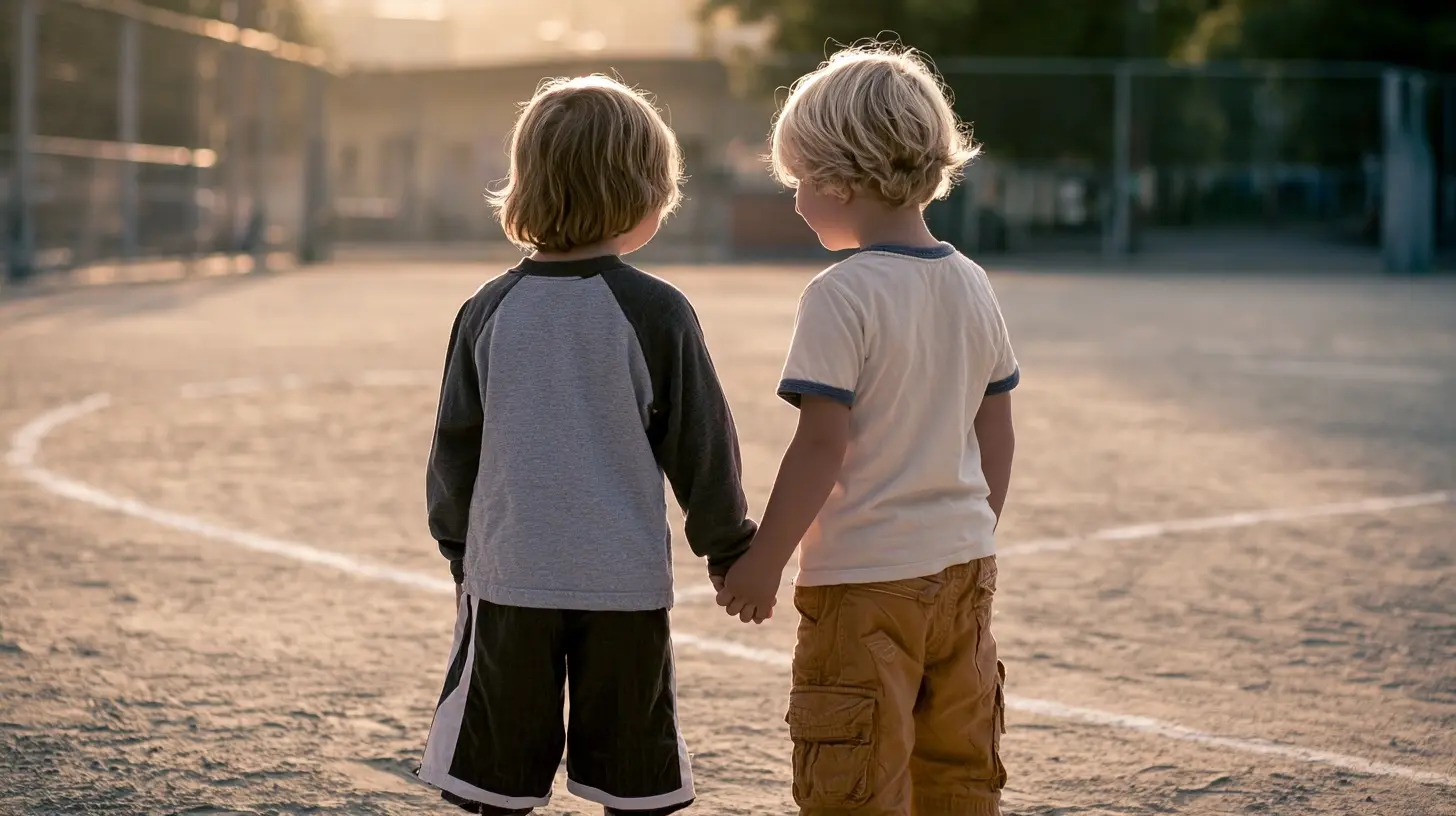
When Your Child Is Left Out
Exclusion is one of the most painful experiences in childhood, for the child and for the parent watching. Your first instinct may be to fix it immediately: call the other parent, arrange a playdate, demand an explanation. Pause before doing any of that.Start with listening. Ask open questions and resist the urge to editorialize: "That sounds really hard. Tell me more about what happened." Let your child finish before offering anything. Often the act of being heard is half the medicine.
Then, together, separate what is fixable from what is not. Sometimes exclusion is a misunderstanding that a simple conversation can clear up. Sometimes it is a sign that a friendship has drifted, which is normal and not a verdict on your child. And sometimes it is deliberate and repeated, which is a different situation entirely and may require adult intervention.
Help your child widen their social portfolio. A child whose entire social world is one friend or one group is fragile; a child with connections across several settings - a sport, a club, a cousin, a neighbor - has buffers. This is not about collecting friends like trophies. It is about having more than one place to belong, so that a bad day in one place does not become a bad life.
Finally, resist the temptation to promise outcomes. You cannot guarantee your child will be invited next time. You can guarantee that you will be there, that the pain will ease, and that they are not the problem. That honesty builds more trust than false reassurance.
When Your Child Is the One Excluding Others
This is harder to hear about, and it deserves an honest look. Exclusion is not always cruelty; sometimes it is cluelessness, or a child protecting a fragile sense of status, or simply following a group norm without thinking. But left unaddressed, it hardens into habit.Avoid shaming. Shame produces defensiveness, not empathy. Instead, get curious: "What was going on when that happened? How do you think she felt?" Ask your child to imagine the other child's evening at home. Most children, once they truly picture it, feel something. That feeling is the seed of empathy, and it grows best in safety, not in lecture.
Set clear expectations about behavior without demanding specific friendships. You can require kindness, inclusion at the margins, and basic respect. You cannot and should not require your child to be best friends with everyone. Those are different standards, and children can tell the difference.
Also examine the group itself. If your child's friend group rewards meanness, your child faces a real dilemma: stay and conform, or risk losing status. Acknowledge that dilemma out loud. It is genuinely hard. Then help your child think through what kind of friend they want to be, separate from what the group rewards. Sometimes the most powerful thing a parent can say is "I trust you to figure out what feels right, and I'm here to talk it through."
Common Mistakes Parents Make
Even devoted parents stumble here. Watch for these patterns.Solving too fast. Jumping in with solutions before your child has finished explaining teaches them that their feelings are a problem to be fixed rather than something to be understood. Ask first: "Do you want ideas, or do you want me to just listen?"
Overreacting to normal friction. If every playground squabble becomes a family crisis, your child learns that relationships are fragile and conflict is catastrophic. Most childhood conflict resolves itself. Save your energy for patterns, not incidents.
Living through your child. Pushing your child toward the popular group, or mourning the social life you wish they had, puts pressure on them to perform for your benefit. Their social life is theirs. Your job is support, not script.
Discounting online friendship. Digital connection is real connection for this generation. Dismissing it as "not real" closes a door your child needs open. Instead, treat it with the same curiosity and boundaries you apply to offline friendship.
Assuming popularity equals wellbeing. Some of the most socially successful children are also the most anxious, because maintaining status is exhausting. Watch for the child who is always performing. Quiet contentment with two good friends is a better sign than frantic busyness with twenty.
Building a Home Base That Makes Friendship Easier
Children venture into the social world from a home base, and the sturdier that base, the braver they can be. A few practical moves help.Make your home welcoming to your child's friends. This does not mean elaborate entertainment. It means a place where kids feel comfortable, where snacks exist, and where they are not constantly managed. Children talk more freely when adults are nearby but not hovering.
Keep the door open for hard conversations. Children disclose difficult social experiences when they feel safe, usually at odd hours - in the car, at bedtime, while doing dishes. Those moments are gold. Drop what you are doing when they come.
Model friendship yourself. Let your child see you being a good friend: calling someone who is struggling, repairing a disagreement, keeping a confidence. Children absorb the shape of friendship from watching the adults around them far more than from any lecture.
And protect unstructured time. Friendship grows in the gaps - the bike ride, the hangout with no agenda, the long conversation on the bus. A schedule packed with structured activities can inadvertently crowd out the very space where social skills develop.
A Final Word on Patience
Social development is not linear. Your child may struggle at nine and thrive at twelve. The child who seems socially behind in one setting may be perfectly at ease in another. The goal is not to produce a popular child. It is to raise a child who knows how to be a good friend, who can recognize when a friendship is worth keeping, and who trusts that they are worthy of belonging exactly as they are.That kind of confidence is not built in a single conversation. It is built over years of small moments: being heard, being trusted, being allowed to fail and try again. You are not responsible for your child's social life. You are responsible for giving them the tools, the safety net, and the steady presence to build it themselves. That is more than enough, and it is exactly what they need.
all images in this post were generated using AI tools
Category:
Navigating ParenthoodAuthor:

Austin Wilcox