How to Help Kids Read Social Cues More Effectively
15 October 2026
A child who can read social cues has an easier time making friends, resolving conflicts, and navigating group dynamics. But social cue reading is not a single skill. It is a bundle of abilities that develop slowly, unevenly, and largely through experience. Parents often assume these skills will simply emerge with age. Sometimes they do. Often they do not, especially for kids who are anxious, impulsive, neurodivergent, or simply wired to process information differently.
The goal of this article is not to hand you a script or a checklist. It is to help you understand what social cue reading actually involves, why some kids struggle more than others, and what you can realistically do to support development without turning social interaction into a performance review.
What Social Cue Reading Actually Means
Social cues are the signals people send, often without conscious awareness, that communicate their emotions, intentions, and boundaries. They fall into several categories:Verbal cues include tone of voice, volume, pacing, and word choice. A child who hears "That's fine" in a flat tone may miss that the speaker is actually annoyed.
Nonverbal cues include facial expressions, eye contact, posture, gestures, and physical distance. These are processed quickly and often below the level of conscious thought.
Contextual cues involve the setting, the relationship history, and the social norms of the moment. Hugging a friend at a birthday party is different from hugging a classmate in the middle of a silent reading period.
Paralinguistic cues sit between verbal and nonverbal. They include sighs, laughs, throat clearing, and other sounds that carry meaning without words.
A child who struggles with social cue reading is not necessarily lacking empathy or intelligence. In many cases, the problem is one of timing, attention, or interpretation. The brain may be receiving the signal but misreading its meaning or missing it entirely because attention is elsewhere.
Why Some Kids Struggle More Than Others
There is no single cause of social cue reading difficulty. Several factors interact.Developmental stage
Young children are still learning that other people have thoughts and feelings separate from their own. A four year old who interrupts constantly is not being rude on purpose. The part of the brain responsible for impulse control and perspective taking is still under construction. By age seven or eight, most children begin to notice and respond to subtle cues more consistently. By early adolescence, peer approval becomes a powerful motivator for paying attention to social signals.Temperament
Some children are naturally more observant and socially attuned. Others are more focused on objects, ideas, or their own internal world. Neither temperament is a flaw. But a child who is deeply absorbed in a task may need explicit prompting to look up and notice what is happening around them.Attention and impulse control
A child who blurts out answers, grabs toys, or invades personal space is often not ignoring cues. They are simply acting before the cue registers. The gap between noticing and acting is where impulse control lives, and that gap widens with practice and maturity.Neurodevelopmental differences
Autistic children, children with ADHD, and children with social anxiety often experience social cue reading as genuinely harder. For autistic kids, the issue may be that nonverbal signals are less intuitively meaningful. For anxious kids, the problem may be that fear overrides observation. For kids with ADHD, the challenge is often sustaining attention long enough to catch the cue in the first place.Understanding these differences matters because the same strategy will not work for every child. A child who misses cues because of inattention needs different support than a child who notices cues but misinterprets them.
The Real Cost of Not Addressing This
Parents sometimes dismiss social cue difficulty as something kids will outgrow. Some will. But the costs of persistent difficulty are real.Children who consistently misread social cues are more likely to be rejected by peers. They may be labeled annoying, weird, or aggressive. They may experience bullying. They may withdraw from social situations altogether. Over time, these experiences can erode self esteem and contribute to anxiety or depression.
The goal is not to make every child socially popular. The goal is to give them enough skill to form and maintain the relationships they want. Social connection is a protective factor for mental health across the lifespan. Helping a child read cues is not about conformity. It is about giving them tools to participate in the social world on their own terms.
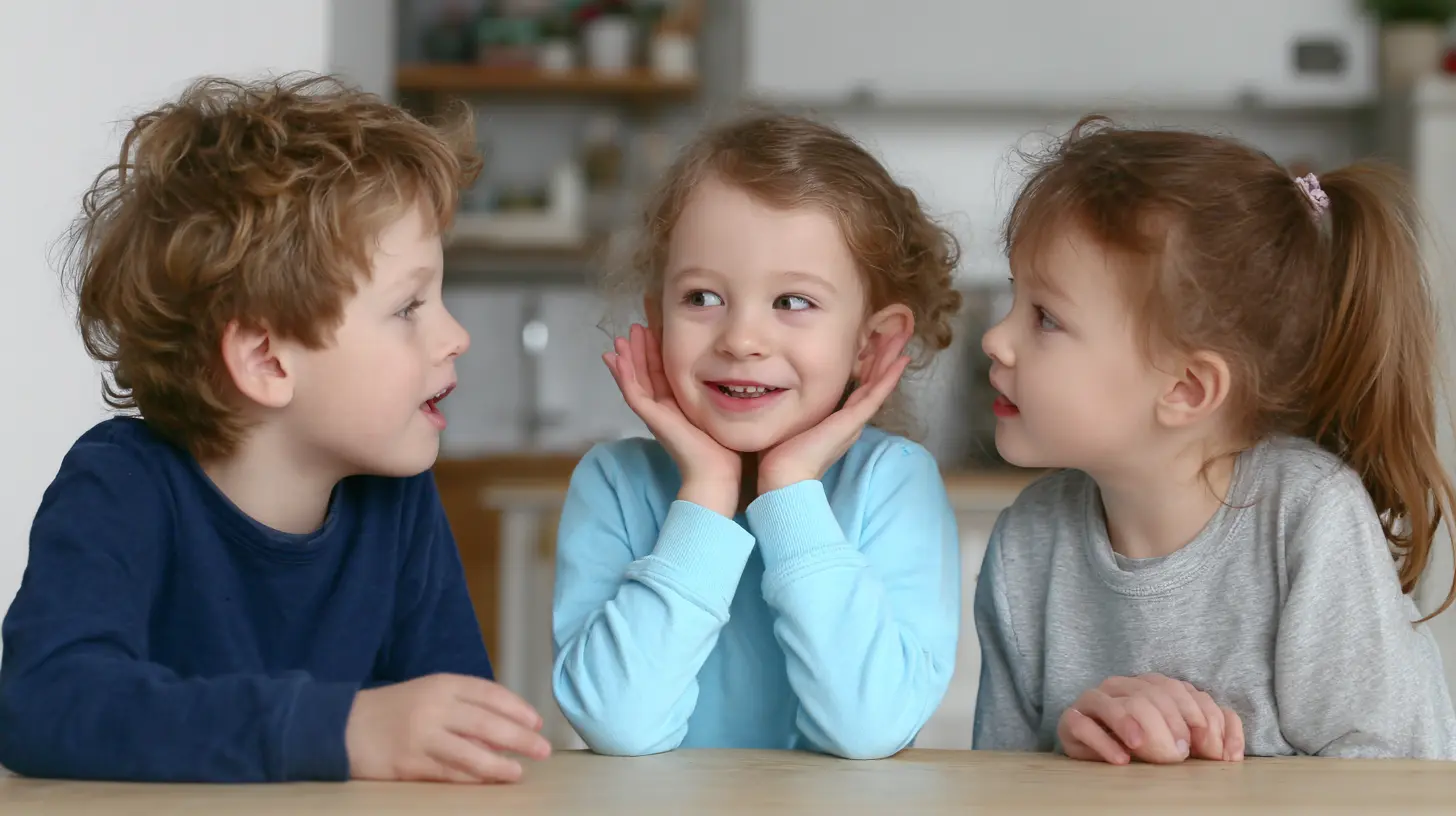
Start With Observation, Not Instruction
The most common mistake parents make is jumping straight to correction. "Look at her face. She does not like that." This approach can work in the moment, but it often backfires. The child feels criticized, and the lesson does not generalize to the next situation.A better approach is to build observation skills first. Before a child can read cues, they need to notice them. That means slowing down and paying attention.
Use neutral language
Instead of "You missed that she was upset," try "What did you notice about her face just now?" This shifts the child from defense to curiosity. It also gives you information about what they actually saw.Practice in low stakes settings
People watching at a park, a mall, or a family gathering can be a low pressure way to practice. Ask your child to guess what a person might be feeling based on posture, expression, or tone. Keep it light. The goal is not to be right. The goal is to notice.Narrate your own observations
Children learn by watching. When you are reading a book or watching a show together, point out cues out loud. "He said he was fine, but look at his hands. They are clenched. I think he is actually angry." This models the process without putting your child on the spot.Teach the Difference Between Observation and Interpretation
Noticing a cue and understanding what it means are two different skills. A child might see that a friend stepped back. They might interpret that as rejection when the friend was simply trying to get out of the way of a swinging backpack.This is where many social skills programs fail. They teach children to associate specific expressions with specific emotions. A smile means happy. A frown means sad. But real life is messier. A smile can mean happiness, nervousness, politeness, or sarcasm. A frown can mean sadness, concentration, confusion, or disapproval.
Use multiple cues to build a hypothesis
Teach your child to gather at least three pieces of information before deciding what someone is feeling. What does the face say? What does the body say? What does the tone say? What happened right before? The more cues they collect, the more accurate their interpretation will be.Normalize uncertainty
It is okay to not know what someone is feeling. In fact, it is common. Teaching your child to say "I am not sure what you are feeling. Can you tell me?" is a skill in itself. It is far better than guessing wrong and acting on a faulty assumption.
The Role of Emotional Regulation
A child who is flooded with their own emotions has very little bandwidth left for reading someone else's. This is why social cue reading and emotional regulation are inseparable.If your child is angry, anxious, or excited, their ability to notice subtle cues drops dramatically. The first step in any social coaching moment is to help them regulate. That might mean taking a break, taking a breath, or simply waiting until the emotional wave passes.
Co regulation before correction
When a child is upset, correcting their social behavior rarely works. The brain is in threat mode. The thinking part of the brain is offline. Your job in that moment is to help them calm down, not to teach a lesson. The lesson can wait.Teach body awareness
Many children who struggle with social cues also struggle with interoception, the ability to notice what is happening inside their own body. If they cannot tell when their own heart is racing or their muscles are tense, they will have a harder time noticing those signals in others. Simple practices like body scans or naming physical sensations can build this awareness over time.Practice With Books, Shows, and Real Life
One of the most effective ways to build social cue reading is through stories. Books and shows give children a chance to observe social interactions without the pressure of participating.Pause and predict
When reading a book, pause before a character responds. Ask your child what they think the character is feeling and what they might do next. This builds the habit of looking for cues and making predictions.Compare the words and the signals
Point out moments where what a character says does not match what their body is doing. This is where advanced social cue reading lives. Sarcasm, polite lies, and hidden emotions are all part of social life. Children need to understand that words are not always the whole story.Connect to real life
After reading, ask your child if they have ever seen something similar happen at school or with friends. This helps them transfer the skill from fiction to reality.
When to Step In and When to Step Back
One of the hardest parts of parenting is knowing when to let your child struggle and when to intervene. Social cue reading is no different.If your child is in a safe situation and the stakes are low, let them practice. They will make mistakes. That is how learning happens. If your child is in a situation where they are being bullied, excluded, or hurt, step in. Your job is to keep them safe, not to let them learn through trauma.
The 80/20 rule
In general, aim to let your child handle about 80 percent of social situations on their own. Step in for the 20 percent that are genuinely risky or beyond their current skill level. This gives them room to grow without leaving them stranded.Debrief, do not lecture
After a social situation, ask open ended questions. "How did that go?" "What did you notice?" "What would you do differently next time?" Avoid telling them what they did wrong. Let them arrive at the insight themselves. It sticks better that way.Common Mistakes Parents Make
Even well intentioned parents can undermine their child's social development. Here are some pitfalls to avoid.Overcorrecting in public
Correcting your child in front of their peers can be humiliating. It also draws attention to their struggle in a way that can make them more self conscious. If a correction is needed, do it privately.Assuming malice
Most children who miss social cues are not trying to be rude. They are simply missing information. Assuming malice leads to punishment, which does not teach the skill.Using shame as motivation
Shame does not teach social skills. It teaches children to hide their struggles. It also damages the parent child relationship, which is the very foundation you need to coach them effectively.Expecting overnight change
Social cue reading is a slow building skill. It develops over years, not weeks. Celebrate small progress. Do not expect perfection.
When to Seek Professional Support
Some children need more than what parents can provide. If your child is consistently struggling with peer relationships, showing signs of anxiety or depression, or expressing distress about social situations, it may be time to seek professional help.Speech language pathologists, occupational therapists, and child psychologists can all play a role. Social skills groups can also be helpful, especially for children who need structured practice with peers.
The key is to find support that is individualized and evidence based. Not all social skills programs are created equal. Some focus on compliance and masking, which can be harmful for neurodivergent children. Look for programs that build genuine understanding and self advocacy.
Building a Foundation of Trust
The most important factor in helping your child read social cues is not a technique or a script. It is the relationship you have with them. Children who feel safe with their parents are more willing to take social risks and learn from mistakes. They are also more likely to come to you when they are struggling.That means listening more than you talk. It means validating their feelings even when their interpretation is off. It means being curious instead of critical. It means remembering that your child is not a project to be optimized. They are a person learning to navigate a complex world.
A Final Thought on Timing
Social cue reading develops on its own timeline. Some children will pick it up easily. Others will need more support. Neither path is a reflection of your parenting or your child's worth.What matters is that you pay attention, stay patient, and keep the door open. The goal is not to produce a perfectly socially skilled child. The goal is to raise a person who feels capable, connected, and confident enough to keep learning.
all images in this post were generated using AI tools
Category:
Parenting And Social SkillsAuthor:

Austin Wilcox