Raising Curious Kids Through Everyday Conversations
23 September 2026
Curiosity is not a personality trait that children either have or lack. It is a habit of mind, and like any habit, it grows through repetition, encouragement, and the right conditions. Parents often assume that fostering curiosity requires elaborate science experiments, museum trips, or expensive educational toys. In reality, the most powerful tool you already possess is conversation. The ordinary exchanges you have with your child during dinner, in the car, or while folding laundry can either feed their natural wonder or quietly starve it.
This article examines how everyday talk shapes a child's relationship with learning, why some common conversational patterns backfire, and how to build a household culture where questions are welcome and thinking out loud is normal.
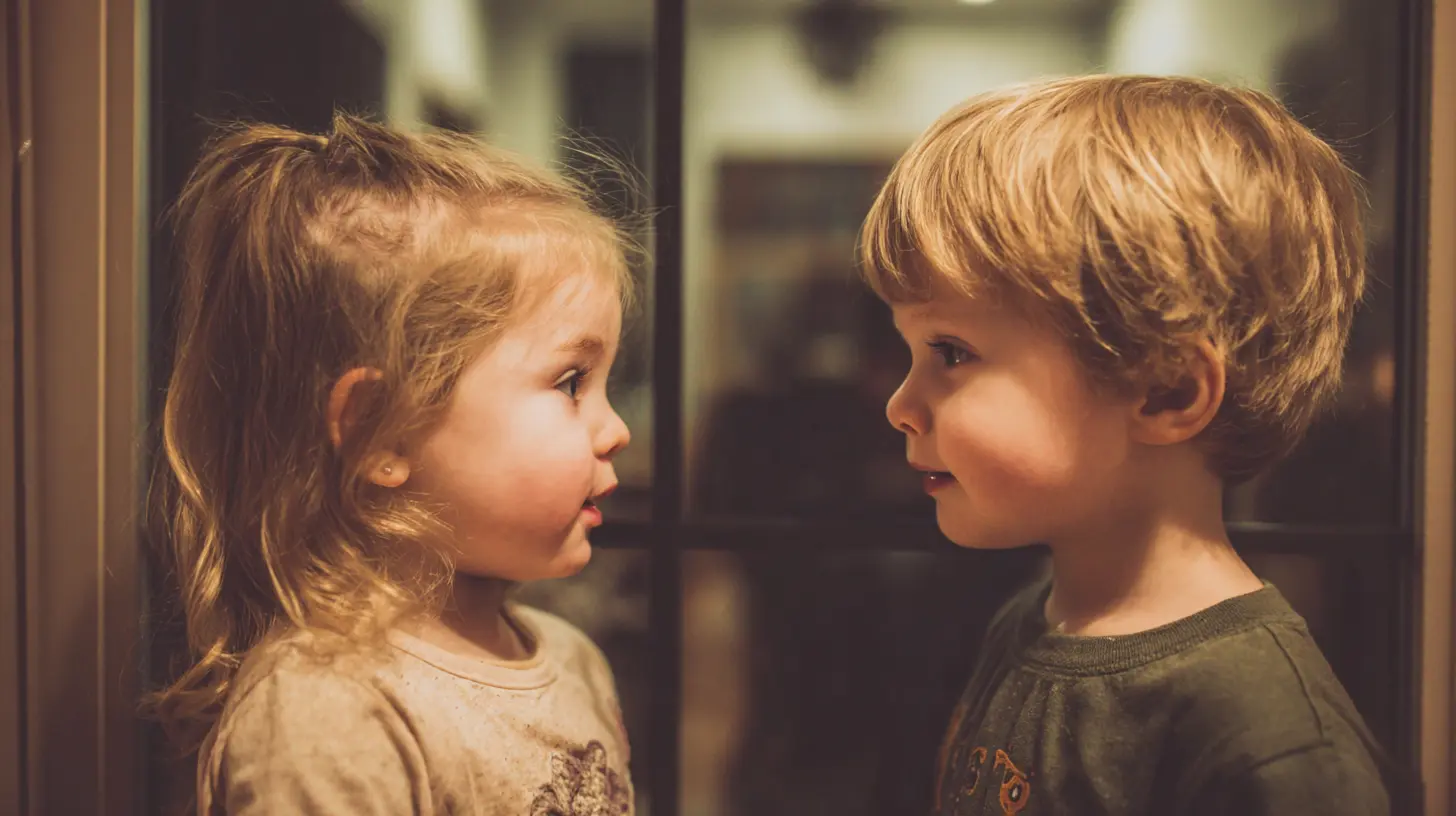
Why Conversation Matters More Than You Think
Children are born asking questions. A typical preschooler might ask dozens of them before lunch. But research on child development has repeatedly shown that the frequency and quality of back-and-forth conversation with caregivers predicts vocabulary growth, reading comprehension, and later academic performance more strongly than the sheer number of words a child hears. It is the serve-and-return nature of dialogue, not passive exposure, that builds brain architecture.This matters because many parents focus on the wrong metric. They read to their children, which is excellent, but they treat conversation as background noise rather than an active teaching tool. A bedtime story where the parent reads and the child listens is valuable. A bedtime story where the parent pauses and asks, "What do you think will happen next?" or "Why do you think the bear did that?" is a different category of experience altogether.
The difference is not about adding extra work to your day. It is about shifting from transmission mode, where you deliver information, to inquiry mode, where you invite your child to think alongside you. That shift costs nothing and can happen anywhere.

The Science of Serve and Return
The term "serve and return" comes from developmental psychology and describes the interactive loop between a child and a caregiver. The child serves by babbling, pointing, asking, or commenting. The adult returns by responding in a way that acknowledges and extends the child's bid for connection.When this loop happens consistently, it strengthens neural connections in areas of the brain responsible for language, attention, and reasoning. When it breaks down, either because the adult ignores the child or because the adult dominates the exchange, the child learns that their questions do not lead anywhere useful.
Consider two responses to the same question.
A four-year-old asks, "Why is the sky blue?"
Response one: "Because of the way light scatters. Now eat your breakfast."
Response two: "That is a great question. What color do you think it would be if we lived on a different planet? Let us think about what we know about light and air."
The first response is factually correct but shuts down the conversation. The second response does not immediately answer the question, which might feel inefficient, but it keeps the loop alive. It signals that the child's curiosity is worth engaging with. Over time, children who experience the second kind of response ask more questions, not fewer.

Common Mistakes That Shut Down Curiosity
Well-meaning parents often undermine curiosity without realizing it. Here are the most frequent patterns.Answering Too Quickly
When a child asks a question, the instinct is to provide an answer. This is efficient, but it teaches the child that questions are transactions: you ask, you receive, you move on. A better approach, especially for children over the age of four, is to reflect the question back or offer a partial answer that invites further thinking.Instead of "That is because plants need sunlight," try "What do you think would happen to a plant if we kept it in a dark closet?" You are not withholding information. You are modeling how to think about the question rather than just memorizing the answer.
Using Dismissive Language
Phrases like "That is just how it is," "Because I said so," or "We do not have time for that right now" are sometimes necessary. But when they become the default, children stop bringing their questions to you. They learn that curiosity is inconvenient.If you genuinely cannot engage at the moment, acknowledge the question and schedule it. "That is a really interesting question. I cannot talk about it right now because I am driving, but let us put it on the list for dinner." Then follow through. This teaches that questions are valuable even when they cannot be answered immediately.
Correcting Instead of Exploring
When a child offers a wrong answer or a strange theory, the immediate correction can feel like a rejection. A child who says, "The moon is made of cheese," is not asking for a science lesson. They are playing with ideas. You can say, "That would be a very tasty moon. What do you think it is actually made of?" This keeps the game going while gently nudging toward reality.Overloading with Facts
Some parents respond to curiosity with a lecture. A simple question about why it rains becomes a ten-minute explanation of the water cycle. The child's eyes glaze over. The parent feels they have done a good job because they provided accurate information. But the child has learned that asking questions leads to boredom.Match the depth of your answer to the child's age and attention span. A five-year-old does not need the full water cycle. They need "Water goes up into the sky and then comes back down. Where do you think it goes after it lands?" You can always add more layers as they get older.

Practical Strategies for Everyday Conversations
You do not need to set aside special time for curiosity-building conversations. You need to weave them into the routines you already have.The Dinner Table Question
Family dinners are one of the few times when everyone is together and not multitasking. Instead of asking, "How was school?" which reliably produces "Fine," try a question that invites storytelling or speculation. "What was the most confusing thing that happened today?" or "If you could change one rule at school, what would it be and why?"These questions do not have right answers. They require the child to reflect, evaluate, and explain. That is the cognitive equivalent of a workout.
Car Conversations
Driving time is dead time for many families. It is also a captive audience. You can play games that build curiosity without any materials. "I am thinking of an animal that lives in the ocean and has eight legs. What is it?" Or "What would happen if cars could fly?" The key is to keep it light and playful. The moment it feels like a test, the child disengages.Bedtime Wonderings
Bedtime is when children are most reflective. They are tired, their defenses are down, and they often want to talk. Instead of rushing to turn off the light, use the last five minutes for a "wondering" question. "What is something you wondered about today but did not ask?" or "If you could ask an animal one question, what would it be?"This ritual does two things. It signals that curiosity is valued even when the day is over. And it gives you a window into what your child is actually thinking about, which is information you cannot get any other way.
Kitchen Science
Cooking and baking are full of opportunities for observation and prediction. "What do you think will happen when we put this dough in the oven?" "Why do you think the recipe says to add salt?" "What would happen if we used twice as much sugar?" You are not turning every meal into a science lesson. You are simply narrating your own curiosity out loud.Modeling Curiosity as an Adult
Children learn more from what you do than what you say. If you want your child to be curious, they need to see you being curious. This means asking questions yourself, admitting when you do not know something, and showing genuine interest in the world around you.Admit What You Do Not Know
Many parents feel pressure to be the authority. But saying "I do not know" is not a sign of weakness. It is a sign of intellectual honesty. "I have no idea why the sky turns red at sunset. Let us look it up together." This teaches that not knowing is the beginning of learning, not a failure.Think Out Loud
Narrate your own reasoning. "I wonder why the grocery store is so busy today. Maybe it is because of the holiday. Or maybe there was a sale. How could we find out?" This shows your child how a curious mind works. It is not about having answers. It is about asking better questions.Show Interest in Their Interests
If your child is obsessed with dinosaurs, trains, or a particular video game, engage with that interest rather than dismissing it. Ask questions that go beyond the surface. "What is the most dangerous dinosaur? How do you know?" "What happens if you miss a stop on that train line?" "What is the hardest level in that game and why?"You do not need to share the interest. You need to share the curiosity.
When to Push and When to Back Off
Not every moment is a teaching moment. Sometimes a child is tired, hungry, or overwhelmed. Sometimes they just want to be left alone. Reading the signals is part of the skill.If your child is melting down, the priority is regulation, not curiosity. If they are deeply absorbed in play, interrupting to ask a question breaks their focus. Curiosity thrives in a calm, safe environment. It does not thrive under pressure.
The goal is not to turn every interaction into a Socratic seminar. The goal is to create a general atmosphere where questions are welcome, where not knowing is acceptable, and where thinking is treated as a form of play.
Trade-Offs and Nuance
There is a tension between efficiency and curiosity. Answering a question directly takes five seconds. Exploring it takes five minutes. On a busy morning, the direct answer is often the right choice. The key is to make exploration the default in low-stakes moments so that it becomes a habit, not an exception.There is also a tension between accuracy and imagination. A child who believes the moon is made of cheese is not harmed by that belief in the short term. But a child who is never gently guided toward reality may struggle later. The balance is to honor the imaginative impulse while gradually introducing facts. "I love that idea. Scientists think it is made of rock and dust. Which do you think is more interesting?"
Finally, there is a tension between leading and following. Some parents dominate conversations, steering every exchange toward a lesson. Others are so hands-off that the child gets no feedback. The sweet spot is a back-and-forth where both parties contribute. You are not the teacher. You are a co-explorer.
Building a Family Culture of Inquiry
The most durable change is not a single technique. It is a shift in how your family talks to each other. When questions are normal, when "I do not know" is acceptable, and when thinking out loud is valued, curiosity becomes self-sustaining.This does not require a curriculum. It requires consistency. It requires you to notice when you are shutting down a conversation and to choose a different response. It requires you to be curious yourself, even when you are tired.
The payoff is not just a smarter child. It is a child who knows how to think, who is not afraid of not knowing, and who sees the world as a place full of interesting things to figure out. That is a gift that lasts far longer than any fact you could teach them.
all images in this post were generated using AI tools
Category:
Early Childhood EducationAuthor:

Austin Wilcox