Raising Socially Aware Teens in the Coming Years
1 November 2026
Teenagers today are growing up inside a social environment that looks nothing like the one their parents navigated. Information moves in seconds. Public opinion forms in comment sections. Friendships live partly in group chats. Political arguments happen in front of an audience. And the issues teens are asked to have opinions about, from climate policy to artificial intelligence to identity and belonging, are genuinely complicated.
That is the backdrop for this article. Raising socially aware teens is not about producing young people who recite the correct opinions. It is about helping them notice the world around them, think carefully about what they see, understand other people's perspectives, and act in ways that are thoughtful rather than performative. That work has always mattered, but the conditions of the coming years make it more demanding and more important than it used to be.
This article is written for parents who want a realistic approach, not a script. It covers what social awareness actually means, why it is harder now, how to build it at home, and where well-meaning parents commonly go wrong.

What Social Awareness Actually Means
The phrase gets used loosely, so it helps to define it precisely. Social awareness is the capacity to read situations and people accurately and to respond with judgment. It includes several distinct skills that develop at different rates:- Perspective taking. The ability to imagine how a situation looks from another person's position, including people whose background or experience differs from your teen's.
- Empathy. Feeling a response to someone else's emotional state, and knowing the difference between feeling something and being obligated to fix it.
- Social reading. Noticing tone, context, group dynamics, and what is not being said.
- Contextual judgment. Understanding that the same behavior can be appropriate in one setting and harmful in another.
- Moral reasoning. Working out why something is right or wrong rather than just knowing which answer adults expect.
A teen can be strong in one area and weak in another. A young person might feel deep empathy for a friend in crisis and still be tone-deaf in a group chat. Another might have sharp analytical views about justice and no idea how to notice that a classmate is being excluded. Parents who treat social awareness as a single trait tend to misread their kids. It is better to think of it as a set of muscles, each of which can be trained.

Why the Coming Years Are Different
Every generation of parents has worried about the influences shaping their teens. But three shifts make the current period genuinely different.The speed and permanence of public speech
Teens now speak in public by default. A comment posted at midnight can be screenshotted, shared, and resurfaced years later. The cost of a careless remark has changed. A teen who says something thoughtless in a hallway can apologize and move on. The same remark posted online can follow them into college admissions and job interviews.This changes the skill set required. Teens need a kind of "pause literacy": the ability to notice the moment before they hit send and to ask whether this is something they would defend in a different context. That skill does not develop automatically. It has to be practiced.
Algorithmic amplification
Social platforms are not neutral mirrors. They reward strong reactions. Content that provokes outrage, fear, or tribal loyalty spreads faster than content that is balanced. Teens who spend hours in these environments are being quietly trained to treat certainty and intensity as virtues.Parents should be careful here. It is easy to slide into claims about how algorithms work that go beyond what is firmly established. What can be said confidently is this: platforms are designed to maximize engagement, and engagement tends to favor emotionally charged content. The practical implication is that teens need help recognizing when their own reactions are being shaped by a feed rather than by their own judgment.
Public issues arriving earlier
Teens are now expected to have positions on issues that adults themselves disagree about. Climate change, artificial intelligence, war, elections, identity, school policy. Some of this is healthy. Young people should care about the world. But there is a difference between being informed and being conscripted into someone else's argument. Part of a parent's job is protecting a teen's right to think slowly.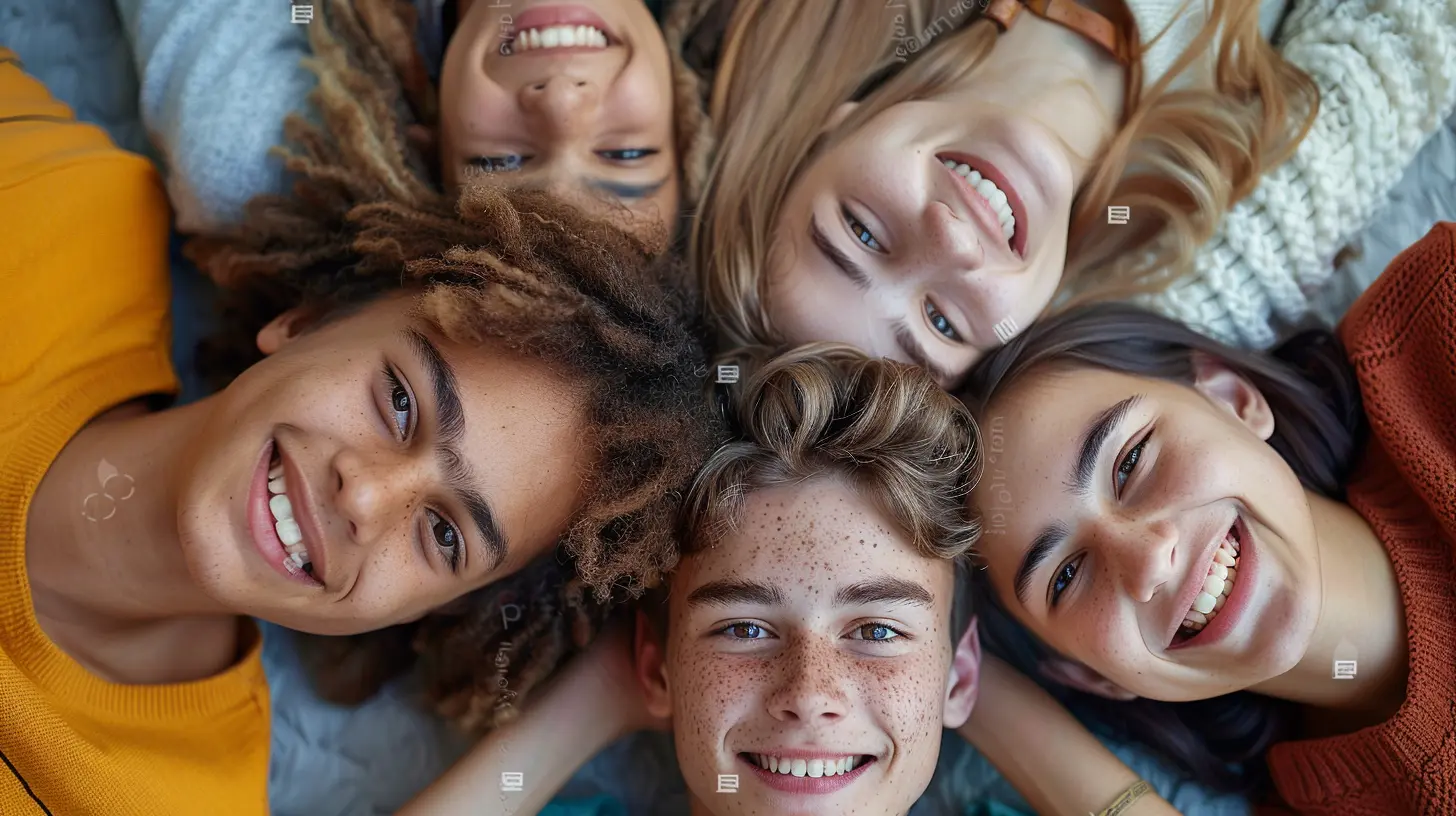
The Foundation: A Home Where Thinking Out Loud Is Safe
Social awareness grows in environments where a teen can test ideas without being graded on them. That sounds obvious, but many homes accidentally shut this down.Consider two households. In the first, a teen mentions a controversial opinion at dinner, and a parent immediately corrects it. In the second, the parent asks a question: "What led you there?" The first home teaches the teen to keep controversial thoughts private. The second keeps the conversation open, which is where real development happens.
This does not mean parents should be neutral about everything. Values matter, and teens benefit from knowing what their parents stand for. The distinction is between stating your view and shutting down theirs. A parent can say, "I see it differently, and here is why," without implying that the teen is a bad person for thinking otherwise.
A few practices that help:
- Ask before you correct. "Tell me more about that" is usually more useful than "That's wrong."
- Separate the person from the position. Disagree with the argument, not the character of the person making it.
- Model changing your mind. When you update a view because of new information, say so out loud. Teens learn more from watching an adult revise a belief than from any lecture on open-mindedness.
- Avoid performance questions. "What do you think your teacher wants to hear?" teaches teens to guess at expected answers rather than reason honestly.

Teaching Perspective Taking Without Turning It Into a Lecture
Perspective taking is the workhorse skill of social awareness. It is also the one most easily turned into a lecture. Parents who say "think about how she feels" are giving an instruction, not building a capacity.A better approach is to make perspective taking a habit of observation. When something happens, whether in your own family, in a show you watch together, or in the news, ask questions that require the teen to construct a view from the inside:
- "What do you think was going on for him right then?"
- "If you were in her position, what would worry you most?"
- "Who else is affected by this that we haven't talked about?"
These questions work because they require mental simulation. The teen has to build a model of another person's situation. That is the actual exercise. Repeating it across many small situations builds the skill far more reliably than a single deep conversation about empathy.
There is a trade-off worth naming. Too much perspective taking can tip into self-erasure, especially for teens who are already sensitive to others' needs. The goal is not to make teens responsible for everyone else's comfort. It is to help them understand others without losing their own footing. If your teen tends to absorb other people's emotions, the more useful lesson may be about boundaries: you can understand someone's anger without taking responsibility for it.
Helping Teens Read Context, Not Just Content
Social media trains teens to respond to content. Real social life requires reading context. The same joke can land well among close friends and humiliate someone in a larger group. The same opinion can be appropriate in a private conversation and reckless in a public post.Parents can build this skill by narrating context out loud. When you see a situation, whether in real life or on a screen, name the factors that matter:
- Who is present?
- Who has power here?
- Is this private or public?
- Is this permanent or temporary?
- What is the likely effect on the people involved?
A useful exercise for teens is the "three audiences" test. Before posting or saying something, ask: how would this read to a close friend, to someone who dislikes me, and to a stranger? If the answer changes dramatically depending on the audience, that is a signal the statement is context-dependent and may need rethinking.
This is not about teaching teens to be cautious to the point of silence. It is about teaching them that context is part of the message.
Navigating the Pull of Tribal Certainty
One of the hardest challenges of the coming years is the pressure toward tribal certainty. Teens are pulled toward groups that offer belonging, identity, and moral clarity, and many of those groups reward absolute positions and punish nuance. This happens across the political spectrum and in many non-political spaces too: fandoms, friend groups, online communities.The problem is not belonging. Belonging is a genuine human need, and teens need it. The problem is when belonging requires abandoning independent thought.
Parents can help by making a distinction between loyalty and agreement. A teen can be loyal to a friend, a family, or a community without agreeing with everything that community believes. That distinction is worth naming explicitly, because many teens have never heard it articulated.
A practical tool: ask your teen to identify one belief they hold that their main social group would disagree with. If they cannot think of one, that is worth noticing together, without judgment. It may mean the group is very homogeneous, or it may mean the teen has not yet developed the confidence to hold a minority view. Either way, the question opens a conversation.
Another useful practice is reading or watching content from outside the teen's usual orbit. Not to "balance" them, as if opinions were a scale, but to show that intelligent, decent people disagree. Teens who have only ever seen their own side argued well tend to assume the other side is stupid or evil. Exposure to serious arguments from other perspectives builds a more durable kind of confidence.
The Difference Between Awareness and Performance
There is a real risk that social awareness becomes a performance. Teens learn quickly that certain phrases and gestures signal virtue, and some adopt them without the underlying understanding. This is not usually malicious. It is how adolescents learn: by trying on identities.But parents should watch for the gap between signal and substance. Signs of performative awareness include:
- Using the right vocabulary but treating people poorly in private.
- Sharing content about causes without any engagement with the details.
- Expressing strong views on distant issues while ignoring problems in their own school or friend group.
- Needing an audience for their concern.
The antidote is not cynicism. It is to redirect attention to the local and the concrete. Ask: what is happening in your school that bothers you? Who in your friend group is struggling? What could you actually do this week? Social awareness that never touches real people tends to stay shallow.
At the same time, parents should be careful not to dismiss genuine idealism. A teen who is passionate about a cause, even if their expression is imperfect, is doing something valuable. The goal is to deepen the commitment, not to mock the form it takes.
Practical Habits That Build Social Awareness Over Time
Skills grow through repetition. Here are habits that tend to work, along with notes on when they fit best.Family discussions with real disagreement
A weekly conversation about something in the news, where family members are allowed to disagree and are expected to explain their reasoning, builds several skills at once. It works best when parents participate as participants rather than as judges. It works less well if it becomes a debate club where winning matters more than understanding.Service that involves relationships, not just hours
Community service builds awareness when teens actually interact with the people they are helping. Sorting donations in a warehouse teaches less than tutoring a younger student or visiting residents at a care home. The relational version is harder and more uncomfortable, which is part of why it works.Media literacy as a routine, not a lecture
When your teen shares something they saw online, ask how they know it is true. Not as a challenge, but as a habit. Over time, the question becomes internal. The goal is a reflex of curiosity about sources, not suspicion of everything.Journaling or reflecting on social situations
Some teens process by talking; others need to write. A short nightly note about one social moment, what happened, what they noticed, and what they might do differently, builds reflective capacity. This works best when it is private and not reviewed by parents.Deliberate practice in low-stakes settings
Teens can practice perspective taking and context reading in safe environments: books, films, games, and stories. Discussing why a character acted as they did, or what a character missed, builds the same muscles that real life requires, without the social cost of getting it wrong.Common Mistakes Parents Make
Even well-intentioned parents stumble in predictable ways. Knowing the traps helps avoid them.Mistake 1: Treating social awareness as agreement. Parents sometimes equate awareness with holding the "right" views. But a teen who parrots a parent's politics has not necessarily developed awareness. They may simply have learned to perform. The real test is whether they can reason independently, including to conclusions the parent disagrees with.
Mistake 2: Correcting too fast. When a teen shares a half-formed thought, the instinct to correct is strong. But correction at the wrong moment teaches the teen to stop sharing. Better to let the thought develop, then ask questions that surface its weaknesses.
Mistake 3: Assuming online life is not real life. Adults often dismiss online interactions as "not real." For teens, they are real, with real social stakes and real emotional consequences. Parents who minimize this lose credibility.
Mistake 4: Over-scheduling awareness. Some families turn social development into another achievement category. Awareness becomes a resume item. This can produce teens who are skilled at talking about justice and exhausted by the pressure to perform it.
Mistake 5: Ignoring the teen's own social world. It is easier to talk about distant issues than about the friend group that is quietly excluding someone. Parents should not skip the local. The most important social awareness lessons often happen in the hallway, not in the news.
Mistake 6: Forgetting to model. Teens learn more from what parents do than from what they say. A parent who lectures about kindness and then speaks contemptuously about a neighbor is teaching the opposite lesson, and teens notice.
When to Step Back
There is a real question about how much parents should intervene in their teen's social development. The answer depends on the situation, and there are trade-offs either way.Stepping back allows teens to make mistakes, learn from them, and build confidence. A teen who handles a conflict with a friend without parental rescue develops judgment that no lecture can provide. But stepping back too far can leave a teen isolated in a situation they do not have the skills to manage.
A useful rule of thumb: intervene when there is a safety issue, when the teen asks for help, or when the situation is clearly beyond their current capacity. Otherwise, offer perspective and let them decide. The goal is to be a consultant, not a manager.
This is harder than it sounds, especially for parents who are themselves socially attuned and can see the problem clearly. But the teen's learning happens in the space between the problem and the solution, and that space belongs to them.
A Note on Values and Boundaries
Social awareness is not the same as having no boundaries. A teen can understand why someone is angry and still decide not to accept being yelled at. A teen can see another person's point of view and still hold their own. In fact, the most durable kind of social awareness includes the capacity to stay kind while disagreeing, and to stay firm while understanding.Parents should be explicit about this. Many teens, especially those who are naturally empathetic, need permission to have limits. They need to hear that understanding someone does not mean agreeing with them, and that being kind does not mean being available to everyone at all times.
What to Expect
Progress will not be linear. Teens will sometimes show startling insight and sometimes behave in ways that seem to erase everything you taught them. This is normal. Adolescent development involves a lot of experimentation, and experiments often fail.The signs of real growth are usually quiet. A teen who pauses before sending a message. A teen who asks a question instead of repeating a talking point. A teen who notices that a friend is quieter than usual. A teen who changes their mind after hearing a better argument. These moments are easy to miss, but they are the ones that matter.
Final Thoughts
Raising socially aware teens in the coming years is not about producing young people who hold the correct opinions. It is about helping them develop the capacity to see clearly, think independently, and act with care in a world that rewards speed and certainty. That capacity is built slowly, through conversation, example, and repeated practice in real situations.Parents have more influence than they often feel they do. Not because teens agree with everything they hear at home, but because the home is where teens learn how to think, how to disagree, and how to stay open to being wrong. Those lessons travel with them into every room they enter.
all images in this post were generated using AI tools
Category:
Parenting And Social SkillsAuthor:

Austin Wilcox