Strengthening Family Bonds Through Community Service
12 August 2026
There is a moment that happens on every family service project, whether you are sorting canned goods at a food bank or pulling weeds at a local park. It is the moment when the usual bickering stops, the phones go back into pockets, and everyone is working toward the same thing. That moment is not accidental. It is the result of a shared purpose, and it is one of the most powerful tools a family has for building lasting connection.
Most parents think of community service as a way to teach children about gratitude or responsibility. Those are real benefits, but they are only the surface. When a family serves together, something deeper happens. The hierarchy of parent and child softens. The parent becomes a co-worker, not just an authority figure. The child becomes a contributor, not just a receiver. That shift in roles is where the magic lies.

Why Shared Service Works Better Than Family Game Night
Family game night is a staple in many households, and it has its place. But games are inherently competitive. Someone wins, someone loses, and the emotional stakes can sometimes create tension rather than connection. Service projects, on the other hand, are cooperative by nature. There is no winner. There is only the shared outcome of a job done well.When you work side by side with your child to pack meals for a shelter, you are not just teaching them about hunger. You are showing them how you handle frustration when the box tears, how you problem-solve when the supplies run low, and how you treat strangers with kindness. Those are lessons that no lecture can deliver. Children learn more from watching you work than from listening to you talk.
The other advantage of service is that it creates a common enemy, so to speak. Not a person, but a problem. The overflowing donation bin, the overgrown trail, the unread books in the school library. When a family faces a problem together, they bond over the struggle. The shared hardship, even a mild one like sore muscles or tired feet, becomes a memory that ties them together.

The Psychology of Giving as a Family Unit
There is a reason why families that serve together often report feeling closer. It comes down to something psychologists call "shared identity." When you engage in an activity that is meaningful and aligned with your values, you are not just doing a task. You are reinforcing who you are as a group.Think of it this way. Your family has a story it tells about itself. Maybe that story is "we are a sporty family" or "we are a creative family." When you add service to that story, you are saying "we are a family that cares." That narrative becomes part of how your children see themselves. They start to think of themselves as people who help, not just people who are helped.
This is different from individual volunteering. When a parent volunteers alone, the child hears about it. When a child volunteers alone, the parent hears about it. But when you volunteer together, you are creating a shared reference point. You are building a history that belongs to all of you. Years later, your teenager might not remember the exact conversation you had about responsibility, but they will remember the time you both laughed while trying to untangle a knot of donated shoelaces.

Choosing the Right Project for Your Family
Not all service projects are created equal, and not all are suitable for every family. The biggest mistake parents make is picking a project that is too complex, too boring, or too emotionally heavy for the age of their children.Age-Appropriate Service
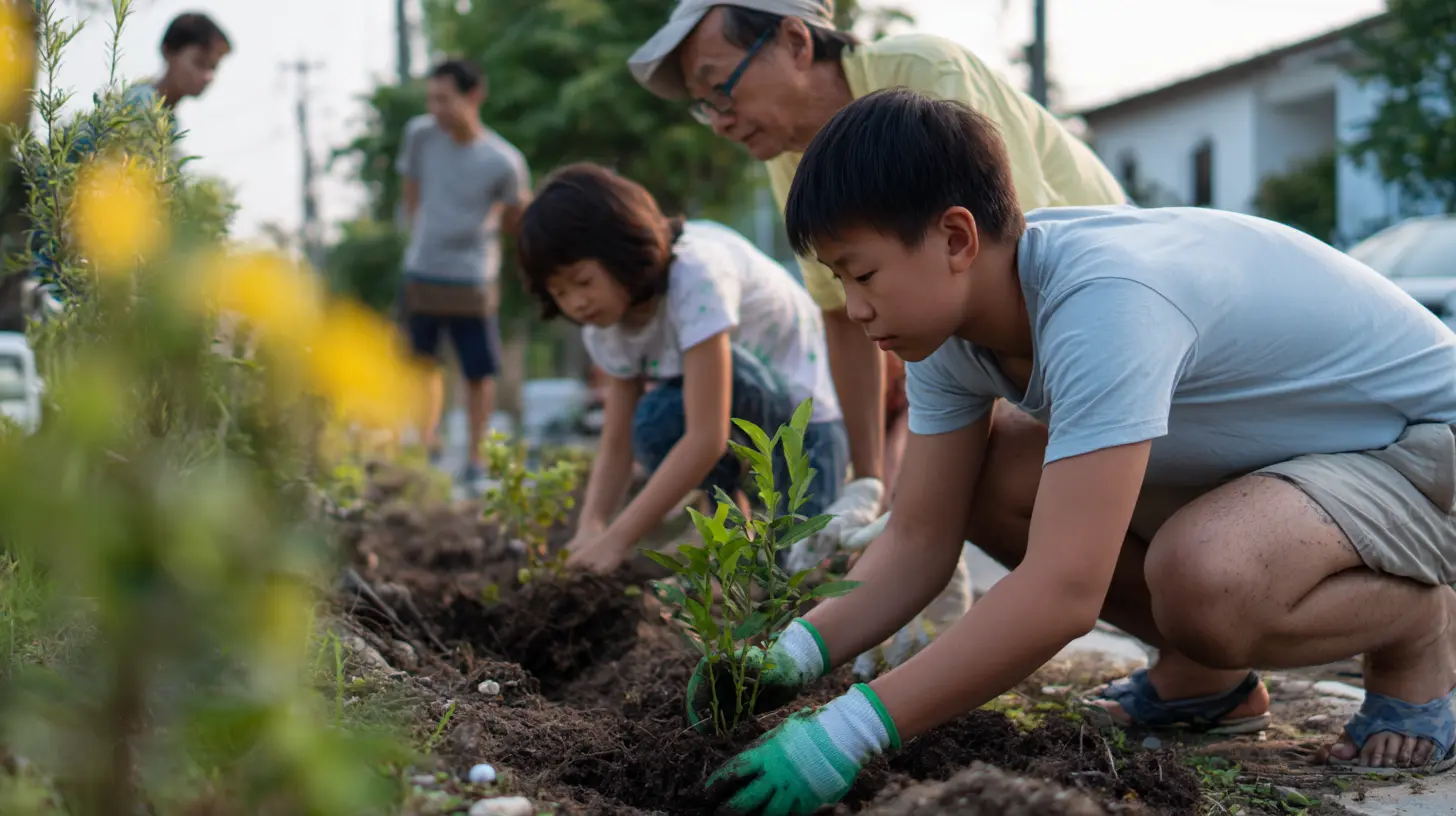
For young children, ages three to seven, the focus should be on tangible, immediate results. They need to see the outcome of their work. Sorting toys for donation, making simple greeting cards for nursing home residents, or picking up litter in a local park are good choices. The task should be concrete and short. A thirty-minute project is plenty for a five-year-old.For older children, ages eight to twelve, you can introduce projects that require more coordination. Packing food boxes, organizing a book drive, or helping at a community garden are excellent options. At this age, children understand the concept of cause and effect. They can grasp that their effort helps someone they will never meet. This is the age where you can start having conversations about why some people need help.
Teenagers are ready for more complex and emotionally challenging work. They can handle serving meals at a shelter, tutoring younger children, or helping with environmental restoration. They also benefit from having a say in choosing the project. A teenager who is forced into service will resent it. A teenager who picks a cause they care about, whether it is animal welfare or climate action, will own the experience.
The Matching Problem
There is a common misconception that any service is good service. That is not true. If your child is introverted and shy, a project that requires constant interaction with strangers might be overwhelming. If your child is highly energetic, a project that involves sitting still and folding flyers will be torture.The key is to match the project to your family's temperament. A family of extroverts might thrive at a community event where they can talk to people. A quieter family might prefer behind-the-scenes work like organizing donations or preparing materials. Both are valuable. Both matter. The goal is not to force your family into a mold. The goal is to find a way for each member to contribute in a way that feels natural.
The Hidden Obstacles and How to Overcome Them
Even with the best intentions, family service projects can fail. The most common obstacle is scheduling. Between school, work, sports, and homework, finding a two-hour block where everyone is available and not exhausted is genuinely hard. This is where many families give up.The Scheduling Trap
The solution is not to find more time. It is to lower the barrier. Instead of committing to a monthly project that takes half a day, start with a twenty-minute activity that you can do on a Saturday morning. Walk around your neighborhood with a trash bag. Rake leaves for an elderly neighbor. Drop off gently used clothes at a donation center together.The frequency matters more than the duration. A family that does a small act of service every other week will build stronger bonds than a family that does one big project twice a year. The small, regular acts become part of your routine. They become normalized. Your children stop thinking of service as an event and start thinking of it as a way of life.
The Motivation Problem
Another obstacle is motivation. Children, especially teenagers, may not see the point. They might complain that it is boring or that it does not change anything. This is a legitimate objection, and it deserves a real answer, not a lecture.Do not tell them that they should be grateful for what they have. That is a guilt tactic, and it backfires. Instead, acknowledge that their complaint has some truth. One afternoon of service will not end hunger or fix the environment. But it is not about fixing everything. It is about being the kind of person who shows up. It is about building a habit of looking outward instead of inward.
If your teenager still resists, let them choose the cause. Give them ownership. If they care about climate change, find a local environmental group. If they care about mental health, look for a charity that supports that. When the cause is personal, the resistance drops.
The Long-Term Effects on Family Dynamics
The benefits of family service are not always visible in the moment. In fact, the immediate aftermath of a service project can be messy. There might be complaints about being tired or hungry. There might be a fight in the car on the way home. Do not let that discourage you.The effects of shared service show up over time. Children who serve with their families tend to develop a stronger sense of empathy. They are more likely to notice when someone is struggling. They are more likely to offer help without being asked. These are not just character traits. They are relationship skills. When your child learns to see the needs of others, they also learn to see the needs of their own family members.
There is also a subtle shift in how parents and children communicate. During a service project, you are not in the usual parent-child dynamic. You are working as peers. This opens the door for conversations that might not happen at the dinner table. A child might open up about their worries while you are both planting flowers. A parent might share a story about their own childhood while sorting books. These conversations are gold. They build trust and intimacy.
Common Mistakes Parents Make
Even experienced parents make mistakes when it comes to family service. Here are the most common ones, and how to avoid them.Treating Service as a Punishment
Some parents use community service as a consequence for bad behavior. This is a serious error. When service is used as a punishment, children associate helping others with being in trouble. They learn that giving is a burden, not a privilege. This can turn them away from service for years.Instead, keep service separate from discipline. If your child misbehaves, the consequence should be related to the behavior, not to helping others. Service should always be framed as a positive choice, something the family does because it is meaningful, not because someone did something wrong.
Forcing Gratitude
Another mistake is trying to force gratitude. Parents often say things like "You should be thankful you have a roof over your head" while volunteering. This is counterproductive. It makes the child feel guilty for their own good fortune, which breeds resentment.The goal of service is not to make your child feel bad about their own life. The goal is to help them connect with others. Gratitude will come naturally, but it cannot be demanded. Instead of pointing out what your child has, focus on what you are giving together. Talk about the people you are helping, not the things your child should appreciate.
Making It a Lecture
Finally, do not turn service into a teaching moment every time. If you constantly explain the moral lesson of each activity, your children will stop listening. Let the experience speak for itself. You can have a conversation afterward, but keep it light. Ask open-ended questions like "What did you notice today?" or "How did that make you feel?" rather than delivering a monologue about the importance of giving back.Real-World Examples of Family Service That Work
To make this concrete, here are a few examples of how different families approach service. These are not fictional success stories. They are patterns that tend to work well.The Weekend Walkers
One family I know has a rule. Every Saturday morning, they take a walk in their neighborhood. Each person carries a small bag and a grabber tool. They pick up litter as they walk. The walk takes about forty minutes. The kids complain sometimes, but they also compete to see who can collect the most bottle caps. The parents use the time to ask about school, friends, and worries. The service is simple, but the consistency is what makes it powerful. They have been doing this for three years.The Holiday Bakers
Another family bakes cookies every December. They make a huge batch, then divide it into tins. They deliver the tins to neighbors, the mail carrier, and the local fire station. The kids decorate the tins with drawings. The parents use the activity to talk about who in their community might feel lonely during the holidays. The project is seasonal, but the conversation about kindness lasts all year.The Library Helpers
A third family volunteers at their local library once a month. They help with story time for younger children. The parents read, and the kids help with crafts. This works because the family loves books. It does not feel like a chore. It feels like an extension of who they already are. The children are learning that they can share their interests with others.These examples share a common thread. The service is not grand or heroic. It is practical, regular, and aligned with the family's existing interests. That is the secret. You do not need to start a nonprofit or travel abroad. You need to find a small way to help that fits your family's rhythm.
The Trade-Offs of High-Commitment Service
Some families decide to go bigger. They commit to a weekly shift at a food bank or a long-term project like building a house with a housing charity. These high-commitment projects have real benefits. They create a deep sense of accomplishment. They teach perseverance. They expose children to communities and situations they would not otherwise see.But they also have costs. They require significant time and energy. They can be emotionally draining, especially for younger children. They can also create a sense of obligation that feels heavy. If a family is already stretched thin, a high-commitment project can cause burnout. The service becomes a source of resentment rather than bonding.
The trade-off is real. You have to weigh the benefits of deep engagement against the risks of fatigue. A good rule of thumb is to start small and see how it feels. If the project energizes your family, consider increasing the commitment. If it drains you, step back and try something lighter. There is no shame in scaling down. The goal is sustainable connection, not martyrdom.
How to Start a Family Service Tradition
If you are ready to start, here is a practical plan.First, have a family meeting. Ask everyone what causes they care about. Write down all the ideas, even the silly ones. You are not looking for the perfect cause. You are looking for something that at least one family member feels passionate about.
Second, research local opportunities. Look for organizations that welcome families. Many food banks, animal shelters, and community centers have family-friendly shifts. Call ahead and ask about age requirements and what to expect.
Third, set a low bar. Commit to one small project. Do not announce that you will volunteer every month for a year. Just do one thing. Afterward, have a debrief. Ask everyone what they thought. If it went well, schedule another. If it did not, try a different type of project.
Fourth, make it a habit. The goal is to integrate service into your family's identity. That takes repetition. Once you find something that works, put it on the calendar. Treat it like any other important family activity. Protect that time.
Finally, reflect together. Once a season, talk about the projects you have done. What did you learn? What was hard? What was fun? This reflection turns individual experiences into a shared family story.
The Misconception That Service Is Only for the Needy
There is a subtle but damaging misconception that community service is something you do for people who are less fortunate. This framing creates a separation between "us" and "them." It turns service into a charity transaction rather than a human connection.The truth is that service benefits everyone involved. The person receiving help gets a need met. The person giving help gets a sense of purpose, a broader perspective, and a connection to their community. These are not unequal exchanges. They are mutual gifts.
When you frame service this way for your children, you remove the condescension. You are not helping "those poor people." You are working alongside your neighbors to make your shared community better. This is a subtle shift, but it changes everything. It makes service an act of partnership, not pity.
The Role of Technology and Social Media
In a modern family, screens are a constant presence. Some parents worry that service cannot compete with the lure of a phone. But service can actually be a powerful counterweight to the digital world. When you are physically working, sorting, lifting, or planting, you are completely present. There is no notification that matters. The task requires your hands and your attention.This is one of the reasons service is so effective at building bonds. It forces a digital detox that does not feel like a punishment. Your child is not being told to put down the phone. They are being given a reason to put it down. The satisfaction of a completed project is more tangible than the dopamine hit of a like or a comment.
Parents can also use technology to reinforce the habit. After a project, take a family photo and post it, if everyone is comfortable. This publicly affirms the family's values. It also shows the wider community that service is normal and expected. But be careful. Do not turn service into a performance for social media. The goal is connection, not likes. If posting becomes the main point, the experience loses its integrity.
The Ripple Effect on Extended Family and Friends
When your family makes service a priority, it does not stay contained. Relatives notice. Friends notice. Grandparents might ask about your projects. Neighbors might join you on a Saturday walk. This is a positive ripple effect. Your family becomes a model for others, not because you are preaching, but because you are acting.This can also create opportunities for intergenerational bonding. Grandparents can share their own stories of volunteering. Older relatives might have skills to offer, like knitting for a charity drive or cooking for a meal program. Including extended family in service projects strengthens those bonds too. It gives cousins a shared activity. It gives grandparents a role that is not just about receiving care but about giving.
When Service Does Not Go Well
It is important to be honest. Sometimes service projects go badly. The organization is disorganized. The weather is terrible. The kids are cranky. The whole thing feels pointless. This happens to every family eventually.Do not treat a bad project as a failure. Treat it as data. What went wrong? Was the project too long? Was it too unstructured? Did the family need a break that day? Use the information to make better choices next time.
Also, do not force a project that is clearly not working. If everyone is miserable, it is okay to leave early. You can explain to the organization that the fit was not right. You are not obligated to suffer. The goal is to build a positive association with service. If you push through a terrible experience, you create a negative association that will be hard to undo.
The Quiet Power of Consistency
The most important word in family service is consistency. A single project is a nice memory. A regular practice is a transformation. When service becomes a habit, it stops being an "activity" and starts being part of who your family is.This is not about grand gestures. It is about showing up, week after week, for the people and places around you. It is about teaching your children that they are part of something larger than themselves. It is about building a family identity that is rooted in contribution, not consumption.
The bond that forms from this consistency is deep. It is not based on the excitement of a special event. It is based on the quiet knowledge that you can rely on each other, that you can work together, and that you share a commitment to making the world a little better. That is a bond that no game night can replicate.
A Final Word for Parents
You do not need to be an expert on social issues to serve with your family. You do not need to have a perfect plan. You just need to start. Pick one small thing. Do it together. See what happens.The first time might be awkward. The second time might be better. By the tenth time, it will be a part of your family's rhythm. Your children will stop asking why they have to do it. They will start expecting it. And one day, they will carry that expectation into their own adult lives. That is the legacy of family service. It is not just about the help you give today. It is about the people you become together.
all images in this post were generated using AI tools
Category:
Parenting And CommunityAuthor:

Austin Wilcox
Discussion
rate this article
1 comments
Aaron Perry
What a wonderful way to bring families together! Community service not only helps those in need but also creates lasting memories and strengthens our bonds. Love this idea!
August 12, 2026 at 2:41 PM
Austin Wilcox
Thank you! I'm glad you feel that way. Community service truly does bring families closer while making a positive impact.