The Art of the Curfew Negotiation in 2027
5 September 2026
There is a moment every parent recognizes. It usually happens on a Sunday evening, somewhere between the dishwasher cycle and the eleventh episode of a show your teenager claims is "basically a documentary." Your sixteen-year-old appears in the kitchen doorway, phone in hand, and delivers the line that has echoed through generations: "So, about Friday..."
You brace yourself. Not because you don't trust them, but because you know what is coming next. A request for a later curfew. A proposal that involves a party, a friend's older sibling driving, and a return time that feels like it was generated by a random number generator set to "technically after midnight."
Here is the thing about curfew negotiations in 2027: they are not the same as they were in 2007, or even 2017. The landscape has shifted. The variables have changed. And if you are still using the same playbook your parents used, you are going to miss the mark entirely.
This is not a guide to winning arguments with your teenager. It is a guide to building a system that actually works, one that accounts for the world they live in now, not the world you grew up in.
Why the Old Rules No Longer Apply
Let us start with a hard truth. The traditional curfew conversation was built around a simple premise: your teenager leaves the house, does something you vaguely disapprove of, and comes home by a time that limits the damage. The curfew was a fence, and your job was to set the fence line.That model is broken for several reasons.
First, the concept of "coming home" has blurred. In 2027, your teenager is socially present in at least three spaces simultaneously. They are at a friend's house, but they are also in a group chat with twelve other people, and they are live-posting updates to a story that disappears in twenty-four hours. The physical location matters less than the digital one. A curfew that only governs physical presence misses most of the picture.
Second, the risks have changed. The dangers your parents worried about, namely car accidents, alcohol, and peer pressure, still exist. But they have been joined by a new set of concerns. Location sharing is now ubiquitous. Ride-sharing apps have made it easier for teenagers to move around without a parent's knowledge. And the social pressure to be "reachable" at all hours has created a strange new dynamic where being offline is seen as suspicious.
Third, and this is the big one, your teenager has more negotiating power than you think. They have access to information. They know what their friends' curfews are. They have read articles about adolescent sleep needs. They have heard the phrase "autonomy supports development" somewhere, probably from a TikTok therapist, and they will deploy it against you with the precision of a lawyer.
So if you walk into this negotiation with the same tired arguments, you will lose. Not because you are wrong, but because you are speaking a different language.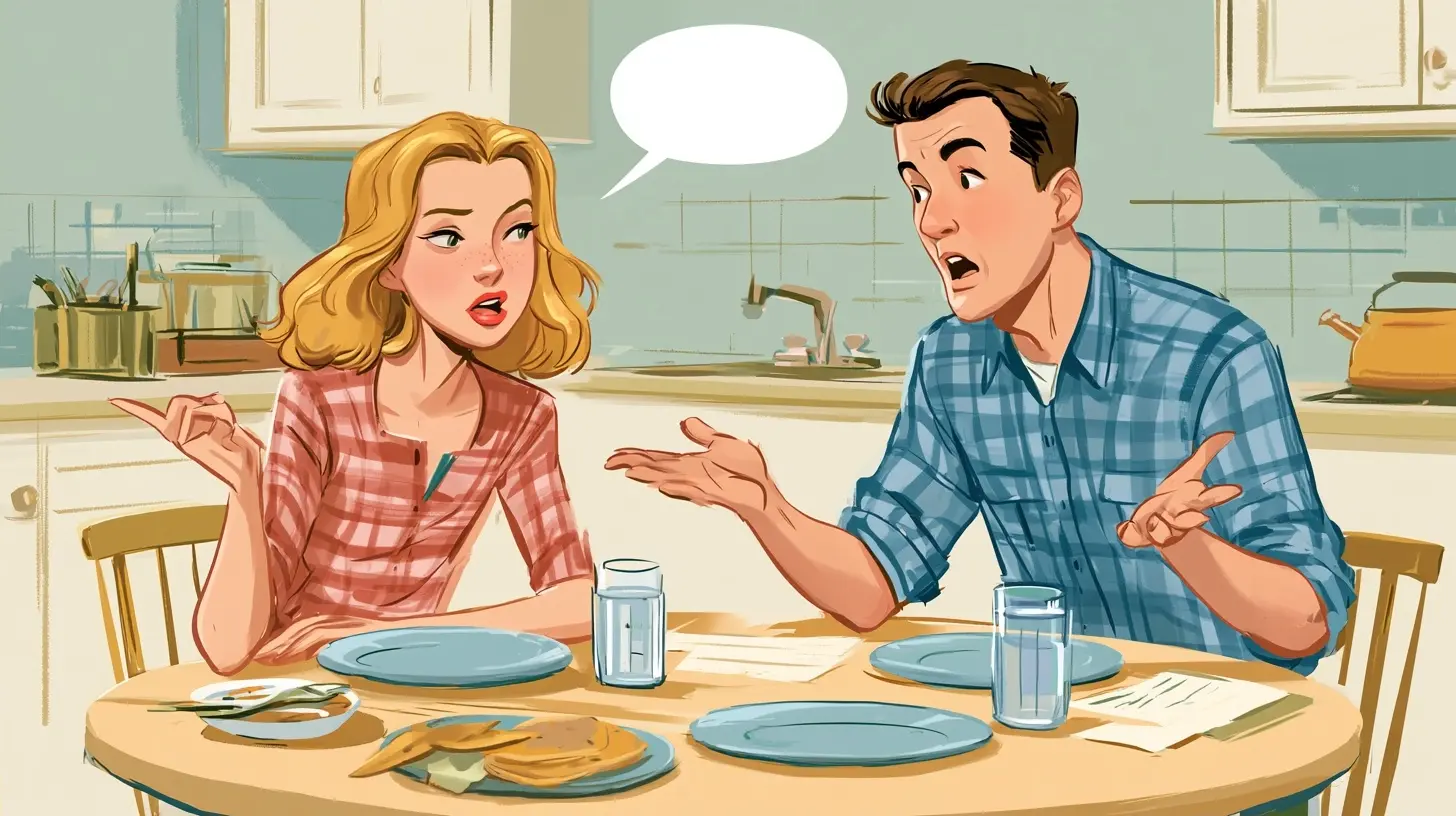
The Real Goal Is Not the Time
Here is the mistake most parents make. They treat the curfew as the outcome. They focus entirely on the number, the hour, the minute. They negotiate like they are haggling over the price of a used car.But the curfew is not the goal. The goal is trust, safety, and communication. The time is just a proxy for those things.
When you understand this, the entire conversation changes. You stop arguing about whether 11:30 PM is more reasonable than midnight. You start asking better questions. What are you actually doing? Who will be there? How will you get home? What happens if the plan changes? What is your backup plan?
This is not about being controlling. It is about being realistic. The curfew is a contract, and a good contract specifies more than just the delivery date. It specifies the terms.
A teenager who can answer those questions clearly is demonstrating the maturity that justifies a later curfew. A teenager who responds with "I don't know, just hanging out" is telling you they are not ready for the responsibility. Not because they are a bad kid, but because they have not thought it through.
And here is the secret that changes everything: you can teach them to think it through. That is the actual job.
The 2027 Reality Check
Before you set any time, you need to understand what your teenager is actually dealing with on a Friday night in 2027.The social scene has shifted. Large house parties still exist, but they are less common than they were a decade ago. The cost of living has pushed many families into smaller spaces, which means fewer basements are available for teenage gatherings. Instead, you see smaller groups meeting at public spaces, coffee shops that stay open late, arcades, bowling alleys, or someone's living room with strict parental supervision on the premises.
The transportation picture is different too. Fewer teenagers are driving. The cost of insurance, the price of used cars, and the availability of ride-share services have all contributed to a decline in teenage licensure. This is a double-edged sword. On one hand, you worry less about your teenager driving recklessly. On the other hand, they are dependent on rides from others, which means you have less control over their schedule.
Then there is the digital layer. Your teenager's social life does not end when they walk in the door. It continues in group chats, on gaming platforms, and in private messaging apps. This creates a strange paradox. They are physically home by 10 PM, but socially active until 1 AM. The curfew, in many ways, is just a transition from one form of socializing to another.
This matters because it changes the nature of the negotiation. When your teenager asks for a later curfew, they are not just asking for more time out of the house. They are asking for more time in a specific social context. The real question is not "when should you be home?" It is "what are you doing, and why is that the best use of your time?"
The Negotiation Framework That Works
I have seen many approaches to curfew negotiations over the years. Some parents use a rigid system with escalating consequences. Others operate on a case-by-case basis. A few have abandoned curfews entirely, opting for open communication and mutual respect.None of these are wrong, but none of them are complete either. The most effective approach I have observed combines structure with flexibility. It gives the teenager a sense of agency while maintaining clear boundaries. Here is how it works.
Step One: Separate the Conversation from the Decision
Do not negotiate in the moment. When your teenager asks for a later curfew on Wednesday for a party on Friday, do not give them an answer right away. This is not about being evasive. It is about giving yourself time to think and giving them time to prepare.Say something like: "Let us talk about it tomorrow evening. In the meantime, I want you to write down the details. Where are you going? Who is hosting? Are their parents going to be there? How are you getting there and back? What time does the event actually end, not just when you want to leave?"
This serves two purposes. First, it prevents you from making a snap decision you might regret. Second, it forces your teenager to engage with the logistics. You are not asking them to do homework. You are asking them to demonstrate that they have thought this through.
Step Two: Shift from Demands to Information
When you sit down to talk, do not start with your position. Start with questions. Ask them to walk you through the evening from start to finish. Where are they going? Who will be there? What happens if the host's parents are not around? What happens if the ride falls through?Listen more than you speak. This is hard, but it is essential. Your teenager is used to being talked at. When you actually listen, you will be surprised by what you hear.
You might find out that the party is at a friend's house where the parents are known to be strict and present. You might find out that there is a designated driver who is a senior and has a clean record. You might find out that the event ends at 11 PM, and the "curfew" they are asking for is just buffer time.
Or you might find out that the plan is vague, the location is uncertain, and the transportation is "someone's older brother." That information is gold. It tells you exactly where the gaps are.
Step Three: Offer a Trial Period
Instead of a permanent change, offer a one-time extension. This is not a concession. It is a test.Say: "I am willing to let you stay out until midnight this Friday, under these conditions. You will share your location with me. You will text me at 10 PM with an update. You will answer if I call. And we will talk about how it went on Saturday."
This approach works because it removes the stakes. The teenager is not fighting for a permanent change in the rules. They are asking for a single opportunity to prove themselves. And you are not making a blanket decision. You are evaluating a specific situation.
If the night goes well, you have data. You can point to the fact that they communicated, that they came home on time, that they handled a change in plans responsibly. That becomes the foundation for a more permanent adjustment.
If the night goes poorly, you also have data. You are not punishing them for breaking a rule. You are responding to a demonstrated lack of readiness.
Step Four: Build a Tiered System
Once you have gone through a few trial periods, you can formalize the arrangement. Create a tiered curfew system based on the type of event and the level of trust.For example:
- Tier One: Standard weekend curfew, say 10 PM for a fifteen-year-old, 11 PM for a sixteen-year-old. This applies to casual hangouts with no specific plans.
- Tier Two: Approved events with known details, such as a school dance or a party at a friend's house with parental supervision. This might be midnight.
- Tier Three: Special occasions, such as prom or a milestone birthday. This might be 1 AM or later, with additional conditions.
The key is to make the tiers explicit and to tie them to demonstrated responsibility. A teenager who handles Tier Two well earns the right to ask for Tier Three. A teenager who abuses Tier Two gets bumped back to Tier One for a while.
This system has a major advantage. It removes the emotional charge from each individual request. The rules are clear. The expectations are known. The teenager knows exactly what they need to do to earn more freedom.
The Communication Charter
A curfew is not just a time. It is a communication agreement. In 2027, that agreement needs to be explicit.Sit down with your teenager and establish the following expectations.
First, location sharing. This is non-negotiable in most cases. If your teenager has a smartphone, they can share their location with you. This is not surveillance. It is a safety net. You are not checking their location every five minutes. You are checking it if they do not respond to a text.
Second, check-in times. Agree on specific times when they will text you. The exact times depend on the event and the curfew, but a good rule of thumb is once in the middle of the evening and once about thirty minutes before they plan to leave. These check-ins are not about control. They are about establishing a rhythm of communication.
Third, the change of plans protocol. This is the one that trips everyone up. Something will go wrong. The ride will be late. The event will run longer than expected. A friend will have an emergency. Your teenager needs to know what to do in these situations.
The rule should be simple: if the plan changes, they text you immediately. They do not wait until the last minute. They do not hope you will not notice. They communicate, and you agree to be reasonable in your response.
This last part is crucial. If your teenager texts you at 11 PM to say the party is running late and they want to stay another hour, you need to be able to handle that request without exploding. You can say no. But you should also be willing to say yes if the circumstances justify it.
The goal is to create a dynamic where your teenager feels comfortable coming to you with problems, not hiding them.
Common Mistakes and Misconceptions
Let me address some of the things I see parents getting wrong.Mistake One: Treating the curfew as a moral issue. A curfew is not a measure of your teenager's character. It is a practical arrangement. When you frame it as "good kids come home by 10 PM," you are setting yourself up for a fight. Your teenager will find examples of good kids who stay out later, and they will be right.
Mistake Two: Ignoring the sleep factor. Adolescents need more sleep than adults, and their circadian rhythms shift later. A curfew that forces them to be home by 9 PM does not help them sleep. It just means they lie in bed staring at their phone. The real issue is not when they get home. It is when they actually go to bed.
Mistake Three: Being inconsistent. If you let them stay out until midnight one weekend and then demand 10 PM the next, with no explanation, you are creating confusion. Teenagers thrive on predictability. The rules should be stable, or the changes should be clearly communicated.
Mistake Four: Over-relying on technology. Location sharing is a tool, not a solution. Some parents think that because they can see their teenager's dot on a map, they are safe. But location sharing does not tell you who they are with, what they are doing, or whether they are okay. It is a supplement to communication, not a replacement.
Misconception: "My teenager should be grateful I let them go out at all." This is a trap. Gratitude is not a substitute for trust. If you are constantly reminding your teenager that they are lucky to have any freedom, you are teaching them that freedom is a gift you can take away at any moment. That creates resentment, not respect.
The Role of Consequences
Every negotiation needs a consequence structure. But the consequences should be logical, not arbitrary.If your teenager comes home late because they lost track of time, the consequence might be an earlier curfew for the next weekend. This is logical because it gives them a chance to reset.
If your teenager comes home late because they chose to ignore the agreement, the consequence should be more serious. Losing the ability to go out for a weekend or two is reasonable.
If your teenager lies about where they are going or who they are with, that is a different category entirely. That is a breach of trust, and it requires a different response. The focus should be on rebuilding trust, not just punishing the behavior.
The key is to make the consequences clear in advance. Your teenager should know what happens if they break the rules. They should not be surprised by the outcome. This is not about being harsh. It is about being fair.
What to Do When the Negotiation Fails
Sometimes, despite your best efforts, you will not reach an agreement. Your teenager will push for a time you are not comfortable with, and you will say no. They will be upset. There will be drama.This is fine. It is normal. The goal is not to avoid conflict. The goal is to handle conflict well.
When you say no, explain your reasoning. Do not just say "because I said so." That might work with a ten-year-old, but it does not work with a sixteen-year-old. Lay out your concerns. Be specific. "I am not comfortable with you staying out until 2 AM because I do not know the host's parents, and I have not been able to verify that there will be adult supervision."
Then, offer an alternative. "I am willing to extend your curfew to 12:30 AM if you can get me the host's parents' phone number and confirm the transportation plan." This shows that you are not being arbitrary. You are being cautious, and you are willing to move if your concerns are addressed.
If your teenager storms off, let them. Give them space. Do not chase them down to continue the argument. Wait until the next day, when emotions have cooled, and revisit the conversation.
The Long Game
Here is the perspective that changes everything. The curfew negotiation is not about Friday night. It is about the next five years.Your teenager is going to leave home eventually. They will go to college, get a job, move into an apartment. They will make their own decisions about when to come home, who to spend time with, and how to stay safe. The curfew is your last chance to teach them how to make those decisions well.
So the real question is not "what time should they be home?" It is "what skills do they need to navigate the world independently?"
The skills are simple: planning, communication, and judgment. A teenager who can plan a night out, communicate changes, and exercise good judgment is ready for more freedom. A teenager who cannot do those things needs more practice.
The curfew is just the practice field.
When you approach it this way, the negotiation becomes less adversarial. You are not fighting against your teenager. You are working with them to build a system that keeps them safe while giving them room to grow.
A Final Practical Note
One last piece of advice. Do not overthink the specific hour. The difference between 11 PM and midnight is not a matter of safety. It is a matter of comfort. Your teenager is not going to be fundamentally safer at 11 PM than at 11:30 PM. The risks are the same. The difference is how much trust you are willing to extend.If you have done the work, if you have established clear communication, if your teenager has demonstrated responsibility, then lean toward generosity. The cost of being slightly too lenient is low. The cost of being too strict is high. A teenager who feels trusted is more likely to act trustworthy. A teenager who feels controlled is more likely to rebel.
The art of the curfew negotiation is not about finding the perfect time. It is about building a relationship where time is just a detail.
all images in this post were generated using AI tools
Category:
Raising TeensAuthor:

Austin Wilcox
Discussion
rate this article
1 comments
Jet Dorsey
Ah, the classic curfew negotiation! It's like a high-stakes poker game, but with more eye rolls and snacks. Who knew parenting in 2027 would come with a side of bartering skills? Good luck, fellow negotiators!
September 5, 2026 at 4:49 AM