The Cognitive Benefits of Free Play by 2026
6 September 2026
The year 2026 is not a distant sci-fi horizon. It is the year the first cohort of children born during the initial wave of generative AI tools enters kindergarten. It is also the year we will see the full cognitive fallout of a decade defined by structured schedules, digital pacifiers, and the relentless optimization of childhood. In this landscape, free play is no longer just a nostalgic pastime. It is becoming a critical cognitive intervention, a biological necessity that we have systematically undervalued.
By 2026, the conversation around play will have shifted. Parents will no longer ask, "Is my child learning enough?" They will ask, "Is my child playing enough to actually use what they learn?" The cognitive benefits of free play are not about getting ahead. They are about building the neural architecture required for flexible thinking, problem-solving, and emotional regulation in a world that is changing faster than any curriculum can keep up with.
This article is not a summary of generic research. It is an expert analysis of how free play functions as a cognitive engine, why the coming years will make it more essential, and how you can implement it effectively without falling into common traps.
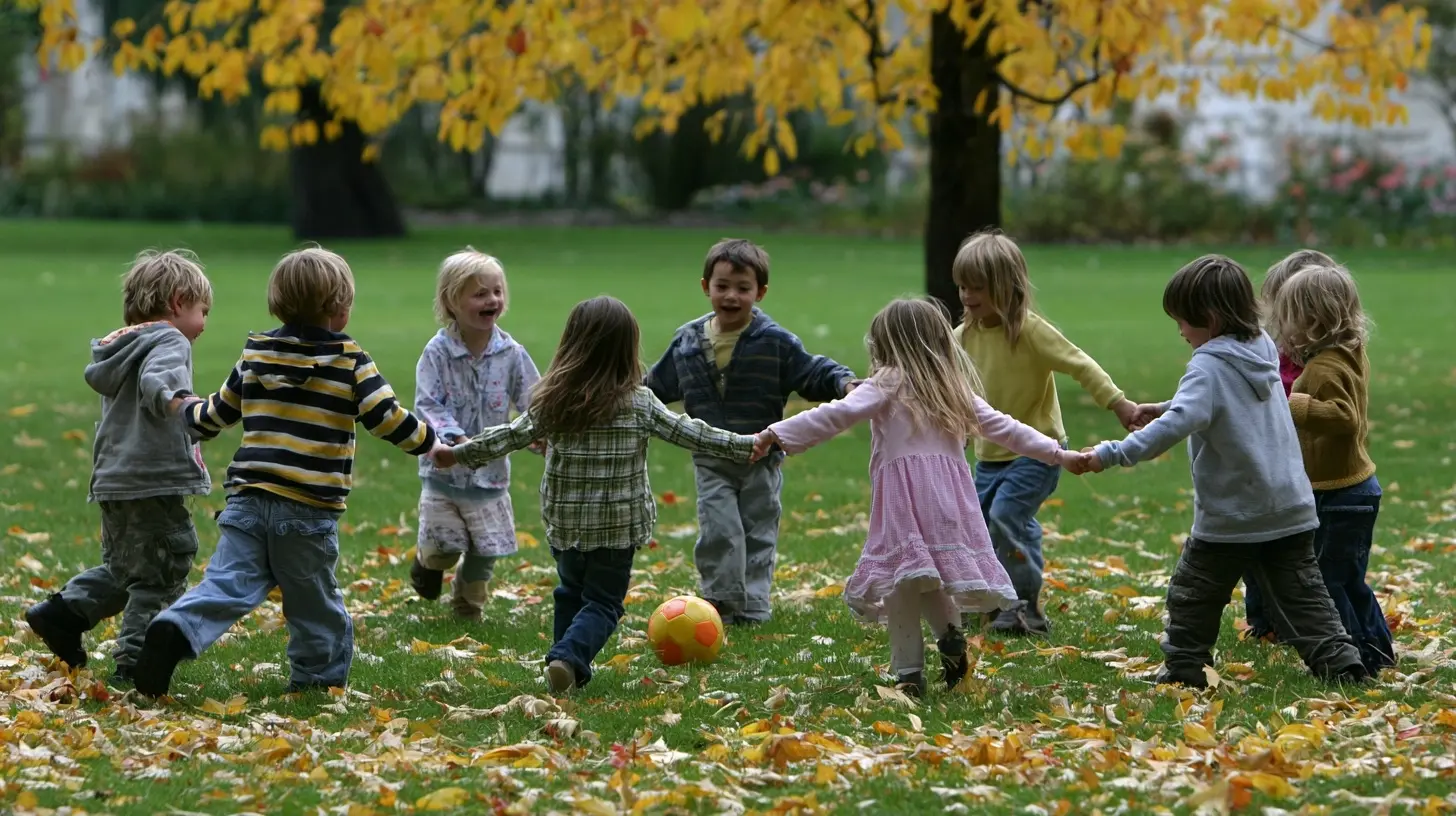
The Executive Function Factory: Why Play Outperforms Worksheets
Let us start with the most critical cognitive domain: executive function. This is the brain's air traffic control system. It manages working memory, inhibitory control, and cognitive flexibility. These skills predict academic success better than IQ scores in early childhood.Here is the paradox that will dominate parenting discussions by 2026. Direct instruction, like flashcards or drilling phonics, teaches a child what to think. Free play teaches a child how to think. When a child builds a fort with pillows, they must hold a mental image of the structure (working memory), resist the urge to knock it down prematurely (inhibitory control), and adjust their plan when a pillow slides (cognitive flexibility).
A structured puzzle has one correct answer. A pile of blocks has infinite possibilities. The cognitive load required to navigate open-ended materials is far higher than following a set of instructions. This is not to say worksheets are useless. They have a role in consolidation. But they are not the primary driver of executive function growth.
By 2026, we will see more schools adopting "play-based learning" not as a soft option but as a rigorous cognitive strategy. The key distinction is child-led versus adult-directed. In high-quality free play, the child sets the goal. The adult provides the environment and safety, but not the script. This is crucial because goal-setting and self-correction are the exact skills that executive function is built upon. When an adult says, "Now build a tower," the child is executing an external goal. When a child says, "I want to build a spaceship that can fly," they are generating an internal goal, which activates the prefrontal cortex in a different, more demanding way.
The mistake many parents make is hovering and correcting during play. "No, the wheels go on the bottom." This interrupts the child's problem-solving loop. The cognitive benefit comes from the child making the mistake, noticing the wheels do not roll, and figuring out a solution. That iterative process of hypothesis, test, and revision is the foundation of scientific thinking.
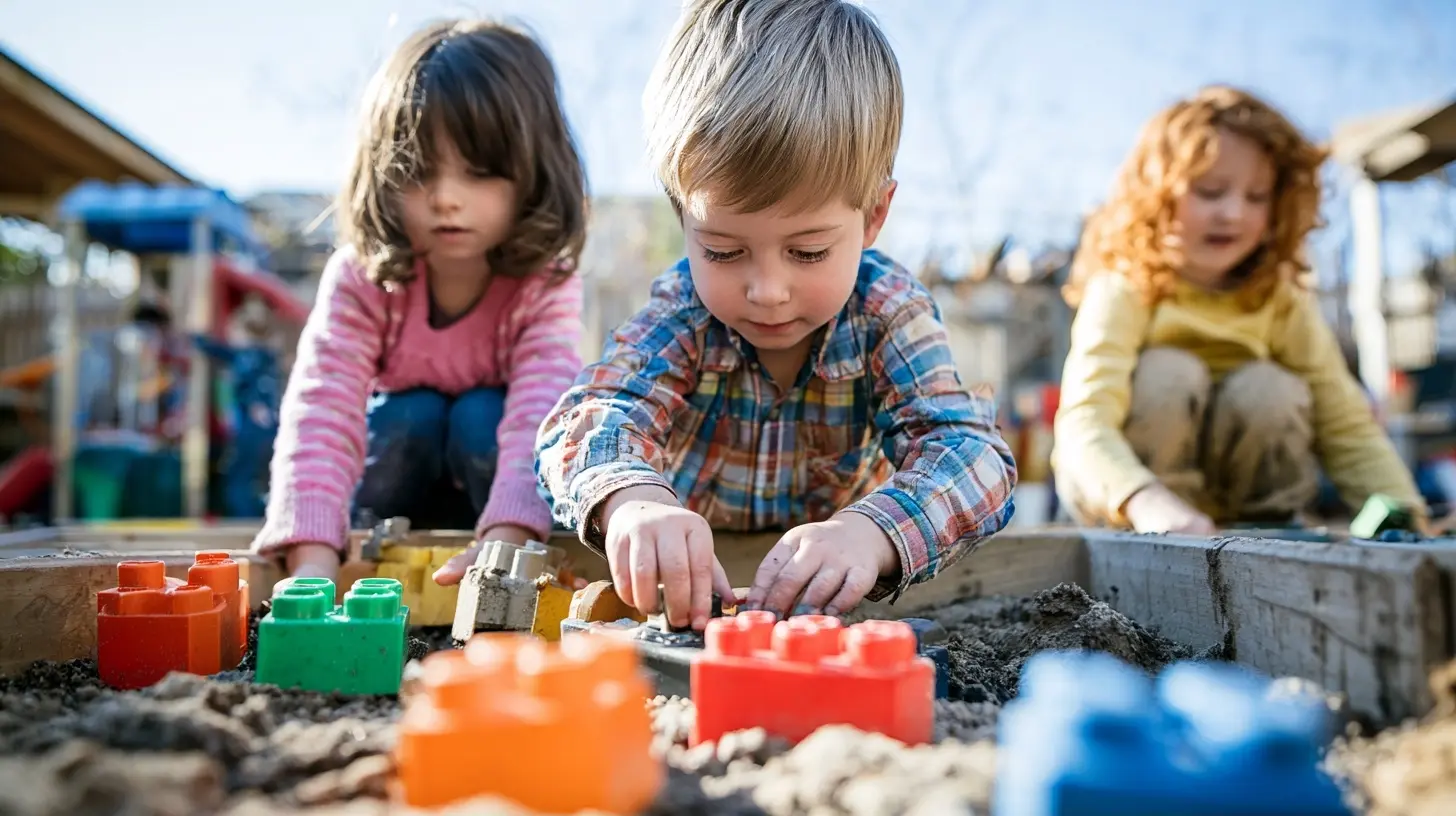
The 2026 Context: Digital Distraction and the Attention Economy
We cannot discuss free play in 2026 without addressing the elephant in the room: screens. The average child today spends more time with digital media than in unstructured outdoor play. By 2026, this gap will likely widen unless deliberate action is taken.The cognitive issue is not just about "screen time" as a monolithic block. It is about the nature of digital engagement. Most digital content for children is highly scaffolded. It provides immediate rewards, constant visual novelty, and eliminates the need for sustained internal attention. A child watching a fast-paced cartoon does not need to practice sustained attention because the stimulus is always changing. A child playing an educational app receives immediate positive feedback for every correct tap.
Free play is the opposite. It is slow. It has no external reward system. It requires the child to generate their own motivation. This is called intrinsic motivation, and it is neurologically distinct from extrinsic motivation. When a child plays with a stick in the dirt, they are practicing the art of self-regulation. They are learning to tolerate boredom, to generate ideas from nothing, and to sustain focus on a self-chosen task.
By 2026, the cognitive skill that will be most valued in the workforce is not coding or data analysis. It is the ability to sustain deep attention without external stimulation. Free play is the only childhood activity that directly trains this. A child who has spent hundreds of hours in unstructured play has built the neural pathways for self-directed focus. A child who has only engaged with high-stimulation digital content may struggle with any task that does not provide immediate feedback.
This does not mean screens are evil. The trade-off is about dosage and context. A 30-minute session of a high-quality educational game can be beneficial for specific skills like phonics or spatial reasoning. But it cannot replace the cognitive workout that comes from two hours of free play where the child must invent, negotiate, and persist without a digital safety net.

Social Cognition and the Art of Negotiation
Cognitive benefits are not limited to individual problem-solving. A large portion of free play, especially in groups, is social cognition. This is the ability to understand others' intentions, beliefs, and emotions, often called Theory of Mind.When children engage in pretend play, they must enter a shared imaginary world. This requires constant negotiation. "I will be the doctor, and you be the patient." "No, I want to be the doctor too." "Okay, let's both be doctors, but you have a different hospital." This seemingly simple exchange is a complex cognitive exercise. The child must hold their own perspective, infer the other child's perspective, and then propose a compromise that satisfies both.
This is not a trivial skill. By 2026, the ability to collaborate with diverse teams will be a core competency. The foundation for that is laid in the sandbox, not in the classroom. Digital social interaction, like online games or video chats, does not provide the same richness. In-person play includes non-verbal cues, body language, and the unpredictable flow of real-time feedback. A child cannot pause a conversation to think of a better response. They must process, adapt, and respond in real-time.
A common mistake is to structure every playdate with planned activities. "We are going to make this craft, then we will play this board game, then we will have a snack." While organized activities have value, they do not require the same level of social negotiation as free play. In a structured activity, the rules are given. In free play, the rules are created, tested, and broken. This is where children learn about fairness, leadership, and followership in a low-stakes environment.
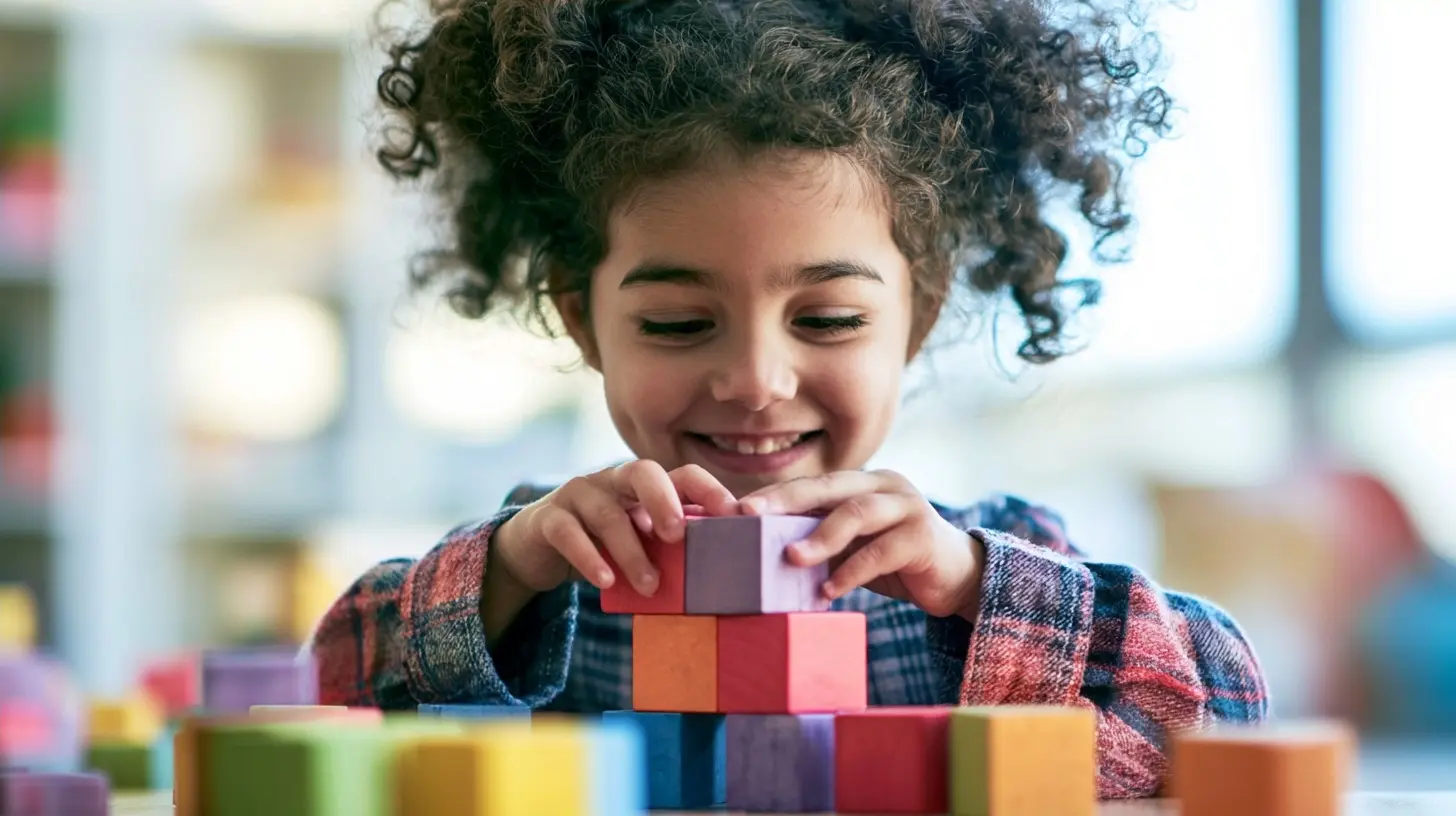
Divergent Thinking and the Death of the Single Answer
The educational system has traditionally rewarded convergent thinking: finding the single correct answer. But the most complex problems of the future will require divergent thinking: generating multiple solutions to an open-ended problem.Free play is the purest form of divergent thinking training. Give a child a cardboard box. The convergent answer is "it is a box." The divergent answers are endless: a car, a house, a time machine, a robot suit, a cave for a bear. Each of these requires the child to override the conventional function of the object and impose a new cognitive schema.
This is called functional fixedness. It is a cognitive bias that limits a person to using an object only in the way it is traditionally used. Adults suffer from this constantly. Children who engage in free play are actively breaking this bias. They are learning that objects, ideas, and situations can be reconfigured and reimagined.
By 2026, we will see more emphasis on "maker" culture and design thinking in schools. But the cognitive seed for that is planted in early childhood free play. The child who learns to see a blanket as a cape is developing the same cognitive flexibility that an engineer uses to see a shipping container as a housing unit.
The misconception here is that free play is only for young children. While the prime window is between ages 2 and 7, older children and even teenagers benefit from unstructured time. For adolescents, free play might look like building a skateboard ramp, starting a band, or writing a fan fiction story. The key is that it is self-directed, intrinsically motivated, and has no external evaluation. This is when the brain's pruning process is most active, and the connections that are used are strengthened while those that are not are eliminated. Free play ensures that the connections related to creativity and flexibility are not pruned away.
Practical Implementation: The 2026 Play Protocol
Knowing the benefits is not enough. The challenge for parents in 2026 is implementation. Here is a practical framework based on what works, what does not, and the trade-offs involved.First, assess the environment. The best play spaces are not necessarily filled with toys. They are filled with loose parts. This includes natural items like sticks, stones, and pinecones, as well as recycled items like fabric scraps, cardboard tubes, and empty containers. The rule of thumb is that a toy is only as good as its ability to be something else. A plastic fire truck is a fire truck. A cardboard box can be anything.
Second, manage your own anxiety. The most significant barrier to free play is adult discomfort with uncertainty. When a child is aimlessly wandering, parents often feel compelled to provide direction. They think, "She is bored. I need to fix this." But boredom is a precursor to creativity. It is the signal that the child's internal motivation is about to kick in. If you solve the boredom immediately, you rob the child of the opportunity to practice generating their own ideas.
A practical strategy is the "Boredom Buffer." Schedule a block of time, at least one hour, where there is no screen, no planned activity, and no adult direction. The child must navigate this time independently. The first few sessions may be frustrating. The child may complain. But after a few weeks, you will notice a shift. The child will begin to engage in deeper, more sustained play.
Third, consider the social configuration. Solo play, parallel play (playing alongside another child), and cooperative play all have different cognitive benefits. Solo play builds independence and focus. Cooperative play builds negotiation and empathy. Do not force group play if your child is naturally inclined to solo play. Both are valid. The goal is to ensure the child has access to all three types.
Fourth, look at the physical environment. By 2026, the "risky play" movement will be mainstream. This includes climbing trees, using tools under supervision, and playing at heights. The cognitive benefit of risky play is the development of self-assessment. A child who climbs a tree must constantly evaluate their own ability against the challenge. "Can I reach that branch?" "Is this hold secure?" This is proprioception and executive function working in tandem. The child is learning to make judgments under uncertainty. Overprotecting children from all risk eliminates this cognitive training. The trade-off is between safety and resilience. The best approach is to manage the risk, not eliminate it. Let the child climb the tree, but ensure the ground beneath is soft.
Common Misconceptions and the Path Forward
One of the most damaging misconceptions is that free play is the absence of learning. This is false. Free play is a different mode of learning. It is not the absence of structure; it is the presence of internal structure. The child is actively constructing knowledge. This is why you will often see children repeating the same action over and over. A child might pour water from a cup into a bucket for twenty minutes. This is not pointless. They are testing the concept of volume, gravity, and cause and effect. They are doing what a scientist does, just with simpler tools.Another misconception is that free play requires expensive toys or elaborate outdoor spaces. This is not true. The most complex play often happens in the most mundane environments. A kitchen with pots and pans is a rich play environment. A back yard with a patch of dirt is a universe. The cognitive benefit comes from the interaction, not the equipment.
The path forward by 2026 requires a cultural shift. We must stop viewing play as the reward for learning and start viewing it as the vehicle for learning. This does not mean we abandon all direct instruction. Reading and mathematics still require explicit teaching. But we must recognize that these skills are meaningless without the cognitive flexibility to apply them in novel situations. Free play provides that flexibility.
When your child is building a pillow fort, they are not just making a mess. They are calculating structural stability. When they are arguing about who gets to be the captain of the imaginary ship, they are practicing perspective-taking. When they are staring at a blank piece of paper with a crayon, they are making a decision about what to create from nothing.
In 2026, the children who will thrive are not the ones with the most advanced academic skills at age five. They are the ones with the most robust executive functions, the strongest intrinsic motivation, and the deepest capacity for creative problem-solving. These are not traits that come from a curriculum. They come from time, space, and the freedom to play without an agenda.
The best thing you can do for your child's cognitive future is to step back, put the phone down, and let them get bored. Then, let them figure out what to do about it. That moment of frustration is the moment of cognitive growth. Your job is not to lead the play. Your job is to protect the time and space for it to happen. That is the single most powerful intervention you can make as a parent in the coming years.
all images in this post were generated using AI tools
Category:
Early Childhood EducationAuthor:

Austin Wilcox
Discussion
rate this article
1 comments
Soryn Garcia
Free play nurtures creativity and problem-solving skills in children. As they explore freely, they develop critical thinking and emotional resilience. Encouraging unstructured play is essential for fostering well-rounded and confident individuals ready for future challenges.
September 7, 2026 at 4:05 AM