Troubleshooting Nap Time: When Baby Just Won’t Sleep
11 August 2026
There is a special kind of exhaustion that comes from a baby who refuses to nap. You have done everything right. The room is dark. The white noise machine hums. The sleep sack is on. You rock, you shush, you pat. And still, those little eyes stay wide open, staring at you with what looks like mild amusement. Or worse, they close for ten minutes and then snap open the second your foot touches the crib rail.
Nap time is not the same as nighttime sleep. It is a different beast, governed by different biology, different pressure, and different expectations. Many parents assume that if their baby sleeps well at night, naps should follow the same pattern. That assumption is often the first mistake. Understanding why naps fail is the key to fixing them, and that requires looking at sleep pressure, circadian rhythms, and the developmental stage your baby is actually in, not the one you hoped they were in.

The Biology of Naps: Why They Are Not Just Shorter Nights
To troubleshoot nap failure, you have to understand the underlying mechanics. Sleep is driven by two primary systems: the homeostatic sleep drive and the circadian rhythm. The homeostatic drive is essentially sleep pressure. It builds the longer a baby is awake. The circadian rhythm is the internal clock that regulates when sleep is biologically preferred.At night, both systems align. Sleep pressure is high, and the circadian clock signals that it is time for a long sleep episode. During the day, the circadian system is actively working against sleep. There is a natural dip in alertness in the mid-afternoon, which is why many cultures have siestas, but for the most part, the body wants to be awake during daylight hours.
This means that naps depend almost entirely on sleep pressure. A baby will only nap when the pressure is high enough to overcome the circadian resistance. If the pressure is too low, the nap will be short, fragmented, or will not happen at all. If the pressure is too high, the baby may be overtired, which triggers a stress response that makes falling asleep even harder.
This is the core trade-off in nap troubleshooting. You need to catch the window where sleep pressure is high enough to induce sleep but not so high that the baby is flooded with cortisol and adrenaline. This window is often called the wake window, and it changes constantly in the first year.

The Wake Window Myth and Reality
The concept of wake windows has become a staple of modern sleep training advice. Charts tell you that a three-month-old should be awake for 90 minutes, a six-month-old for two and a half hours, and so on. These numbers are useful as starting points, but they are not laws of nature.The problem is that wake windows are averages, not prescriptions. Some babies naturally have shorter windows. Some have longer ones. A baby who is teething, sick, or going through a developmental leap may need a shorter window for a few days. A baby who is particularly curious and engaged may fight sleep because they do not want to miss anything.
Instead of rigidly following a clock, watch for the signs. Early sleep cues are subtle. The baby may lose interest in toys, turn their head away from stimulation, or get quiet. Many parents miss these cues because they are waiting for the obvious signs like eye rubbing or yawning. By the time those appear, the window may already be closing.
A real-world example: A seven-month-old is playing on the floor. She is happy, babbling, and moving from toy to toy. Then she stops, stares at a spot on the wall, and goes still. That stillness is a cue. If you move to the nursery within five minutes, she will likely fall asleep easily. If you wait, she will start to fuss, then cry, and then become hyperactive. That hyperactivity is not energy. It is adrenaline. The nap is now much harder to achieve.
The best practice is to track your baby's actual sleep patterns for a week. Note when they fall asleep, how long they sleep, and what time they wake. You will likely see a pattern that does not match the charts. Trust that pattern. The charts are a guide, but your baby is the authority.

The Short Nap Problem: The 30-Minute Curse
One of the most frustrating nap issues is the catnap. Your baby falls asleep easily, but wakes up exactly 30 or 40 minutes later, crying. You go in, try to resettle, but it is hopeless. The nap is over.This is not a sleep association problem in most cases. It is a sleep cycle issue. A full sleep cycle in an infant is about 45 to 60 minutes. The first part of the cycle is light sleep, then deep sleep, then a brief arousal before the next cycle. Many babies simply do not know how to transition from one cycle to the next during the day.
At night, the pressure to continue sleeping is so strong that babies often sleep through these transitions without waking. During the day, the pressure is lower, so when they briefly surface at the end of the first cycle, they wake fully. If they do not have the skill to resettle, the nap ends.
There are a few ways to address this. The first is to extend the nap by intervening before the baby fully wakes. Some parents find that sitting by the crib and placing a hand on the baby's chest just before the 30-minute mark helps them drift back into the next cycle. Others use a pacifier or gentle rocking at that moment. This is not a long-term solution, but it can help bridge the gap while the baby matures.
The second approach is to accept short naps for a period of time. This is hard to hear, but it is developmentally normal for many babies under six months to have short naps. The ability to consolidate sleep cycles during the day often develops between five and seven months. Forcing a longer nap before the baby is ready can lead to a lot of crying and frustration for both of you.
The third approach involves adjusting the wake window before the nap. If a baby is slightly undertired, they may not have enough pressure to push through the cycle transition. Try adding 10 to 15 minutes to the wake window before the nap. If the nap lengthens, you have found your answer. If it does not, try shortening the window. It is a process of elimination.

The Crib Versus Contact Nap Dilemma
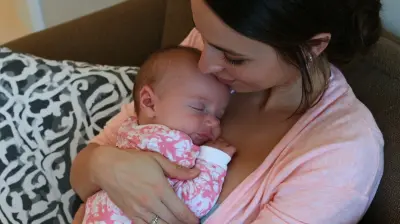
Many babies will sleep beautifully on a parent's chest or in a carrier, but the moment they are placed in a crib, they wake. This leads to a common question: should you hold your baby for naps or insist on the crib?There is no universal answer. Contact naps are not a bad habit. They are biologically normal. Human babies are carried, and they expect warmth, movement, and the sound of a heartbeat. For the first few months, contact naps may be the only way your baby gets enough daytime sleep. Refusing to hold your baby for a nap because you are worried about creating a sleep association can backfire. An overtired baby is harder to put down for any sleep, including nighttime.
That said, contact naps are not sustainable for every nap as your baby grows. You have other children, work, or simply a need for a break. The trade-off is real. You have to weigh the benefit of a guaranteed nap against the cost of being trapped for an hour.
A practical middle ground is to do the first nap of the day in the crib and allow contact naps for the later naps. The first nap is often the easiest because sleep pressure is highest after the longest stretch of wakefulness. As the day goes on, naps get harder, so it makes sense to use more support for those.
If you want to transition from contact naps to crib naps, do it gradually. Start by putting the baby down for the first nap of the day only. If that fails, rescue it by holding them for the rest of the nap. The next day, try again. Over time, the baby gets used to the crib for at least one nap, and you build from there.
The Environment: More Than Just Dark and Quiet
Most sleep advice focuses on making the room dark and quiet. That is solid advice, but it is incomplete. The nap environment needs to be consistent, but it also needs to be appropriate for the baby's age and temperament.For newborns, a completely dark room is not necessary and may even be disorienting. They are used to the bright, noisy world of the womb. A slightly dim room with some ambient noise is often enough. As babies get older, around three to four months, darkness becomes more important because they become more aware of visual stimulation. A dark room removes distractions and signals that sleep is the only option.
Temperature matters more than most parents realize. A baby who is too warm will struggle to fall asleep and will wake more frequently. The ideal room temperature for sleep is generally between 68 and 72 degrees Fahrenheit, but that is a guideline. Some babies run warm, some run cool. Check the back of the baby's neck. If it is sweaty, they are too warm. If it is cool, add a layer.
White noise is another tool that is often misused. The purpose of white noise is not to make the baby sleepy. It is to mask sudden sounds that could startle them awake. A consistent, low-level hum is best. It should be loud enough to be heard over a doorbell or a dog bark, but not so loud that it is uncomfortable. If you use white noise for naps, use it for nighttime too. Consistency is key.
One mistake parents make is making the nap environment too different from the nighttime environment. If the night routine involves a specific lullaby, a certain sleep sack, and a particular sound, use the same elements for naps. The more familiar the cues, the easier it is for the baby to recognize that sleep is coming.
The Transition from Three Naps to Two
Around six to nine months, most babies are ready to drop from three naps to two. This transition is often messy. The baby may fight the third nap, but then be too tired to make it to bedtime. Or they may take two great naps and then wake up at 4 a.m. because they have too much daytime sleep.The signs that a baby is ready to drop a nap are not always obvious. They may start taking longer to fall asleep for the third nap. They may skip it entirely and still be okay until bedtime. They may take the third nap but then fight bedtime. These are all signals that the schedule needs to change.
The mistake is to force the transition too early. A baby who is not ready will become overtired, and overtiredness leads to night wakings and early morning wake-ups. The better approach is to gradually shift the first two naps earlier and later, respectively, to stretch the wake windows. This often means the third nap gets squeezed out naturally.
For example, if your baby typically wakes at 7 a.m., naps at 9:30, 1:00, and 4:00, and goes to bed at 7:30, you might shift the first nap to 10:00 and the second to 2:00. The third nap becomes unnecessary because bedtime moves slightly earlier. This is not a one-day process. It can take a week or more. Be patient and flexible.
The Overtired Trap
Overtiredness is the enemy of nap time. When a baby stays awake too long, their body produces cortisol and adrenaline to keep them going. These stress hormones make it harder to fall asleep and harder to stay asleep. An overtired baby may finally crash, but the sleep is often restless and short.The tricky part is that overtiredness can look like a baby who is full of energy. They may be laughing, bouncing, and seemingly having a great time. Parents often mistake this for alertness and think the baby is not tired. In reality, the baby is running on fumes.
If your baby is consistently fighting naps, check the wake windows. Are they too long? It is easy to let a baby stay up an extra 15 minutes because they seem happy. But those 15 minutes can be the difference between a smooth nap and a screaming match.
The fix is to err on the side of earlier naps for a few days. Put the baby down at the first sign of a sleep cue, even if it feels too early. You may be surprised at how quickly the baby falls asleep and how much longer the nap lasts. Once the sleep debt is paid off, you can gradually extend the wake windows again.
The Role of Feeding and Digestion
Feeding and sleep are closely linked, but not in the way many parents think. A baby who is hungry will not sleep. But a baby who is overfed or who has just eaten a large meal may also struggle to sleep because digestion is active and uncomfortable.The general advice is to feed after a nap rather than right before. This creates a feed-play-sleep routine that separates eating from sleeping. It also ensures that the baby is not relying on a full stomach to fall asleep. However, this does not work for every baby. Some babies need a small top-up before a nap, especially if they are going through a growth spurt.
The key is to avoid a large feed immediately before putting the baby down. If your baby falls asleep while feeding, they may wake when they are moved or when they need to burp. Try to finish the feed at least 15 to 20 minutes before nap time. This gives the baby a chance to digest a little and reduces the chance of reflux or spit-up disrupting sleep.
Common Mistakes Parents Make
There are a few recurring mistakes that undermine nap success. The first is inconsistency. If nap time changes by an hour every day, the baby's circadian rhythm never gets a stable anchor. Try to keep nap times within a 30-minute window each day, even on weekends.The second mistake is skipping naps to make bedtime easier. This is a tempting strategy. If your baby fights the afternoon nap, you might think, "Fine, we will just do an early bedtime." But an overtired baby does not sleep better at night. They often wake more frequently and wake earlier in the morning. The short-term gain of an easier bedtime is offset by a worse night.
The third mistake is giving up too quickly. If a baby cries for ten minutes, many parents abandon the nap attempt and go back to playing. This teaches the baby that crying ends the nap process. It also makes the next nap attempt harder because the baby is now overtired. Of course, you should not let a baby cry indefinitely. But a few minutes of fussing while you pat, shush, or rock is normal. Do not interpret every fuss as a signal to stop.
The fourth mistake is comparing your baby to others. A friend's baby may nap for two hours straight at four months. Yours may only nap for 40 minutes. That does not mean your baby is broken or that you are doing something wrong. Sleep needs vary widely. Some babies are simply low sleep needs. They are healthy, happy, and alert, but they just do not need as much sleep as the average.
When to Seek Professional Help
There are times when nap problems are a sign of something deeper. If your baby is consistently difficult to wake, has trouble breathing during sleep, snores loudly, or shows signs of developmental regression, it is worth discussing with a pediatrician. Similarly, if your baby is over six months old and never naps longer than 20 minutes, or if they are extremely irritable and inconsolable during the day, a medical evaluation is reasonable.Sleep disorders in infants are rare, but they do exist. Reflux, food allergies, and ear infections can all disrupt sleep. If your baby seems to be in pain when lying down, or if they arch their back, vomit frequently, or have persistent congestion, these are red flags.
Also, trust your gut. If something feels wrong, it probably is. You know your baby better than any chart or app. A professional can help rule out medical issues and provide guidance that is specific to your situation.
The Long Game: What Nap Success Really Looks Like
Nap time is not a battle to be won. It is a developmental skill that your baby will acquire over time. Some babies are natural nappers. Others need more help. Both are normal.The goal is not to have a perfect schedule with perfectly timed naps. The goal is to have a baby who gets enough daytime sleep to be happy and engaged, and a parent who is not losing their mind. That might mean contact naps for a while. It might mean a late afternoon nap in the stroller. It might mean accepting that your baby is a catnapper and adjusting your expectations.
As your baby grows, naps will consolidate. The three short naps will become two longer ones. The two will become one. And eventually, the nap will disappear altogether. That day will feel bittersweet. You will miss the quiet moments, the warmth of a sleeping baby in your arms. But you will also get your afternoons back.
In the meantime, be kind to yourself. Nap struggles are not a reflection of your parenting. They are a reflection of your baby's biology and development. You are not failing. You are troubleshooting. And with time, patience, and a willingness to adapt, you will find a rhythm that works for your family.
all images in this post were generated using AI tools
Category:
Babies And SleepAuthor:

Austin Wilcox
Discussion
rate this article
1 comments
Zanya McKeever
Every baby is different... hang in there!
August 11, 2026 at 4:23 AM
Austin Wilcox
Thanks for the reminder! Each little one has their own rhythm.