Understanding the Social Lives of Children in the Digital Age
20 August 2026
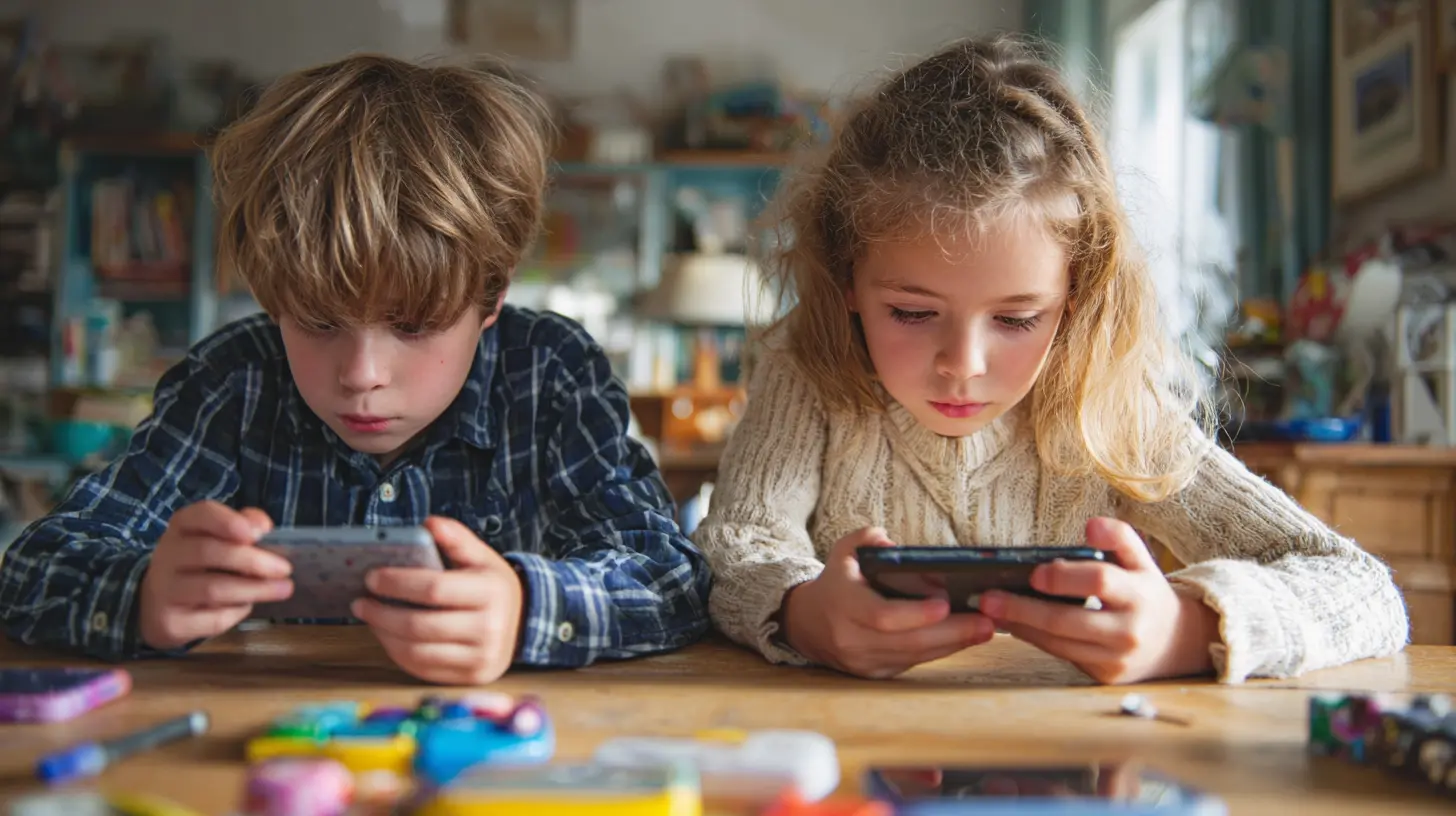
Every parent has seen the scene: a group of teenagers sitting together on a couch, each one staring at a phone, the silence broken only by the occasional thumb swipe. It looks like isolation, but it is not. Something else is happening here, something that looks like disconnection but is actually a different kind of connection. And that is the core challenge of raising children today. We are trying to read a social map that was drawn in a language we never learned.
The social lives of children have always been complex, layered with hierarchies, inside jokes, and unspoken rules. But the physical playground has been replaced, or at least heavily supplemented, by a digital one that never closes. The problem is not that children are online. The problem is that we are trying to apply the rules of the physical world to a digital environment that operates on completely different logic. To truly understand what is happening in the social lives of children, we have to stop judging the medium and start studying the behavior.

The Architecture of Digital Friendship
When a parent looks at their child's phone, they see a stream of nonsense, memes, and cryptic comments. What they are actually looking at is a carefully constructed social architecture. Children build their digital social lives the way an architect designs a building, with load-bearing walls, entrances, exits, and spaces for different kinds of activity.The first thing to understand is that digital friendship is not a lesser version of real friendship. It is a different kind of friendship with its own rules. A child might have two hundred followers on Instagram but only three people they would call if they were in trouble. The follower count is a public facade, a measure of social reach, not social depth. The three people are the load-bearing walls. The confusion arises because many adults look at the two hundred and assume those are all friendships, and then panic. The child knows the difference. The problem is that the child does not always have the language to explain it to an anxious parent.
The Rise of the "Low Stakes" Friend
One of the most significant shifts in the social lives of children is the rise of what we might call the low stakes friend. This is someone they interact with regularly online, share memes with, and comment on each other's posts, but they do not necessarily hang out with in person. These friendships are real, but they are maintained on a low emotional budget. They require little time, little vulnerability, and little shared history.This is not inherently bad. For many children, especially those who are introverted, socially anxious, or living in remote areas, these low stakes friendships are a lifeline. They provide a sense of belonging without the overwhelming pressure of face-to-face interaction. The key is that parents need to stop asking "How many friends do you have?" and start asking "Who makes you feel good?" The number of friends is irrelevant. The quality of the interaction is what matters.

The Currencies of the Digital Playground
Every social environment has a currency. In the schoolyard, it might be athletic ability or a cool backpack. In the digital world, the currencies are different, and understanding them is essential to understanding why children behave the way they do online.The Currency of Visibility
The first currency is visibility. In the digital age, being seen is a form of social capital. A child who posts a photo and gets a hundred likes feels a surge of social validation. This is not vanity; it is a signal that they exist in the eyes of their peers. The problem is that this currency is inflationary. What got a hundred likes last month might only get twenty this month. Children are forced to increase the stakes, to post more daring content, to be funnier, to be more revealing, just to maintain the same level of social standing.This is where parents often make a mistake. They see the child checking their phone obsessively and assume it is an addiction. In many cases, it is not addiction. It is anxiety. The child is checking to see if their social currency is still holding its value. It is the digital equivalent of a child walking into a room and scanning to see if people are looking at them. The problem is that the digital room is open all night.
The Currency of Response Time
The second currency is response time. In the physical world, if you ask a friend a question and they do not answer, you might assume they did not hear you. In the digital world, a slow response is a loaded message. If a child sends a message and the friend reads it but does not reply for three hours, that is not a delay. It is a statement. It says, "You are not a priority right now."This creates a complex social dance. Children are acutely aware of how long they take to respond to others, and they are equally aware of how long others take to respond to them. The dreaded "read receipt" has become a tool of social negotiation. Some children deliberately leave messages on read to assert dominance. Others obsessively check to see if they have been left on read, interpreting it as rejection.
The best practice here is not to ban the phone but to teach the child about the games that are being played. Help them understand that a slow response is often about the other person's life, not about their worth. This is a hard lesson, and it takes years to internalize, but it is one of the most valuable skills a child can learn.
The Group Chat: The New Living Room
If there is one single feature that defines the social lives of children today, it is the group chat. For many children, the group chat is the digital living room where they hang out. It is where jokes are made, plans are formed, and social status is negotiated. It is not a distraction from their social life; it is their social life.The Dynamics of Inclusion and Exclusion
Group chats are fascinating because they have very clear boundaries. There is an inner circle, and there is an outer circle. Being added to a group chat is a rite of passage. Being removed from one is a social catastrophe. This is where the digital world is crueler than the physical world. In the physical world, exclusion is often passive. You just do not get invited to the party. In the digital world, exclusion is active and visible. You see the messages that you are no longer a part of, and you know exactly when you were cut out.This is a critical point for parents to understand. When a child is removed from a group chat, it is not just a minor social setback. It is a public declaration that they are no longer wanted. The emotional impact is equivalent to being publicly shamed in front of the entire class. Parents who dismiss this as "just a silly chat" are making a serious mistake.
The trade-off here is that group chats also provide a level of support that was previously unavailable. A child who is having a bad day can send a message to the group and receive immediate comfort from multiple friends. The group chat is a source of resilience, not just a source of pain. The goal is to help children build the skills to handle both sides.
The Myth of the "Digital Native"
There is a pervasive myth that children are "digital natives" who instinctively know how to navigate the online world. This is false. Children are digital residents. They live there, but they do not understand the architecture. They know how to use the apps, but they do not understand the social dynamics, the privacy implications, or the long-term consequences of their actions.A child knows how to post a photo, but they do not understand that the photo will be there in ten years when they are applying for a job. A child knows how to send a message, but they do not understand that a screenshot can be used as a weapon. This is where parental guidance is not just helpful; it is essential. The child is a resident, but the parent needs to be the architect. The parent needs to explain the plumbing, the wiring, and the load-bearing walls.

The Performance of Identity
One of the most nuanced aspects of the digital social life is the performance of identity. Children are not just being themselves online; they are curating a version of themselves. This is not deception. It is experimentation.In the physical world, a child can try on different personalities, but the process is slow and visible. In the digital world, they can create a persona instantly. They can be funnier, more confident, more attractive, or more mysterious. This is a natural part of development, but it has a dark side.
The Gap Between the Performance and the Reality
The danger arises when the gap between the performance and the reality becomes too wide. A child who presents themselves as confident and popular online but feels lonely and insecure in real life is living in a state of cognitive dissonance. This is exhausting. It creates a constant pressure to maintain the facade.The best practice here is to have open conversations about the difference between the curated self and the real self. Ask your child what they post and why. Ask them if they ever feel like their online self is different from their real self. The answer might surprise you. Many children are deeply aware of this gap, and they are relieved when an adult acknowledges it without judgment.
The Role of the Parent: Observer, Not Warden
The worst thing a parent can do is try to control the digital social life of their child through surveillance and restriction. This does not work, and it damages trust. The child will find a way around the restrictions, and they will learn to hide their online life from their parents.The better approach is to be an observer. Watch what your child is doing online, not to catch them doing something wrong, but to understand what their social life looks like. Ask questions out of curiosity, not accusation. Sit with them while they scroll through their feed and ask them to explain the jokes. This is not about being cool. It is about being present.
The Importance of the "Family Digital Contract"
One practical tool that works well is the family digital contract. This is not a set of rules imposed by the parent. It is a negotiation. Sit down with your child and agree on the boundaries together. What times are off-limits for screens? What apps are appropriate? What happens when someone breaks the agreement?The key is that the child has a say in the creation of the contract. When they have ownership of the rules, they are more likely to follow them. This also provides a framework for discussing the difficult topics. When a problem arises, you can refer back to the contract instead of making a snap decision in the heat of the moment.
Common Misconceptions and Mistakes
There are several misconceptions that parents commonly hold about the digital social lives of their children, and these misconceptions lead to mistakes.Misconception: "The Problem is the Screen"
The screen is not the problem. The screen is a window. The problem is what is happening on the other side of the window. If a child is being bullied online, taking away the phone does not stop the bullying. It just cuts off the child from their support network and makes them feel more isolated. The bullying will continue at school, but now the child has no way to process it with their friends.Misconception: "All Online Friends are Dangerous"
This is a fear-based misconception. The vast majority of online friendships are completely benign. In fact, for many children, online friends are a source of deep emotional support, especially for those who feel marginalized in their physical community. The danger is not in the online friend; the danger is in the lack of parental awareness. The goal is not to be suspicious of all online friends but to know who your child is talking to.Mistake: "Public Shaming as Punishment"
When a parent catches a child doing something wrong online, the natural instinct is to punish them publicly. This is a disaster. Public shaming in the digital world is the equivalent of putting a child in the stocks in the town square. It teaches the child nothing except that their parent cannot be trusted with their vulnerabilities.The better approach is to handle the situation privately. Discuss what happened, why it was wrong, and what the consequences will be. The goal is to teach, not to humiliate.
The Long View: What Are We Actually Trying to Achieve?
When we step back and look at the bigger picture, the goal of parenting in the digital age is not to protect children from the online world. That is impossible. The goal is to raise children who can navigate the online world with confidence, empathy, and critical thinking.This means teaching them that a like is not a measure of their worth. It means teaching them that a group chat is not the entirety of their social life. It means teaching them that the person behind the screen is a real person with real feelings.
It also means accepting that the digital world is not going away. It is a permanent part of the human experience. Our children will live their entire lives in a world where the physical and the digital are intertwined. The question is not whether they will be online. The question is whether they will be in control of their online experience, or whether it will be in control of them.
The Best Question You Can Ask
The most powerful question a parent can ask their child is not "What are you doing online?" It is "How do you feel when you are online?" This question opens the door to a conversation about emotions, not just activities. It invites the child to reflect on whether the digital world is making them feel better or worse, more connected or more alone.This is the heart of the matter. The digital age has not changed the fundamental needs of children. They still need to belong, to be valued, and to be understood. The tools have changed, but the needs have not. Our job as parents is to help them meet those needs in a world that is more complex than the one we grew up in. It is not an easy job, but it is a necessary one.
The social lives of children in the digital age are not a mystery to be solved. They are a landscape to be navigated. And the best navigators are not the ones with the most rules. They are the ones with the most understanding.
all images in this post were generated using AI tools
Category:
Parenting And Social SkillsAuthor:

Austin Wilcox
Discussion
rate this article
1 comments
Sydney McCoy
Kids today socialize like pros... with emojis and snack breaks!
August 23, 2026 at 3:21 AM
Austin Wilcox
It's true! Digital tools have definitely changed how kids connect, making interactions fun and flexible.