Turning Daily Chores into Learning Moments for Your Kids
16 March 2026
Let’s be real—getting kids to do chores can feel like convincing a cat to take a bath. It’s a battle of wills, complete with dramatic sighs, “Why me?” protests, and the occasional attempt to disappear when the word "clean" is mentioned.
But what if I told you that chores don’t have to be boring? (Gasp!) What if they could actually be fun and educational? That’s right, folks—your daily household tasks can double as secret learning moments for your kids.
Think of it as sneaky parenting at its finest. You get help around the house, and your child picks up essential life skills without even realizing it. It’s a win-win! So, let’s dive into how you can turn those dreaded chores into valuable learning opportunities. 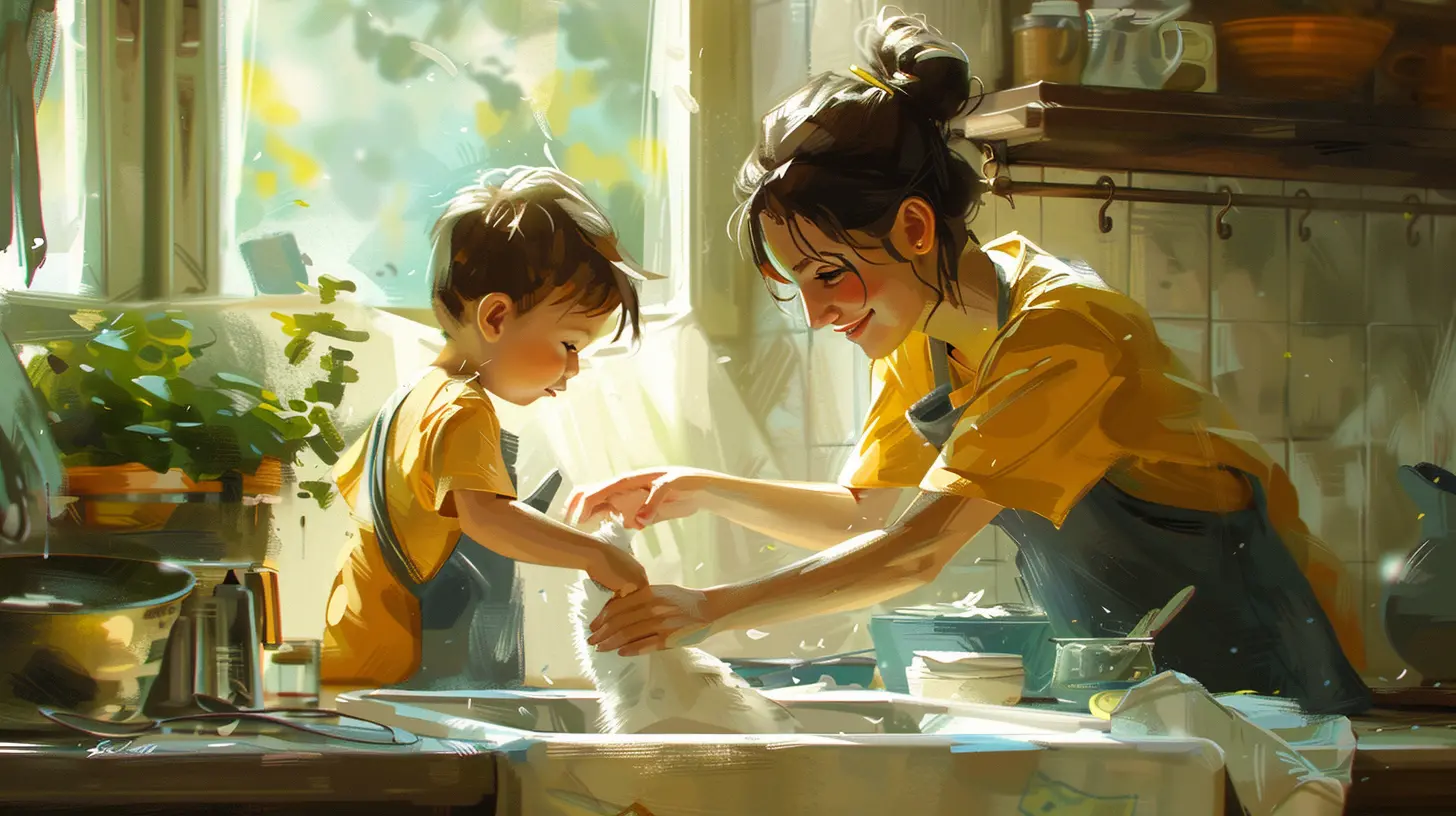
1. Laundry & Sorting: Colors, Math, and Responsibility
The Learning Twist
Laundry isn't just about removing mystery stains from your kid's clothes (seriously, how does spaghetti sauce end up inside the socks?). It’s also a goldmine for learning opportunities.- Sorting by color – Perfect for younger kids learning about colors. Ask them to separate light and dark clothes like they’re detective agents cracking a secret laundry code.
- Counting and matching socks – Teach early math concepts like counting, addition, and even patterns by pairing up socks. Bonus points if you make it a game: “How fast can we find all the sock twins?”
- Responsibility and time management – Older kids can learn the importance of keeping clothes clean and planning outfits ahead (because wearing a favorite shirt that’s still in the hamper isn’t exactly ideal).
Make It Fun
Turn laundry time into a competition: Who can fold the most towels neatly in two minutes? Or create a "Laundry Olympics" where each task earns them a fun title like "Sock Sorting Champion."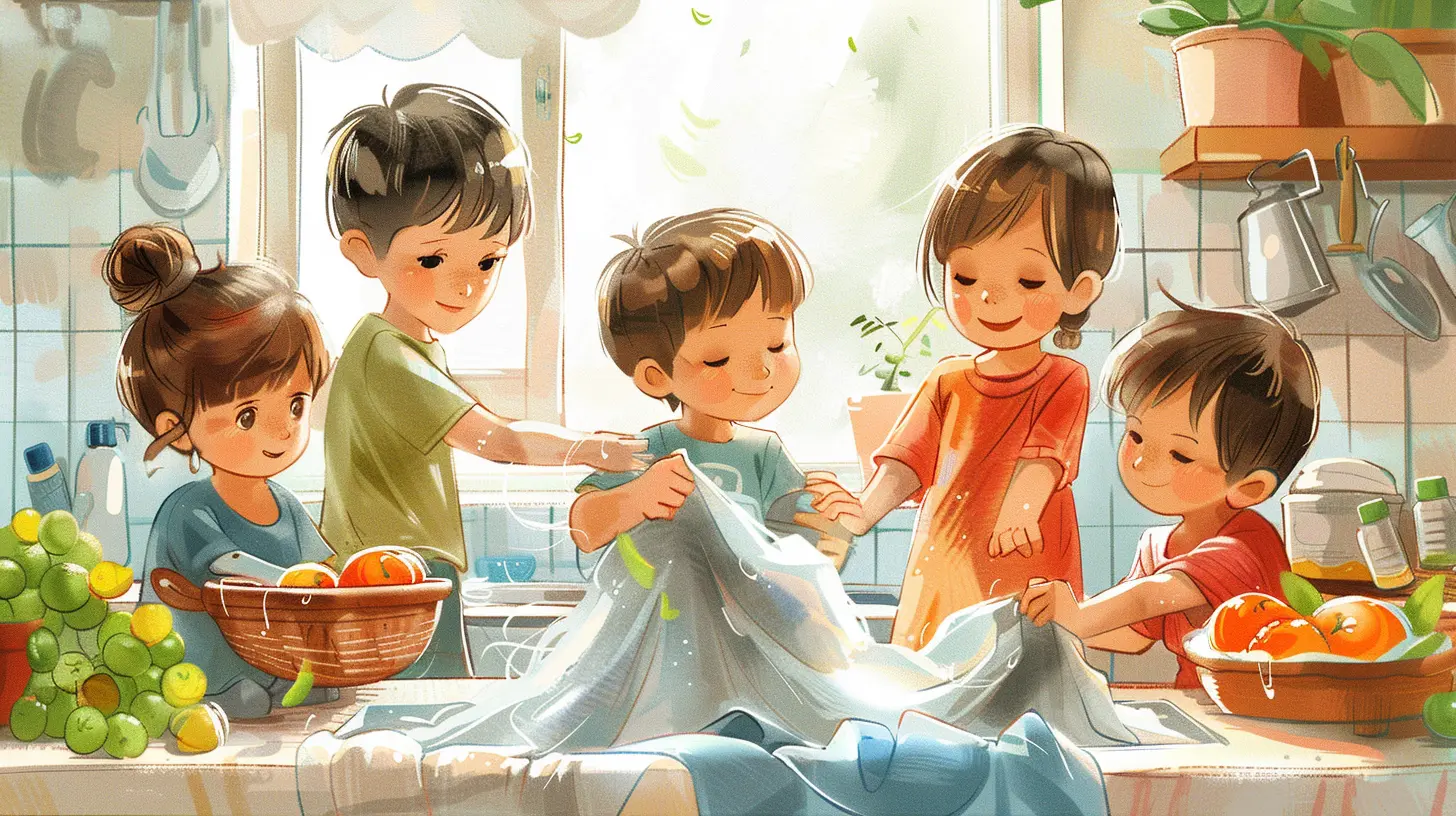
2. Cooking & Meal Prep: Science, Math, and Life Skills
The Learning Twist
Cooking isn’t just about getting food on the table before a meltdown happens—it’s a fantastic way to teach kids about science, math, and responsibility.- Math skills – Measuring ingredients, doubling recipes, and estimating cooking times sneak in math practice without a single worksheet in sight.
- Science experiments – Watching water boil, bread rise, or eggs scramble is basically a kitchen chemistry lesson. Talk about why things change when cooked (or just act like a wizard making magical potions).
- Healthy eating habits – Kids are more likely to eat their veggies when they’ve had a hand in preparing them. Plus, they’ll learn about nutrition and balanced meals.
Make It Fun
Let kids pretend they’re famous chefs on a cooking show. Give them cool chef names and have them "explain" each step in dramatic fashion while you film them. Who knows? You might have the next big food influencer in your kitchen.
3. Cleaning & Organizing: Categorization, Responsibility, and Teamwork
The Learning Twist
Cleaning isn’t just about making sure your house doesn’t look like a tornado hit. It’s also a great way for kids to develop organizational and teamwork skills.- Categorization – Sorting toys, books, and clothes teaches kids how to group similar items together (which helps with early math and logic skills).
- Responsibility – Assigning age-appropriate chores gives kids a sense of ownership over their space. It’s training for adulthood—because no one wants a college roommate who never does the dishes.
- Teamwork & problem-solving – Working together to clean up teaches cooperation and communication. Try giving them little "missions" like, “Find all the blue toys and put them in this bin!”
Make It Fun
Turn cleaning into a race! Set a timer and challenge them to beat the clock. Or play their favorite music and have a mini dance party while tidying up. (Pro tip: energetic cleaning is basically sneaky exercise.)
4. Grocery Shopping: Budgeting, Math, and Decision-Making
The Learning Twist
Grocery shopping is not the most thrilling adventure when you have a toddler melting down in the cereal aisle, but it can be an educational experience.- Counting & numbers – Have younger kids count items as they go into the cart. “We need six apples—can you help me find them?”
- Money & budgeting – Older kids can compare prices, calculate discounts, and tally up a budget. Give them a small shopping list and a budget to stick to—it’s like financial literacy training in disguise!
- Nutrition & decision-making – Explain why you’re picking certain foods over others, helping kids learn how to make informed choices.
Make It Fun
Turn it into a scavenger hunt! Give kids a small list of items to find and let them “search the jungle” of the supermarket. (Bonus: It keeps them busy so they don’t beg for every snack in sight.)5. Gardening & Outdoor Work: Science, Patience, and Responsibility
The Learning Twist
Gardening isn’t just about keeping your plants alive (a challenge for many, I know). It’s an incredible way to teach kids about nature and responsibility.- Science & biology – Explain how plants grow, why they need sunlight, and what different bugs do in the garden.
- Patience & responsibility – Gardening is a long game—perfect for teaching kids that good things take time.
- Fine motor skills – Digging, planting, and watering help with hand-eye coordination.
Make It Fun
Let kids have their own little “garden patch” where they grow something easy like tomatoes or sunflowers. Give them fun tools and let them name their plants (because "Sir Sprouts-a-Lot" is way more fun than "that one plant").6. Washing the Car: Physics, Teamwork, and Fun
The Learning Twist
Washing the car is basically a hands-on science experiment involving water, soap, and physics.- Physics lesson – Talk about water pressure, how soap breaks down dirt, and what friction does when scrubbing.
- Teamwork – Working together to get the job done builds cooperation skills.
- Gross motor skills – All that scrubbing and spraying? It’s basically a workout for little arms.
Make It Fun
Turn it into a water fight! (Okay, maybe not a full-blown water war, unless you want to get soaked.) Let kids spray each other a little and make it feel less like work and more like play.Final Thoughts
Parenting is all about working smarter, not harder. Daily chores don’t have to be battles—they can be opportunities for learning, bonding, and even a little fun.Kids may not love chores, but with a little creativity (and maybe a few bribes—I mean, incentives), they can start seeing them as something more than just another boring task.
So next time you’re knee-deep in laundry, dishes, or a toy explosion, remember: You're not just cleaning—you're raising responsible, capable kids who might actually thank you one day. (*Maybe. No promises.
all images in this post were generated using AI tools
Category:
Stay At Home MomsAuthor:

Austin Wilcox
Discussion
rate this article
2 comments
Lyra McClary
Thank you for sharing such insightful tips! Turning chores into learning experiences not only teaches responsibility but also strengthens family bonds. It's a beautiful way to foster collaboration and life skills while creating cherished memories together. Keep up the great work!
March 26, 2026 at 12:17 AM
Austin Wilcox
Thank you for your thoughtful comment! I'm glad you found the tips helpful. Fostering collaboration through chores truly enriches family bonds and creates lasting memories.
Luma Hardy
Oh, absolutely! Because nothing says "fun family bonding" like turning dishwashing into a math lesson. "Let’s count the plates, kids! And if you break one, congratulations, you’ve just learned about consequences! Who needs video games when you have chores, right?
March 17, 2026 at 3:23 AM
Austin Wilcox
Fair point! Maybe skip the math quiz and just let the bubbles do the teaching this time.